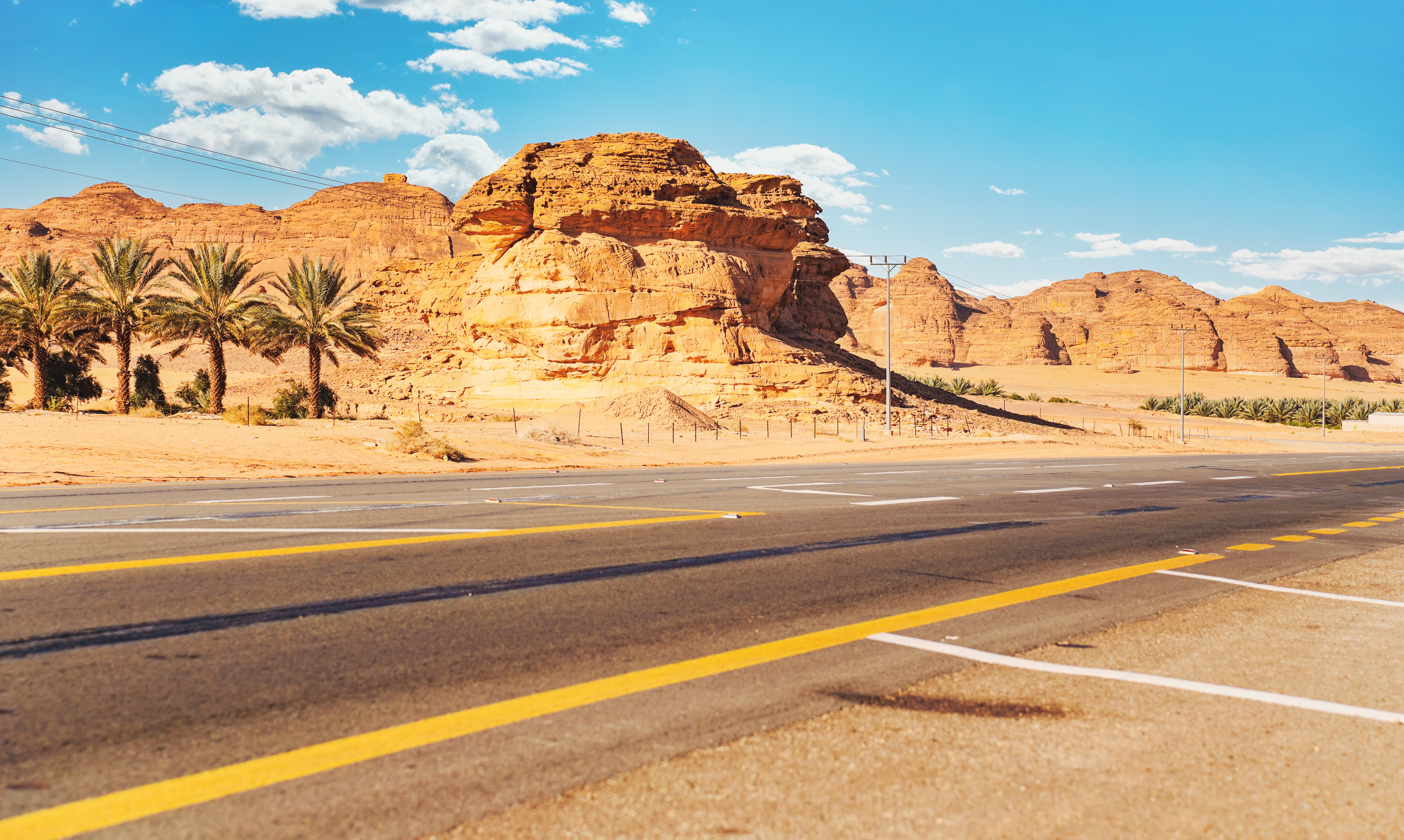
AlUla Travel Guide: Ancient Wonder of Arabia
AlUla travel guide 2026: Hegra tours from SAR 95 (advance booking only), Jabal Ikmah's inscriptions, AlUla Old Town, Elephant Rock, and where to stay in Ashar Valley.
Key Takeaways
- Hegra, Dadan and Jabal Ikmah cannot be visited without a tour booked in advance via Experience AlUla - daily numbers are capped and walk-ins are refused
- Hegra coach tours start from SAR 95 per person (about two hours, audio guide in five languages); hop-on hop-off from SAR 150; premium 4x4 from SAR 1,000 per vehicle for up to seven
- Hegra was Saudi Arabia's first UNESCO World Heritage Site (2008) and holds 111 monumental Nabataean tombs; Jabal Ikmah joined UNESCO's Memory of the World register in 2023
- Fly into Prince Abdul Majeed bin Abdulaziz International Airport (ULH), roughly 300 km north of Madinah, with domestic links from Riyadh, Jeddah and Dammam
- Best window is November to March; summer passes 40C and outdoor sites cut their hours. Three days covers the main sites without rushing
- There is no large supermarket in AlUla - buy water in town before heading to the sites, at least three litres per person per day in warm months
AlUla sits in a valley in northwestern Saudi Arabia where a reliable water supply made a settlement possible for well over two thousand years. Everyone who moved incense, spices and pilgrims up the western side of Arabia had to pass through, and successive kingdoms — Dadan, Lihyan, then the Nabataeans — left their record cut into the sandstone. That record is the reason to come.
The practical thing to understand before you book: the major archaeological sites are not walk-in. Hegra, Dadan and Jabal Ikmah require a tour booked in advance through Experience AlUla, the official gateway. Turning up at the gate does not work. Plan around that and AlUla is straightforward; ignore it and you will spend your trip looking at rocks from the road.
Quick Facts
- Where: northwestern Saudi Arabia, roughly 300 km north of Madinah and about 1,100 km northwest of Riyadh.
- Airport: Prince Abdul Majeed bin Abdulaziz International Airport (ULH), with domestic flights from Riyadh, Jeddah and Dammam, plus seasonal international routes.
- Best months: November to March. Summer regularly passes 40°C and outdoor sites cut their hours.
- Currency: Saudi Riyal, pegged at 3.75 to the US dollar.
- Visa: citizens of 66 countries can get an eVisa for SAR 535 (about USD 143, medical insurance included) or visa on arrival for roughly SAR 480. One year, multiple entry, 90 days per visit.
- Open to all faiths: AlUla has no religious entry restriction. Only Makkah is closed to non-Muslims.
- Alcohol: prohibited nationwide, including in the resorts. There is no exception for tourists.
Hegra: the Nabataean Record
Hegra — also called Mada'in Salih — was the southern city of the Nabataean kingdom, the same people who cut Petra. It became Saudi Arabia's first UNESCO World Heritage Site in 2008. There are 111 monumental tombs here, carved into sandstone outcrops between roughly the 1st century BCE and the 1st century CE, and their facades mix Nabataean forms with Hellenistic and Egyptian borrowings. Many carry inscriptions naming the family that commissioned them and the penalties for reuse — an unusually direct line to individuals dead two thousand years.
Look for the Tomb of Lihyan, son of Kuza — usually called Qasr al-Farid, "the lonely castle" — standing alone against open ground. It was never finished, and the tool marks stop partway down the facade. It is the most useful thing at Hegra, because you can see exactly how they worked: top down, straight into the rock, no scaffolding recovered.
Booking and cost
All Hegra access is by booked tour through Experience AlUla. Options as of July 2026:
- Coach tour — from SAR 95 per person, about two hours, with an audio guide available in Arabic, English, French, Italian and Mandarin. This is the standard option and it is good.
- Hop-on hop-off — from SAR 150 per person, guided in English and Arabic, minimum around an hour.
- Premium 4x4 — from SAR 1,000 per vehicle, seating up to seven, roughly two hours. Worth it split across a family; not otherwise.
Daily tour numbers are capped. Book before you fly, not on arrival.
Dadan and Jabal Ikmah
Dadan was the capital of the Dadanite and then the Lihyanite kingdom, and it was already old when the Nabataeans showed up — it flourished roughly between the 9th and 2nd centuries BCE. Excavation is ongoing. The signature feature is the Lion Tombs, burial chambers cut high into the cliff with lion figures flanking the entrances. They are further up the rock face than photographs suggest, which tells you something about who was buried there.
Jabal Ikmah is the better site, and the one most people underrate. It is a narrow canyon whose walls carry thousands of inscriptions in Dadanitic, Thamudic, Minaic, Nabataean and Aramaic — dedications, names, tallies, graffiti. It is often called an open-air library, and it was added to UNESCO's Memory of the World register in 2023. Go with a guide who can actually read some of it; without that it is a wall of marks.
AlUla Old Town
The Old Town is a dense warren of roughly 900 mud-brick houses, some 400 shops and five squares, occupied continuously from around the 12th century until residents moved to modern housing in the 1980s. That last date is the interesting part: this is not a ruin from antiquity but a town that people left within living memory, and some of them will tell you about it.
It was a stop on the pilgrim route north, which paid for it. Restoration is ongoing, a stretch of the main lane and the souq are open, and the fort above gives you the layout of the oasis in one view. Evenings are the better visit — lit, cooler, and occasionally with performances in the squares.
Landscape
Elephant Rock
Jabal AlFil is a sandstone outcrop eroded into something unmistakably like an elephant with its trunk down. It is a short drive from town, there are sunken seating areas and food trucks around it, and it costs nothing to visit — though a time slot may be needed in peak season. Come for sunset and stay past it; the rock holds colour after the light has gone off the ground.
Harrat Uwayrid
The volcanic plateau on the valley's western side gives the widest view of the oasis — the green strip, the Old Town, the escarpments beyond. Sunrise and sunset are the reason to make the climb.
Maraya
The mirrored concert hall in Ashar Valley is worth seeing even if nothing is programmed. It is clad entirely in mirror, so it does the trick of nearly vanishing into the cliffs behind it. Check what is on before you go; access outside events is limited.
Stargazing, hiking, cycling
Light pollution here is minimal and the sky is very good. Operators run guided stargazing with telescopes. Hiking and mountain-bike routes cover the canyons and the oasis floor; guided desert activities generally run somewhere in the SAR 150–500 range depending on length.
Where to Stay
AlUla is skewed towards the upper end, and this is the main budget constraint on a trip here.
- Ashar Valley resorts — Banyan Tree AlUla and Habitas AlUla sit among the cliffs southeast of town. This is the top tier and priced accordingly.
- Tented and camp-style — a middle band that gets you the landscape without resort rates.
- Town hotels and guesthouses — the practical choice, close to the Old Town and the Welcome Center, and improving.
Rates move sharply with season and we would rather not print a number that is wrong by the time you read it — check live rates, and book early for November to March, when AlUla fills. Our AlUla hotels and resorts guide breaks the options down property by property, and the 3-day AlUla itinerary shows how the sites fit together across a short stay.
Eating
Most of the serious cooking is inside the resorts. Maraya Social, at the concert hall, does contemporary food with the valley in front of it and needs a reservation. The Old Town has a growing cluster of casual places, and the oasis has cafes among the date palms — local dates and citrus are genuinely the thing to order, since they are grown a few hundred metres away. The food trucks at Elephant Rock cover a sunset meal without ceremony.
Practical Notes
- Book everything first. Hegra, Dadan and Jabal Ikmah all require advance booking through Experience AlUla. This is the single mistake that ruins AlUla trips.
- Getting around: a shuttle network links the Welcome Center to the main sites, and most tours include transport. Private car with driver gives more flexibility. Renting a car is possible but rarely necessary, since you cannot drive yourself into the controlled sites anyway.
- Water: there is no large supermarket. Buy water in town before you head out — plan on at least three litres per person per day in warm months.
- Dress: shoulders and knees covered, all visitors. Abaya has not been required since 2019. Linen or cotton; the air is very dry.
- Layers: desert nights drop hard even after a warm day. Bring a jacket.
- Shoes: the sites are uneven and sandy. Closed shoes, not sandals.
- Photography: fine for landscape and monuments. Ask before photographing people.
How Long to Stay
Three days covers Hegra, Dadan, Jabal Ikmah, the Old Town and Elephant Rock without rushing any of them. Two is possible but you will be choosing what to skip. Five or more makes sense if you want the slower side — the oasis walks, the wellness end of things, and time to sit still, which our AlUla slow travel guide covers.
Most people pair AlUla with Jeddah on the Red Sea coast, or with the mountains of Asir further south. For timing the trip against the weather, see our Saudi climate guide.
The tours sell out before the hotels do.
Hegra, Dadan and Jabal Ikmah are capped daily and have to be booked ahead — our Trip Planner sequences them against your flights so you are not holding two tickets for the same morning, and the hotel guide is the place to start on where to sleep, since AlUla's Ashar Valley resorts and its town guesthouses are very different trips.
Frequently Asked Questions
- Do I need a tourist visa to visit AlUla?
- Citizens of 66 eligible countries can apply for a Saudi eVisa at visa.visitsaudi.com for SAR 535 (about USD 143, including mandatory medical insurance), or get a visa on arrival for roughly SAR 480. It is valid one year, multiple entry, up to 90 days per visit. AlUla is open to visitors of any faith - only Makkah is restricted to Muslims.
- How do I book Hegra, and what does it cost?
- All access to Hegra is by tour booked in advance through Experience AlUla, the official gateway; walk-ins are not admitted and daily numbers are capped. Coach tours start from SAR 95 per person and run about two hours with an audio guide in Arabic, English, French, Italian and Mandarin. Hop-on hop-off starts from SAR 150 per person, and a premium 4x4 tour from SAR 1,000 per vehicle for up to seven people.
- How many days should you spend in AlUla?
- Three days covers Hegra, Dadan, Jabal Ikmah, AlUla Old Town and Elephant Rock at a reasonable pace. Two days means dropping something. Five or more makes sense if you want the oasis walks, wellness offerings and unstructured time rather than a site-by-site march.
- When is the best time to visit AlUla?
- November to March, when daytime temperatures are comfortable for walking the sites. Summer regularly exceeds 40C and outdoor sites reduce their hours, so while rates fall from May to September, much of the day becomes unusable. Desert nights are cold year-round relative to the day - bring a jacket.
- What should I pack for AlUla?
- High-SPF sunscreen, a wide-brimmed hat and sunglasses; closed walking shoes, since the sites are uneven and sandy; lightweight layers plus a jacket for the evening; and a refillable water bottle. Dress modestly - shoulders and knees covered for all visitors. An abaya is not required and has not been since 2019.
- Can you get around AlUla without a car?
- Yes. A shuttle network connects the AlUla Welcome Center to the main sites, and most tours include transport. A private car with driver adds flexibility. Renting a car is possible but rarely necessary, since the controlled archaeological sites cannot be entered in your own vehicle regardless.