EXPLORE SAUDI
Skip to main content

The Open-Air Museum of the Ancients

Walk in the footsteps of lost civilizations. From the Lion Tombs of Dadan to the monumental masterworks of Hegra, explore 200,000 years of human history carved into the living rock.

trust.lastUpdated 1 مارس 2026

AlUla is not merely a destination; it is a time capsule. Located on the original incense route that connected the Arabian Peninsula to the Mediterranean, this valley has been a cradle of civilization for millennia. While the world knows Petra, its southern sister, Hegra, remains a pristine frontier—silent, untouched, and overwhelmingly atmospheric.

Here, the wind whispers through canyons that once echoed with the languages of the Dadanites, Lihyanites, Nabataeans, and Romans. It is a place where every rock face tells a story, and the desert preserves secrets that are only just beginning to be revealed.

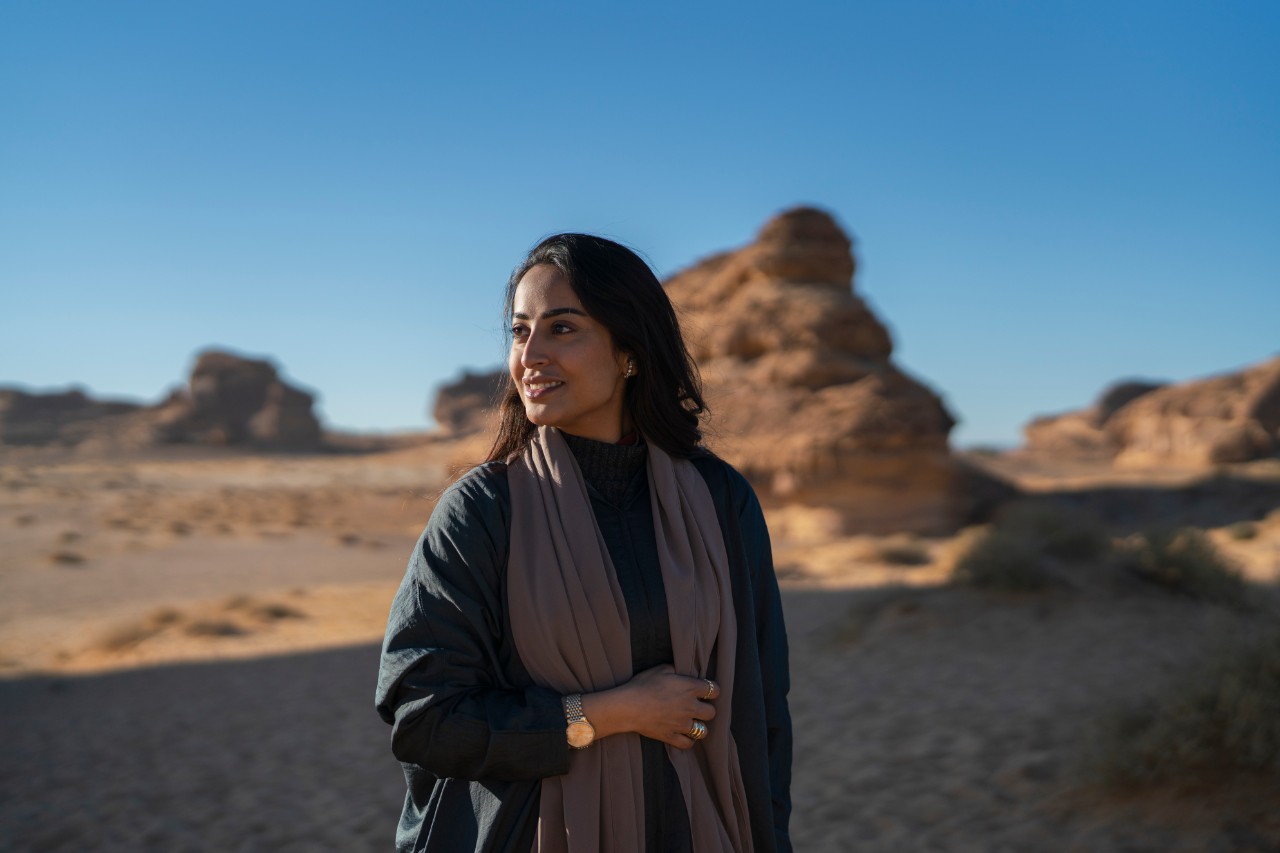
Visitor contemplating the ancient rock formations of AlUla at sunset

Four Sites, One Valley

Navigate through the ages that shaped this sacred landscape

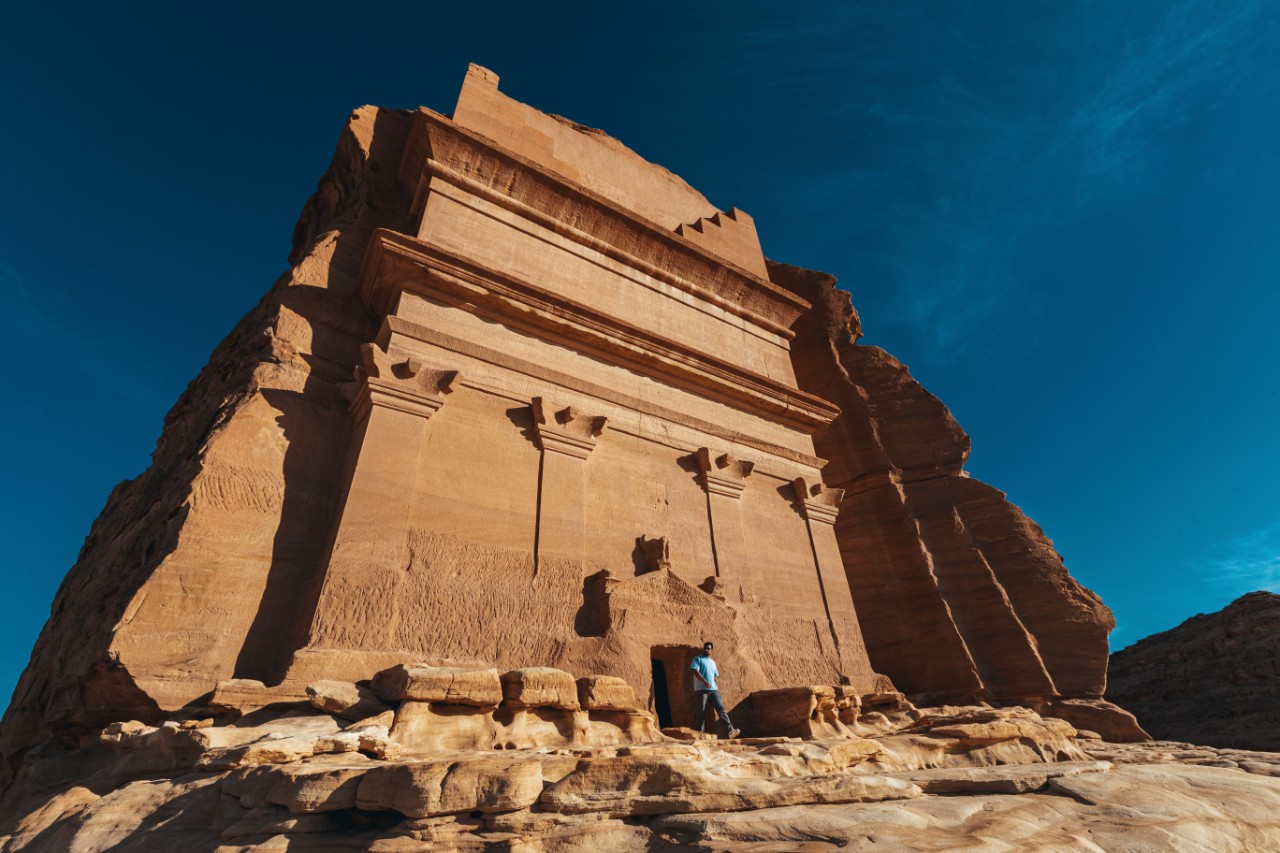
22-metre Nabataean tomb carved into sandstone cliff at Hegra, Saudi Arabia's first UNESCO World Heritage Site (inscribed 2008)
Hegra Era

Hegra: The Stone City

UNESCO World Heritage Site

As Saudi Arabia's first UNESCO World Heritage Site, Hegra stands as the supreme testimony to the Nabataean civilization. Unlike the crowded ruins elsewhere, Hegra offers a rare solitude. Spread over 52 hectares, the site features 111 monumental tombs, 94 of which are intricately decorated. The facades, carved directly into the sandstone outcrops, display a fusion of Assyrian, Egyptian, Phoenician, and Hellenistic architectural styles—proof of the Nabataeans' global reach.

Deep Dive: Qasr al-Farid

Stand before Qasr al-Farid, the 'Lonely Castle'. This unfinished tomb stands four stories high and isolated from the others. It offers a unique archaeological insight: because the lower third is uncarved, it reveals that the Nabataeans carved from the top down, using scaffolding that they removed as they worked.
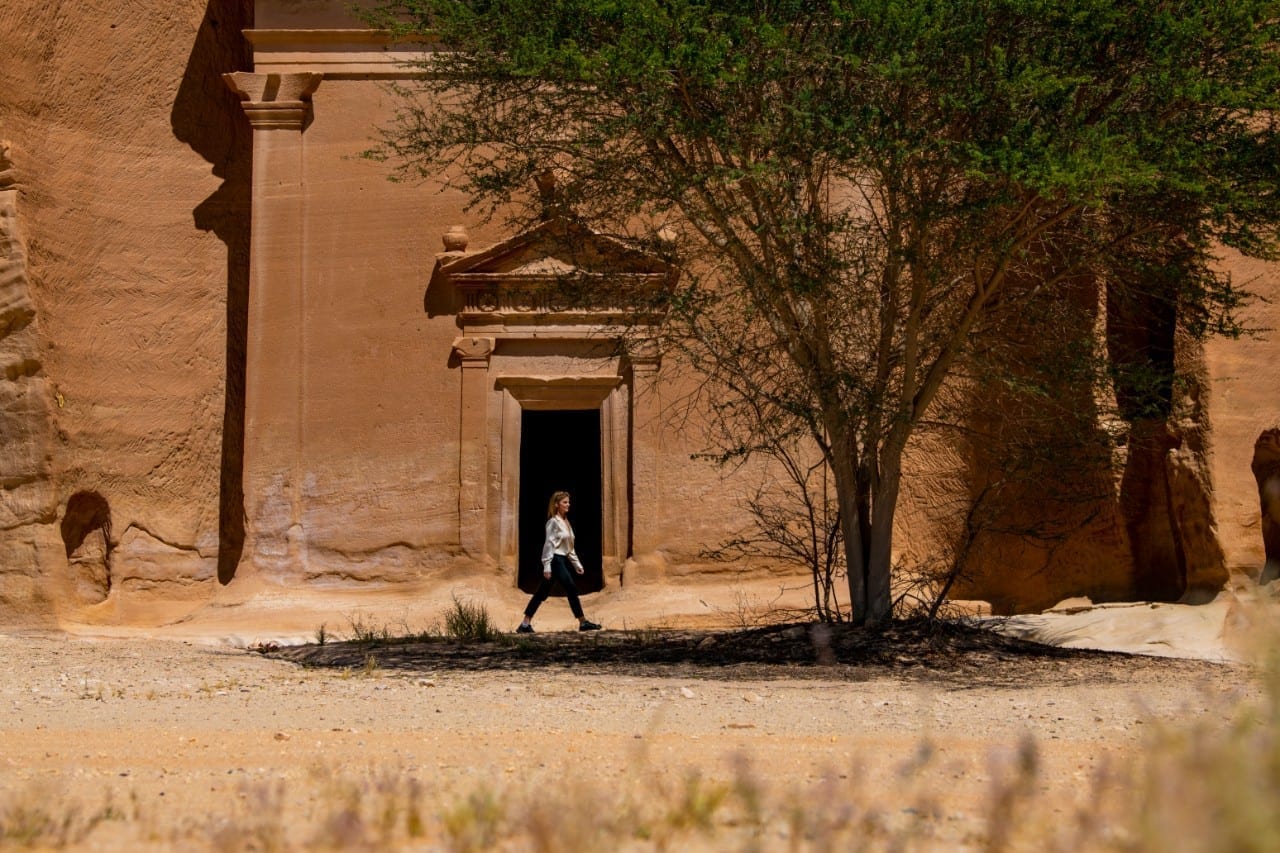
Ancient Nabataean tomb facade with doorway framed by desert tree at AlUla
Dadan Era

The Ancient Kingdoms of Dadan & Lihyan

Pre-dating the Nabataeans

Long before Hegra rose to power, the oasis of AlUla was the capital of the Dadan and Lihyan kingdoms (9th–2nd century BCE). The Lion Tombs of Dadan are the most striking legacy of this era—square niches cut high into the sheer red cliffs, guarded by relief-carved lions symbolizing power and protection. Recent excavations in the city below have revealed colossal statues of Lihyanite kings, standing over 2 meters tall, showcasing a level of artistic sophistication that rivals the empires of the Nile and Mesopotamia.

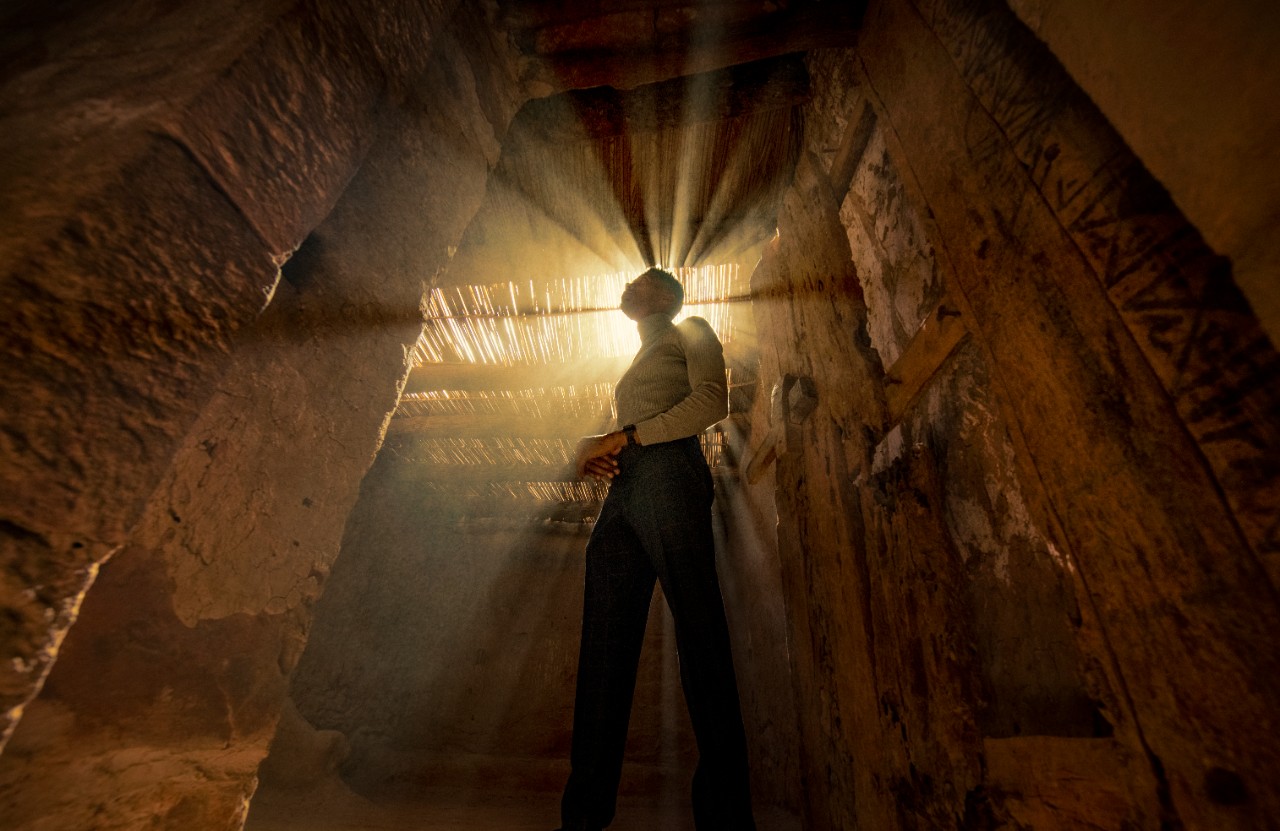
Dramatic light rays piercing through ancient tomb interior at Jabal Ikmah, AlUla
Ikmah Era

Jabal Ikmah: The Open Library

If Hegra is the architecture, Jabal Ikmah is the literature. This mountain canyon contains the highest concentration of pre-Arabic inscriptions in the Kingdom. It served as a 'guestbook' for travelers on the incense route. Thousands of inscriptions in Aramaic, Dadanitic, Thamudic, and Minaic cover the rock faces, detailing religious rituals, royal decrees, and everyday greetings. It was recently added to UNESCO's 'Memory of the World' register, cementing its status as a crucial archive of human language evolution.

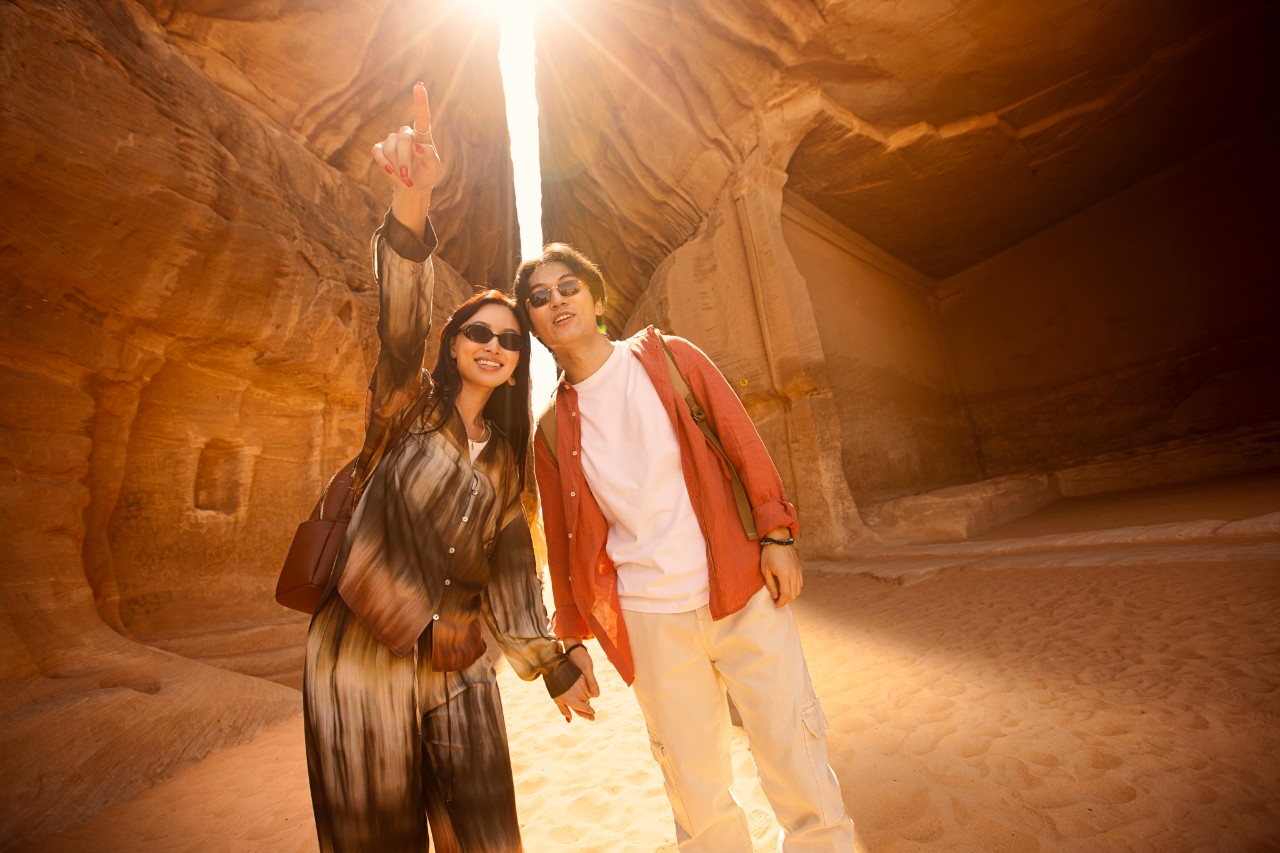
Couple exploring the narrow canyon passages near AlUla Old Town
Oldtown Era

AlUla Old Town

Inhabited from the 12th century until the 1980s, the Old Town is a labyrinth of over 900 mud-brick houses and 400 shops. Walking its narrow streets is like stepping into a medieval Arabian settlement. The town was built tightly together as a defensive fortification, with the outer walls of the houses forming a continuous barrier. Today, its restored souq smells of frankincense and dates, offering a tactile connection to the Islamic era of the valley.

Section 1 of 4

Archaeological Significance of AlUla & Hegra

AlUla's archaeological landscape spans over 7,000 years of continuous human habitation, making it one of the most densely layered heritage corridors on the Arabian Peninsula. The valley served as a critical node on the ancient incense trade route connecting southern Arabia to the Mediterranean world.

Hegra (Madain Salih), Saudi Arabia's first UNESCO World Heritage Site (inscribed 2008), preserves 111 monumental Nabataean tombs dating to the 1st century CE. The site represents the southernmost major settlement of the Nabataean Kingdom, whose capital at Petra is its more famous northern counterpart. Archaeological evidence reveals sophisticated hydraulic engineering—over 130 wells and a network of channels that transformed the desert into productive farmland.

UNESCO Sites

2 inscribed properties

Monumental Tombs

111 carved facades

Inscriptions

Thousands across 6 scripts

Habitation Period

7,000+ years

The Dadan and Lihyan kingdoms (9th–2nd century BCE) pre-date the Nabataeans by centuries. Recent excavations have unearthed colossal royal statues exceeding 2 meters in height, alongside the iconic Lion Tombs carved into sheer cliff faces. Jabal Ikmah, added to UNESCO's Memory of the World register, contains the highest concentration of pre-Arabic inscriptions in the Kingdom—an open-air library documenting millennia of human language evolution.

Section 2 of 4

AlUla Visiting Hours, Tickets & Practical Info

AlUla operates on a seasonal tourism calendar. The primary season runs from October through March, when temperatures are most comfortable and the full range of experiences is available. Summer access (April–September) is more limited but still possible for key sites.

SiteHoursTicket (SAR)
Hegra (Madain Salih)8:00 AM – 6:00 PM95 SAR (~$25)
Dadan8:00 AM – 5:00 PM60 SAR (~$16)
Jabal Ikmah8:00 AM – 5:00 PM60 SAR (~$16)
Old Town9:00 AM – 9:00 PMFree
Elephant Rock24/7Free

💡 Pro Tip: Book the Hegra After Dark experience for an immersive nighttime tour with dramatic lighting projections on the tomb facades. Limited availability—reserve at least 2 weeks ahead via experiencealula.com.

Getting there: AlUla has its own airport (ULH) with direct flights from Riyadh (1h 45min) and Jeddah (1h 20min). Road access via Highway 375 from Medina takes approximately 3 hours. All heritage sites require advance booking—walk-ins are not guaranteed entry during peak season.

Section 3 of 4

AlUla Photography Tips & Best Spots

AlUla is a photographer's dream. The golden hour light transforms the sandstone formations into a warm amber palette that is unmatched anywhere in the Middle East. Understanding the light conditions and permit requirements will elevate your shots from tourist snapshots to portfolio-worthy images.

Best Photography Locations

  • Qasr al-Farid (The Lonely Castle): Sunrise from the east side for warm direct light on the facade. The isolation makes compositions clean.
  • Elephant Rock (Jabal AlFil): Sunset creates a dramatic silhouette. Position yourself southwest for the classic angle.
  • Jabal Ikmah Canyon: Midday light penetrates the canyon, creating dramatic light rays. Best between 11 AM – 1 PM.
  • AlUla Old Town Rooftops: Blue hour (just after sunset) with the fortress lit above. Wide-angle lens recommended.

⚠️ Drone Restrictions: Drone photography at all heritage sites requires a permit from the Royal Commission for AlUla (RCU). Apply at least 30 days in advance. Commercial drone use requires additional GACA authorization.

Section 4 of 4

Where to Stay in AlUla: Nearby Accommodations

AlUla's accommodation landscape ranges from ultra-luxury desert resorts to authentic heritage lodges. The Royal Commission for AlUla (RCU) has carefully curated the hospitality offering to complement the destination's heritage character.

Luxury & Premium

Banyan Tree AlUla

Ultra-Luxury Resort

Tented villas with private pools amid sandstone canyons

From 3,500 SAR/night

Habitas AlUla

Eco-Luxury

Minimalist desert lodges with panoramic canyon views

From 2,200 SAR/night

Mid-Range & Heritage

Shaden Resort

Heritage Resort

Traditional Arabian design near the Old Town

From 900 SAR/night

Sahary AlUla Resort

Mid-Range

Modern rooms with desert garden setting

From 600 SAR/night

Booking tip: During AlUla Season (October–March), premium properties sell out 3–4 months ahead. Book early or consider Tabuk-based hotels (2.5h drive) as an overflow option.

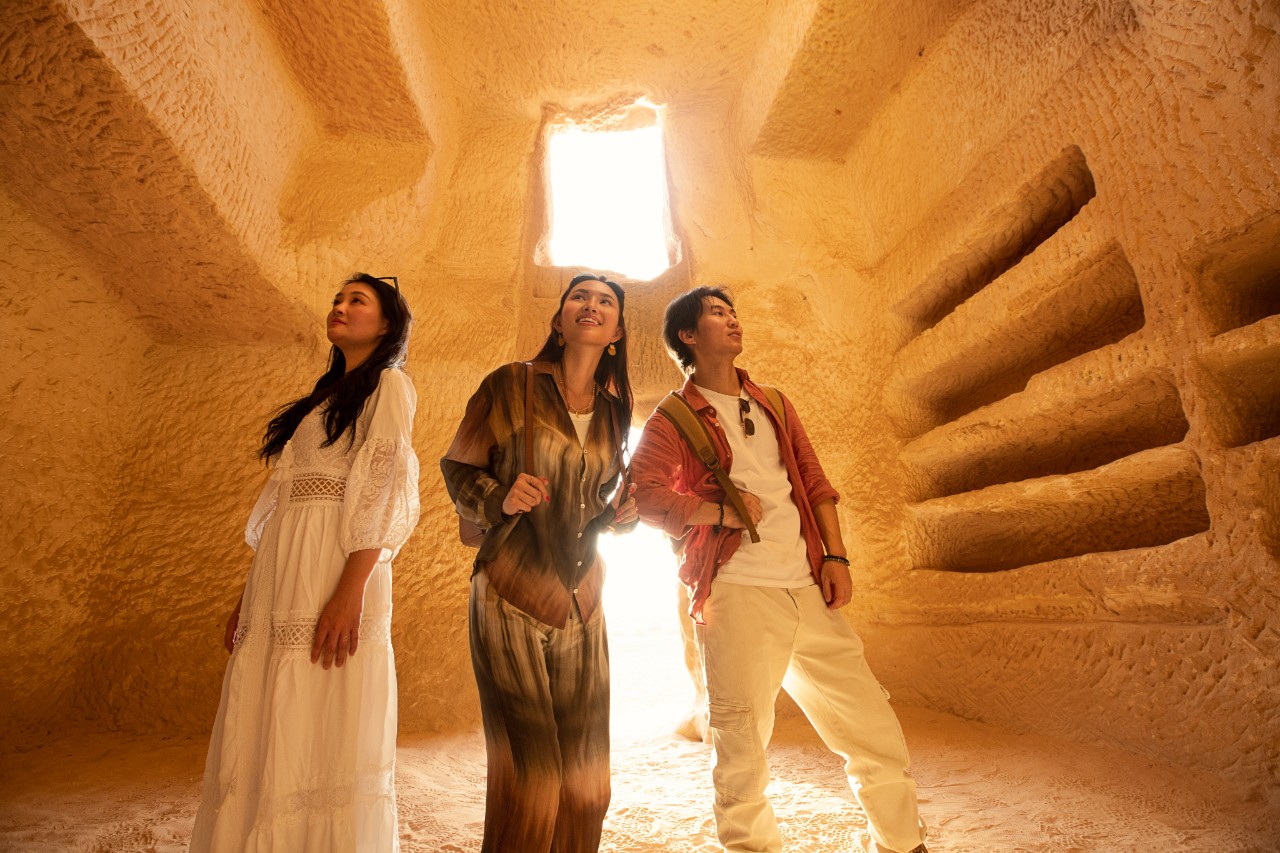
Visitors experiencing the golden light inside a Hegra tomb

Witness the Unseen

Access to Hegra and Dadan is strictly regulated to preserve the sites. Our heritage experts can secure your permits and private Rawi (storyteller) guides.

UNESCO World Heritage Site · Est. 2008

trust.sourcesReferences

  1. [1]
    Royal Commission for AlUla — Royal Commission for AlUla (trust.accessed 15 مارس 2026)
  2. [2]
    UNESCO World Heritage Centre — UNESCO (trust.accessed 15 مارس 2026)

Hegra is just one part of AlUla's extraordinary heritage. Discover the full AlUla destination guide for Maraya, the Old Town, and the oasis. Hegra is one of Saudi Arabia's UNESCO World Heritage Sites — explore all of them. For deeper cultural immersion, see our cultural tours guide and the broader art and culture scene. Capture the experience with tips from our photography guide. For more remote wonders, explore Saudi Arabia's hidden gems.

Last updated: 2026-01-22