Saudi Arabia Hidden Gems: 7-Day Itinerary
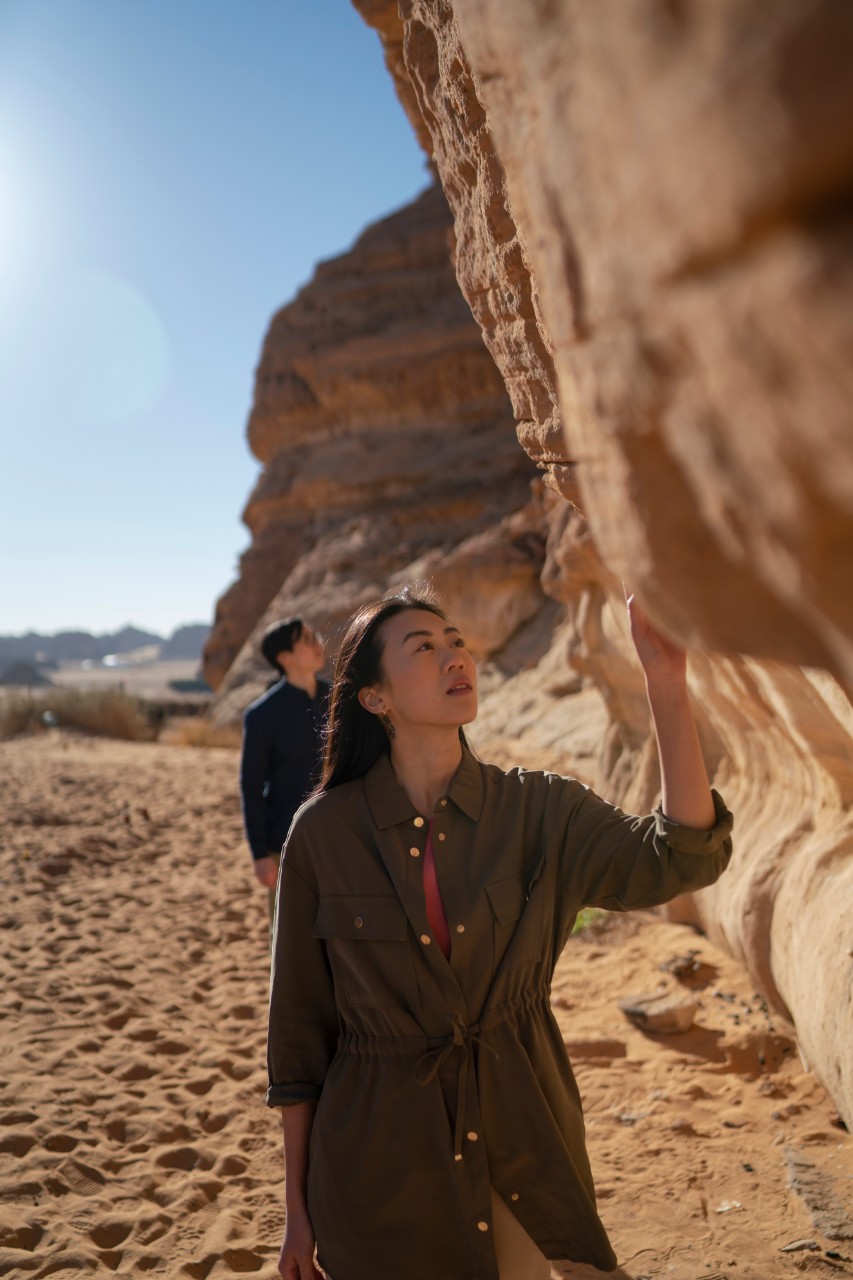
7-day off-the-beaten-path Saudi Arabia itinerary: Jubbah rock art, Wadi Disah, Umluj's islands — plus how 2026 advisories affect the Farasan Islands leg.
Key Takeaways
- Route at a glance: fly Riyadh–Hail for the Jubbah petroglyphs (Day 1), drive to Tabuk for Wadi Disah or Tayyib Al Ism (Days 2–3), then follow the coast through Al Wajh and Umluj to Jeddah (Days 4–7).
- Jubbah's Jabal Umm Sinman is UNESCO-listed, with carvings up to 10,000 years old — visit in late-afternoon light with a local guide arranged in Hail.
- 2026 advisory: the US lists Jizan, Najran, Abha and Khamis Mushayt plus the 50-mile Yemen border zone as do-not-travel, so the classic Farasan Islands ending is on hold — Umluj's islands are the working substitute.
- A 4x4 or hired driver (SAR 800–1,500 per day) is only essential for Wadi Disah and the Hisma; every coastal leg is sealed road, fine in any rental car.
- Budget anchors: guesthouses SAR 250–500 a night, mid-range hotels SAR 400–800, meals SAR 40–100, shared island boats from SAR 300 per person.
- Go between October and April — summer highs in Hail and Tabuk regularly pass 40°C.
Most first trips to Saudi Arabia follow the same triangle: Riyadh, AlUla, Jeddah. This seven-day route goes elsewhere — to the 10,000-year-old rock carvings of Jubbah, the sandstone canyons of the Tabuk region, and the quiet northern Red Sea coast between Al Wajh and Umluj, where fishing boats still outnumber tour groups. It suits second visits, or first-timers who would rather watch petroglyphs catch the sunrise than queue for a photo stop. For a broader overview of the places this route draws on, see our guide to Saudi Arabia's best-kept secrets.
Two practical notes before the day-by-day. First, the route relies on one domestic flight and some long desert drives, so it works best with a rental car — and a 4x4 or local driver for the Tabuk canyon days. Second, the classic version of this itinerary ended in the far southwest, on the Farasan Islands. In 2026 that leg needs an honest security caveat, which you will find below, together with a Red Sea alternative that keeps the week intact.
The 2026 Advisory Situation, in Plain Terms
Since spring 2026 the US State Department has held Saudi Arabia at Level 3 (reconsider travel) country-wide, and it places the far southwest — everywhere within 50 miles of the Yemen border, plus the cities of Jizan, Najran, Abha and Khamis Mushayt — under a stricter do-not-travel designation. Several other Western governments take a similar line on the border region. The Farasan Islands are reached by ferry from Jizan port, so the traditional final leg of this route sits inside that zone.
Daily life there continues and domestic flights still run, but travel insurance is usually void in areas under a do-not-travel advisory, and guidance can change in either direction. Check your own government's current advice before booking anything — our Saudi Arabia safety guide explains how to read and monitor the advisory system. Everything else on this route — Riyadh, Hail, Jubbah, Tabuk and the northern Red Sea coast — lies well outside the named zones. That is how the 2026 version of this itinerary is built: the coast north of Yanbu carries days four to seven, and Farasan stays in as a swap-in ending for when the situation eases.
Quick Facts
- Best months: October to April. Summer highs in Hail and Tabuk regularly pass 40°C. Our month-by-month guide has the details.
- Visa: Citizens of 66 eligible countries can apply online for the one-year, multiple-entry eVisa. It costs SAR 535 including mandatory insurance and allows stays of up to 90 days.
- Money: The riyal is pegged at 3.75 SAR to 1 USD. Cards work almost everywhere; carry cash for village shops and harbour kiosks.
- Getting around: Fly Riyadh–Hail, then drive. A 4x4 is needed only for Wadi Disah and the Hisma desert; every coastal leg is sealed road.
- Alcohol: Banned throughout the country, with no exceptions for tourists. Plan around very good coffee instead.
Day 1: Riyadh to Hail and the Rock Art of Jubbah
Fly Riyadh to Hail in about 90 minutes — one-way fares typically run SAR 300–500 — pick up your car, and drive roughly 90 km northwest to Jubbah, a small oasis town on the edge of the Nefud desert. The reason to come is Jabal Umm Sinman, the sandstone outcrop just outside town whose faces carry one of the densest collections of ancient rock art in the Middle East. The carvings, UNESCO-listed since 2015 as part of the Rock Art in the Hail Region site, span up to 10,000 years: life-size camels, ibex, hunters with bows, and herds of cattle from the millennia when this desert was grassland.
Come in the late afternoon, when low light throws the engravings into relief and the site is at its quietest. A local guide — most Hail hotels and Jubbah guesthouses can arrange one — turns a scramble over rocks into a readable timeline, pointing out which panels are Neolithic and which are Thamudic script added thousands of years later. Sleep in Jubbah or back in Hail: guesthouses run about SAR 250–500 a night, mid-range hotels SAR 400–800.
Days 2–3: Tabuk — Wadi Disah, the Hisma and Tayyib Al Ism
Day 2 is the long one. The highway from Hail to Tabuk crosses roughly 640 km of open desert — six to seven hours with fuel and coffee stops, and the petrol stations thin out mid-route, so fill up when you can. If you would rather not drive it, one-stop flights via Riyadh or Jeddah exist, but you lose most of the day either way. Arriving in Tabuk city, you have time for the restored Ottoman-era Tabuk Castle, built in 1559 on the old pilgrim road from Damascus, before dinner. Tabuk has proper mid-range hotels in the SAR 400–800 range and makes a comfortable two-night base.
Day 3 belongs to the canyons, and you have to choose — the two best sites sit in opposite directions and each fills a day. Option one is Wadi Disah, about two and a half to three hours south: a valley where springs feed date-palm thickets between sandstone walls several hundred metres high, with Nabataean and Thamudic traces cut into the rock. The final stretch into the wadi is soft sand and needs a 4x4; hiring a local driver for the day costs roughly SAR 800–1,500 and removes the recovery-shovel risk. Option two is Tayyib Al Ism, about two and a half hours northwest near Magna: a granite cleft on the Gulf of Aqaba where a freshwater spring runs between cliffs a few metres apart, above water so clear the reef reads from the shore. Between the two, drivers with one day usually pick Disah for the scale; snorkellers pick Tayyib Al Ism. The Hisma desert — red sand and freestanding sandstone towers along the Tabuk–NEOM road — works as a shorter add-on to either if you start early.
Day 4: Down the Coast to Al Wajh
Leave Tabuk after breakfast for the 330 km run southwest to the coast. Al Wajh is the day's reward: a working harbour town whose old quarter is built from coral stone and shuttered timber, weathered rather than restored, a smaller and far quieter cousin of Jeddah's Al Balad. Walk the old town and corniche in the late afternoon, eat grilled fish near the harbour for SAR 40–80, and sleep simply — Al Wajh's hotel choice is modest, which is part of why the town still feels like itself.
Days 5–6: Umluj and the Islands
An easy 150 km south lies Umluj, the launch point for an archipelago of more than 100 islands scattered over shallow turquoise banks. This is the stretch of coast Saudi's tourism campaigns photograph most, yet outside holiday weekends the marina stays low-key: you arrange a boat the evening before, agree a route, and share the water with terns and the occasional dolphin pod rather than a flotilla. Shared day trips start around SAR 300 per person; a private boat for the day typically costs SAR 1,200–2,000 depending on distance and season. Snorkelling over the hard-coral gardens is the point — bring reef-safe sunscreen and, ideally, your own mask.
Use day 5 for a first island run and day 6 for the longer loops or a second morning on the water, with an afternoon on the mainland beaches. Our dedicated guide to the coves between Umluj and Al Wajh maps the specific bays, and our Red Sea beaches guide puts this coast in context against the rest of the coastline.
Day 7: South to Jeddah and Home
The final drive runs about 450 km south to Jeddah — five hours on a fast, sealed highway, with Yanbu's corniche as a natural lunch stop halfway. If your flight leaves late, spend the evening in Al Balad, Jeddah's UNESCO-listed old town; our Jeddah guide covers it in depth. Alternatively, Yanbu has its own airport with connections to Riyadh and Jeddah if you want to skip the last leg of driving.
The Farasan Islands: the Classic Ending, On Hold
Until 2026, days four to seven of this route pointed the other way: a flight south to Jizan, the free vehicle ferry across to Farasan — booking ahead is required — and two days among more than 170 islands, the coral-block merchant houses of old Farasan town, and the endemic Farasan gazelle. It remains one of the most distinctive places in the country, and our Farasan Islands guide keeps the full picture on record.
But the ferry leaves from Jizan, a named do-not-travel city in the current US advisory, and most travel insurance will not follow you there. Saudi and Gulf travellers still make the crossing; for most international visitors, Farasan is background reading and a reason to come back. When advisories ease, swap it straight back in for the Umluj days — the rest of the route does not change.
What the Week Costs
- Accommodation: SAR 250–500 per night in guesthouses, SAR 400–800 in mid-range hotels — call it SAR 2,100–4,500 for six nights.
- Flights and fuel: Riyadh–Hail from about SAR 300, plus roughly 1,600 km of driving; petrol remains cheap by global standards.
- Car: Self-drive rentals from about SAR 250–400 per day; a 4x4 with driver for the canyon day SAR 800–1,500.
- Boats: SAR 300 per person shared, SAR 1,200–2,000 private, per day on the water.
- Food: SAR 40–100 per person for a proper meal almost everywhere on this route.
A realistic mid-range total lands around SAR 5,500–9,000 per person for the week before international flights. Our Saudi Arabia trip cost guide breaks down where each riyal goes and where to trim.
Practical Notes
- Dress modestly — covered shoulders and knees for everyone. The abaya has not been required for foreign women since 2019.
- Ask before photographing people, and skip photos of anything that looks governmental or military, especially near the coast.
- Buy a local SIM (STC, Mobily or Zain) at Riyadh airport and download offline maps before Tabuk — coverage drops in Wadi Disah and the Hisma.
- Prayer-time closures pause shops for 20–30 minutes; restaurants mostly carry on. Friday mornings are the quietest hours of the week.
- Book Jubbah guides, Disah drivers and Umluj boats a day ahead rather than on arrival — none of these places runs on walk-up tourism yet.
Ready to shape this route around your own dates?
Shift the days, drop a canyon, or hold the Farasan ending for a later trip — the Trip Planner lets you build the week stop by stop, and our hotel guide covers the guesthouses and coastal stays this itinerary depends on.
Frequently Asked Questions
- Is this itinerary affected by the 2026 travel advisories?
- The legs this route actually uses — Riyadh, Hail, Jubbah, Tabuk, Al Wajh, Umluj and Jeddah — sit outside the areas named in the US do-not-travel designation, which covers the 50-mile Yemen border zone plus Jizan, Najran, Abha and Khamis Mushayt. The optional Farasan Islands ending requires transiting Jizan, so it is on hold for most international visitors. Check your own government's current guidance before booking.
- How do I get to the Jubbah rock art?
- Fly Riyadh to Hail (about 90 minutes, typically SAR 300–500 one way), then drive roughly 90 km northwest to Jubbah. The UNESCO-listed carvings at Jabal Umm Sinman are just outside town; a local guide arranged through your Hail hotel or Jubbah guesthouse makes the panels far more readable.
- Can I still visit the Farasan Islands?
- The vehicle ferry from Jizan is free and still runs, with advance reservation required. However, Jizan is a named do-not-travel city in the current US advisory, and travel insurance is usually void in such areas, so most international visitors should treat Farasan as a future trip. Saudi and Gulf residents continue to visit.
- Do I need a 4x4 for this route?
- Only for the final sandy stretch into Wadi Disah and for the Hisma desert. Hiring a 4x4 with a local driver for that day costs about SAR 800–1,500. The Hail–Tabuk highway and the whole coastal road from Al Wajh through Umluj to Jeddah are sealed and fine in any rental car.
- What visa do I need for Saudi Arabia?
- Citizens of 66 eligible countries can apply online for the one-year, multiple-entry eVisa, which costs SAR 535 including mandatory health insurance and allows stays of up to 90 days per visit. A visa on arrival is available for the same group at around SAR 480, but the online route avoids queueing after landing.