
Where the Earth
Meets the Cosmos
Journey to one of the darkest places on the planet. Witness a sky unpolluted by modern light, framed by geological giants carved by the wind.
In the Saudi desert, the night is not dark; it is alive. Far from the city lights, the sky reveals itself as our ancestors saw it—a dense tapestry of constellations, planets, and the cloudy arm of the Milky Way. But the drama isn't just above. The landscape itself, sculpted by millions of years of wind and water erosion, creates a surreal theater. Here, massive sandstone pillars rise from the sand like silent sentinels, creating silhouettes that spark the imagination and ground the observer in deep geological time.

Gharameel: The Dark Sky Sanctuary
Bortle Class 1 — The Darkest Skies in Arabia
Gharameel is a landscape that belongs on Mars. Located about an hour north of AlUla, this area is defined by thin, towering rock pillars that stretch endlessly into the darkness. It is widely considered the premier stargazing location in Arabia — and the data supports the reputation. Gharameel measures consistently at Bortle Class 1–2 on the light-pollution scale, placing it among the top one percent of dark-sky sites on Earth.
The geological formations here are not incidental to the experience — they are essential to it. These sandstone pillars, some reaching 40 metres, were sculpted by Paleozoic wind erosion over 500 million years. Their silhouettes against the Milky Way create images that professional astrophotographers travel from Europe and Japan to capture. The site is registered with the International Dark-Sky Association as a candidate sanctuary.
Access is from AlUla town (approximately 55 km north, 45-minute drive on tarmac then 10 minutes on graded desert track). The Royal Commission for AlUla (RCU) manages access — guided night tours depart at 8:30 pm from AlUla Experience Hub and last 3–4 hours. Photography workshops with professional astronomers and telescope sessions are available as add-ons. Pricing starts at SAR 350 per person for standard tours; astrophotography workshops run SAR 900–1,400 for small groups of 4.
The Guided Experience
There is no artificial light here. Under the guidance of a certified Falak (astronomer) guide, you will learn to navigate by the stars exactly as the Bedouin did across these same sands for millennia. The silence is absolute — broken only by the wind whistling through the stone columns. With a professional telescope, you can see Jupiter's four Galilean moons as distinct points of light, the rings of Saturn in clear resolution, and the dust lanes of our galaxy with startling detail. On moonless nights from November to February, the Milky Way core dominates the entire southern horizon.
Elephant Rock (Jabal AlFil)
Saudi Arabia's Most Iconic Geological Monument
The icon of AlUla's geology. Standing 52 metres high, this monolith was shaped by millions of years of wind and water erosion from rose-red Hisma sandstone into the unmistakable profile of an elephant with its trunk touching the ground. By day it is a geological marvel and a photographer's anchor. By night, it becomes one of Saudi Arabia's most extraordinary stargazing venues.
Sunken seating areas — carved into the sand to sit below the ambient temperature layer and avoid any reflected light pollution — surround the base of Jabal AlFil. From these positions, you watch the stars rotate around this ancient giant across a three-hour arc, the Orion belt rising above the elephant's back in winter. The juxtaposition of a 500-million-year-old rock formation and a 13-billion-year-old galaxy in the same frame creates a scale that defies rational comprehension.
Elephant Rock is accessible to all fitness levels — it is a 10-minute walk from the car park across flat sand. The on-site café (Akhwan at Elephant Rock) serves Arabic coffee, dates, and light bites until 10 pm, making it ideal for combining a sunset visit with an evening astronomy session. Night access is included in the standard AlUla Night Sky Experience ticket (SAR 250–350 per person), available through the Seasons of AlUla app.
The Arch (Rainbow Rock)
Framing the Milky Way Through Ancient Sandstone
Located on a vast plateau 20 kilometres east of AlUla, this natural sandstone bridge — locally called Rainbow Rock for the layered mineral striations visible at close range — spans approximately 15 metres across and stands 10 metres at its apex. It is one of the most photographed geological formations in the Kingdom, and the most technically challenging to access, requiring a 4WD vehicle and a 20-minute desert track from the tarmac road.
During the day, the sun casts moving shadows across sedimentary strata of deep red, ochre, and cream — each layer representing a different geological epoch in the Cambrian to Jurassic sequence. The effect changes by the hour as the angle shifts. At night, the arch becomes a natural frame for astrophotography: aligning the Milky Way core through the opening requires arriving precisely at the right season and moon phase, which is why this is considered the 'holy grail' shot for desert astrophotographers visiting Saudi Arabia.
The optimal window for Milky Way arch photography is March–May (galaxy visible from 11 pm) and August–October (visible from 9 pm). Moonless nights — check lunar calendars carefully — are essential. Guided astrophotography tours specifically to The Arch depart from AlUla twice monthly during peak season, led by certified guides; typical cost SAR 700–1,100 per person including transport and basic equipment. Self-guided access is possible but requires a local guide or RCU-registered tour operator for desert safety compliance.
Astrophotography Settings
Professional astrophotographers recommend a wide-angle lens (14–24 mm), f/2.8 or faster aperture, ISO 1600–3200, and a 20–25 second exposure to capture the Milky Way through the arch without star trails. A remote shutter release and carbon-fibre tripod are essential on the desert surface. AlUla guides can position you at the precise angle — approximately 15 metres southwest of the arch's east column — for the alignment to work.
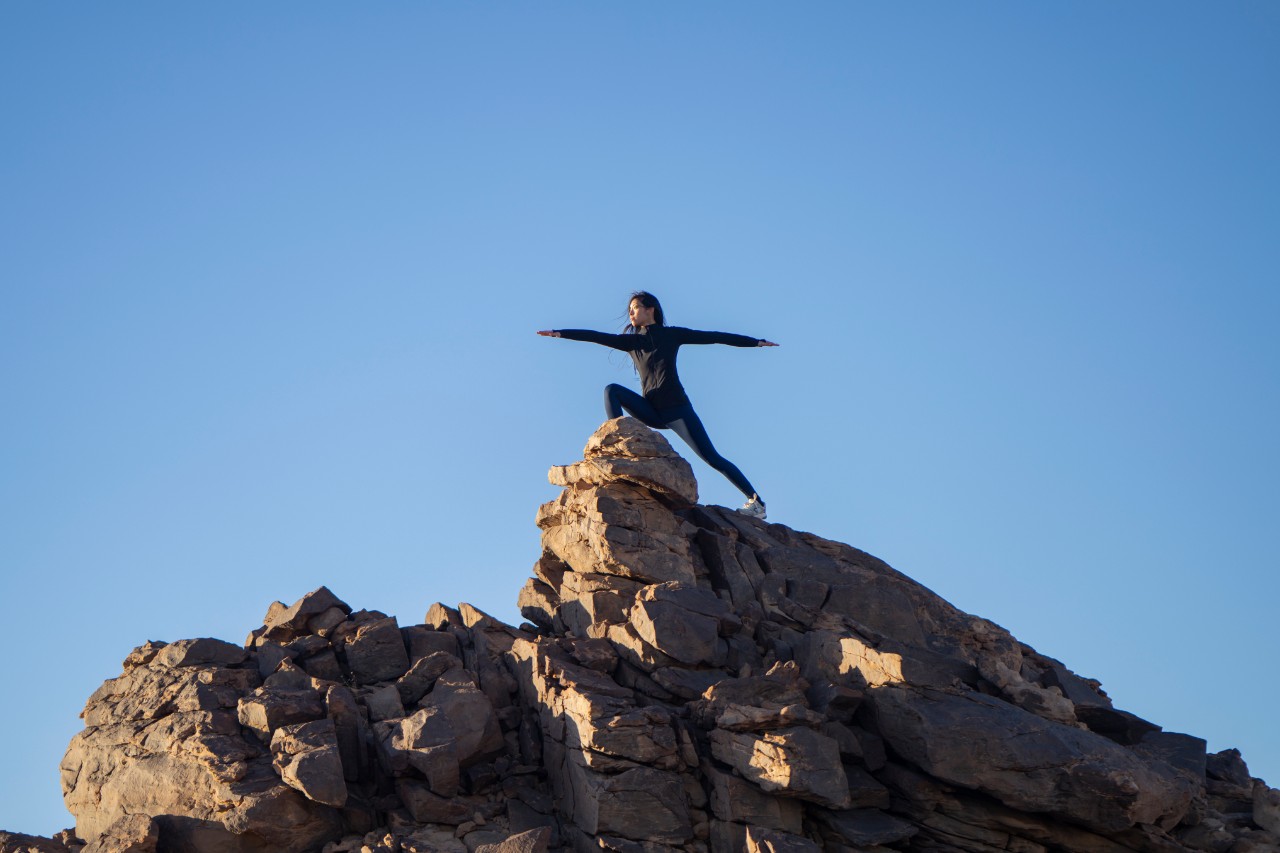
Geological Wonders of the Sharaan Reserve
Where the Arabian Leopard Watches the Stars
The Sharaan Nature Reserve is a 3,500-square-kilometre protected canyon system of red rock, golden dunes, and sheer sandstone walls rising 200 metres from the valley floor. It is the largest protected area in AlUla governorate and shelters the critically endangered Arabian Leopard — one of fewer than 200 remaining in the wild. Jean Nouvel's Sharaan Resort, carved directly into the canyon walls, is planned as the region's most immersive accommodation.
The 'Dancing Rocks' — formations that appear to sway and twist due to differential erosion at their bases — are a testament to the power of wind across geological time. The reserve also protects Nubian Ibex, Arabian oryx, and over 40 resident bird species. Staying here is an exercise in pareidolia: every cliff face suggests a face, a crouching beast, or a fortress wall. The canyon acoustics at night — wind through rock chimneys, distant animal calls — create a soundscape as extraordinary as the visual one.
Access to Sharaan's interior is managed by the RCU; guided geology and wildlife walks depart at dawn and dusk from the Sharaan Reserve entrance gate (35 km from AlUla town). Night stargazing sessions within the canyon — offering the additional drama of canyon walls framing a narrow corridor of stars — are available by advance booking only, SAR 450–600 per person. The complete absence of artificial light within the canyon walls creates conditions approaching Bortle Class 1 even without the open-sky advantage of Gharameel.
Wildlife & Geology Combined
Dawn astronomy sessions in Sharaan offer a rare dual experience: as the stars fade, the canyon walls turn deep amber, then gold, then blinding white as the sun crests the ridge — a transition from star field to geological theatre in under 30 minutes. On lucky mornings, Nubian Ibex can be spotted on the canyon walls above, silhouetted against the dawn sky. This combination of astronomical and wildlife observation in a single sitting is unique among Saudi Arabia's stargazing locations.
Planning Your Visit
Everything You Need to Know
Stargazing in Saudi Arabia requires planning — the right moon phase, the right month, the right guide. Here is the information that makes the difference between a good night and an unforgettable one.
Best Months
October – April. Milky Way core visible March–October. Avoid June–August (heat + haze). December–January peak for clarity.
Timing
Tours depart 8:00–8:30 pm, run 3–4 hours. Moonless nights are critical — check the lunar calendar before booking.
Temperature
Desert nights drop to 5–12°C in winter. Bring a warm layer even in October. Summers (June–Aug) remain 28–32°C at night.
Photography
14–24 mm wide lens, f/2.8, ISO 1600–3200, 20-second exposure. Tripod essential. Guides can recommend exact positions.
Pricing
Standard night tour: SAR 250–400/person. Astrophotography workshop: SAR 900–1,400. Private group (4): from SAR 1,800 total.
Getting There
AlUla International Airport has direct flights from Riyadh (2hrs) and Jeddah (1.5hrs). Tours depart from AlUla Experience Hub in town.
Hotels with Stargazing Experiences
AlUla's best resorts integrate dark-sky astronomy into the guest experience
Banyan Tree AlUla
From SAR 2,200/night
Private astronomy evenings + Gharameel access
View HotelBuild Your AlUla Stargazing Itinerary
Add Gharameel, Elephant Rock, and your preferred hotel to your personalised Saudi Arabia trip — and let our planner sequence the logistics automatically.
Strategic Context
Regional Tourism Relevance
Saudi Arabia's northwestern desert corridor — spanning AlUla, Tabuk, and the Hisma plateau — records some of the darkest night skies in the Middle East, with Bortle Scale ratings of 1–2 in remote locations. Combined with sandstone formations dating back 500 million years, this region offers a dual proposition: observatory-grade astronomical observation alongside Paleozoic-era geological sites. The area's inclusion in multiple international dark-sky preservation databases has attracted astrophotography professionals and astronomical societies from Europe, Japan, and North America.
Cultural Importance
Star navigation was essential to pre-Islamic Arabian culture, with constellations serving as both wayfinding tools and poetic metaphors in classical Arabic literature. The Nabataean civilisation at Hegra aligned architectural elements with celestial events, suggesting astronomical knowledge integrated into their urban planning. Saudi Arabia's rock formations — from the mushroom-shaped pillars of Gharameel to the iconic Elephant Rock — have served as landmarks and gathering points for millennia, their shapes embedded in local oral traditions and place-naming conventions that persist to this day.
Infrastructure Evolution
AlUla's transformation under the Royal Commission for AlUla (RCU) has created purpose-built stargazing infrastructure including observatory-grade viewing platforms, guided night-sky programmes, and light-pollution management protocols. The region's luxury hospitality offerings — Banyan Tree AlUla, Habitas AlUla, and the forthcoming Aman resort — integrate stargazing as a core guest experience. Improved air connectivity through AlUla International Airport and the planned high-speed rail link to Medina will further reduce access barriers for international astronomical tourism visitors.
Vision 2030 Alignment
Astrotourism aligns with Vision 2030's emphasis on experiential and sustainable tourism. The Royal Commission for AlUla's mandate explicitly includes dark-sky preservation as part of its environmental stewardship framework, making Saudi Arabia one of few nations integrating astronomical heritage into national tourism policy. The Kingdom's investment in space science — including the Saudi Space Commission and planned lunar missions — creates institutional synergies between scientific research and tourism promotion, positioning stargazing experiences within a broader narrative of Saudi technological ambition.
Visitor Profiles
Stargazing and geological tourism attracts astrophotography professionals seeking Bortle 1-2 dark skies; geology and earth science academics studying Arabian Shield formations; luxury travellers seeking desert-night experiences at Habitas and Banyan Tree AlUla; adventure hikers exploring sandstone canyon systems; and cultural history travellers tracing Nabataean and Thamudic inscriptions found on rock surfaces throughout the region. The September-to-April window provides optimal viewing conditions, with the Milky Way core visible from March through October.
Questions & Answers
Stargazing in Saudi Arabia
Everything You Need to Know
沙漠之夜
Stargazing is an essential part of the desert adventure experience. Combine night skies with Bedouin hospitality — desert camps offer the darkest skies and cultural immersion. AlUla is one of the world's premier stargazing destinations. For more remote options, explore off-the-beaten-path desert locations. Our photography guide covers astrophotography tips for desert conditions. Check the weather guide for clear-sky seasons.
trust.sourcesReferences
- [1]
- [2]
为何这些信息可靠
Explore Saudi is an independent Saudi Arabia travel intelligence platform focused on structured discovery, cultural context, and long-term tourism transformation under Vision 2030.
我们的内容框架基于
- 官方旅游数据
- 政府公告
- 地区发展项目
- 文化遗产文献
- 实地行程逻辑
We do not aggregate generic listicles. We build layered travel architecture.
For partnership inquiries or data validation requests: partners@explore-saudi.com
Look Up and Wonder
Experience the dark-sky privilege of Gharameel and Elephant Rock — guided by certified Falak astronomers, under skies rated Bortle Class 1.
Tours from SAR 250 per person · Astrophotography workshops from SAR 900 · Private groups available
All stargazing experiences are conducted in partnership with RCU-certified Falak guides · Book via Seasons of AlUla app