Wildlife and Nature Reserves in Saudi Arabia: Who Manages What, and What You Can See
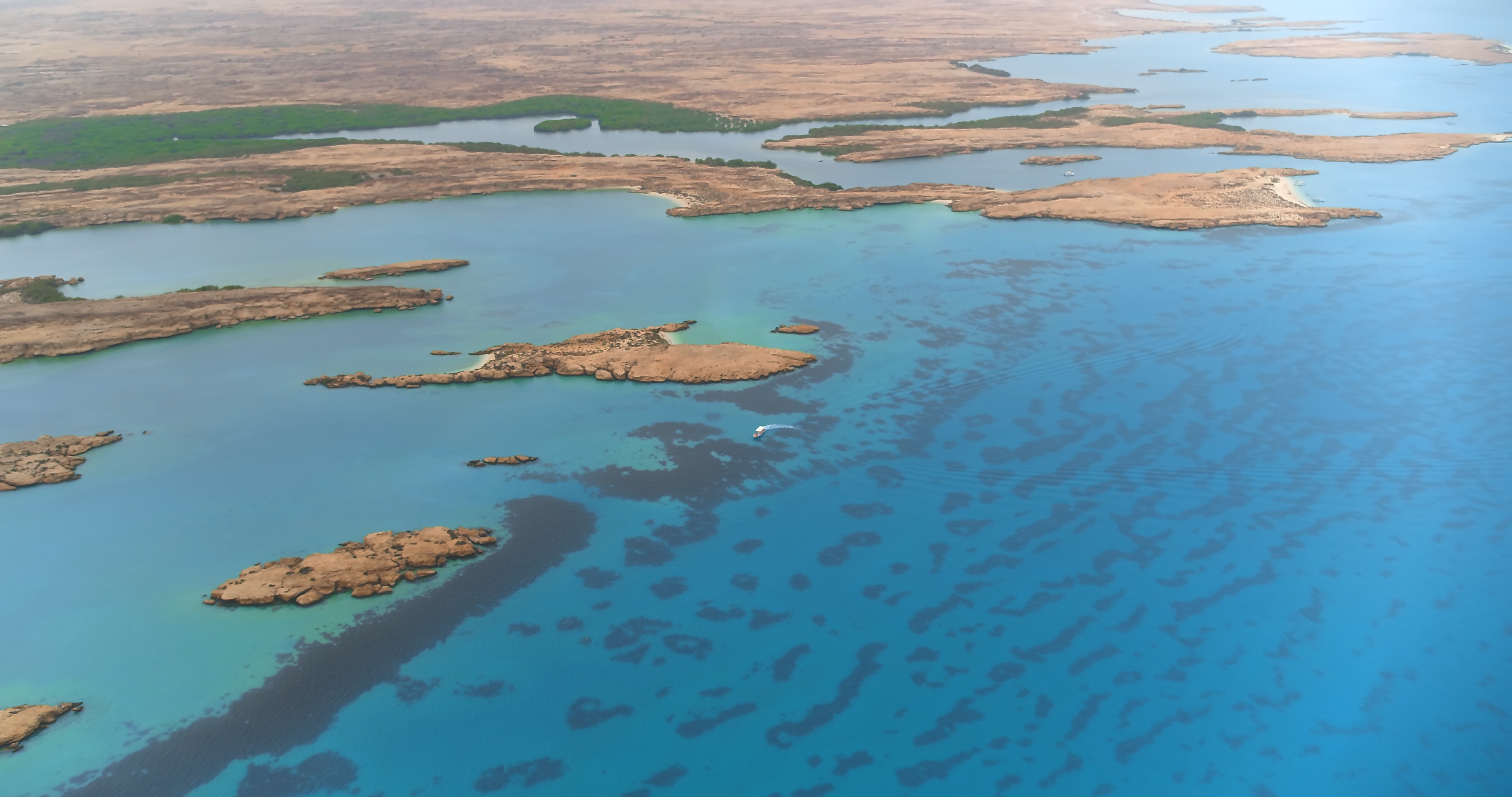
A guide to Saudi Arabia's nature reserves: Uruq Bani Ma'arid (UNESCO 2023), the 130,700 km2 King Salman Royal Reserve, Sharaan in AlUla, and the Red Sea marine areas.
L'essentiel à retenir
- Conservation runs on two parallel systems: eight royal reserves created by royal decree in 2018, and the protected areas managed by the National Center for Wildlife. Each sets its own access rules.
- Uruq Bani Ma'arid became Saudi Arabia's first natural UNESCO World Heritage Site in 2023 - inscribed property 1,276,500 hectares, criteria (vii) and (ix).
- King Salman bin Abdulaziz Royal Reserve is the largest at 130,700 km2, about 6.1% of the country, across four northern provinces.
- Sharaan Nature Reserve in AlUla (1,540 km2) is the most visitor-ready reserve, open through guided tours and defined trails.
- Flagship mammals - Arabian oryx, sand gazelle, Nubian ibex - are recovering, not abundant. Birds and Red Sea reef are the dependable wildlife viewing.
- There is no single national permit. Identify the managing body first, then check its current guidance.
Conservation in Saudi Arabia runs on two tracks, and confusing them is the fastest way to plan a trip you cannot take. One track is the royal reserves, eight areas established by royal decree in 2018, each with its own development authority and its own board. The other is the network of protected areas managed by the National Center for Wildlife (NCW). They overlap in places, they publish different figures for the same ground, and each sets its own access rules.
This guide covers what each system protects, which reserves currently accept visitors, and what you can realistically expect to see.
Uruq Bani Ma'arid: The Country's First Natural World Heritage Site
In 2023, UNESCO inscribed 'Uruq Bani Ma'arid on the World Heritage List under criteria (vii) and (ix) — the first natural site in Saudi Arabia to be listed. The inscribed property covers 1,276,500 hectares with an additional 80,600-hectare buffer zone. The National Center for Wildlife lists the same reserve at 12,693 km²; the two figures describe slightly different boundaries, so quote whichever body you are dealing with.
The site is the western edge of Ar-Rub' al-Khali, the Empty Quarter — the largest continuous sand sea on Earth. Its conservation significance rests on the reintroduction of the Arabian oryx, which was extinct in the wild before captive-bred animals were returned here. Sand gazelle and mountain gazelle populations sit alongside them.
The Royal Reserves
Eight royal reserves were created by royal decree in 2018, several of them by merging or renaming older protected areas. The three that matter most for visitors:
King Salman bin Abdulaziz Royal Reserve
The largest in the Kingdom. The IUCN Green List records it at 130,700 km² — around 6.1% of Saudi Arabia's total area — spanning four provinces: Northern Borders, Tabuk, Hail and Al Jouf. It was first listed by the IUCN Green List in 2024 and is classified IUCN Category VI, a protected area with sustainable use. It absorbed three earlier reserves, including Al-Khanfa and Al-Tubaiq.
Prince Mohammed bin Salman Royal Reserve
The reserve authority states it covers 24,500 km² of terrestrial and marine area in the northwest, headquartered in Al Wajh, with over 85% of its staff drawn from communities inside the reserve. Its stated ambition is a desert conservation and heritage tourism destination. Wadi al-Disah, the canyon system near Tabuk, falls within its geographic scope — which is why access there is governed by the reserve rather than being open by default.
Sharaan Nature Reserve, AlUla
Managed by the Royal Commission for AlUla, Sharaan covers 1,540 km² and is the most visitor-ready of the group. The Commission states it welcomes visitors through guided tours and trails, under guidelines designed to limit impact. It protects gazelles, reintroduced Arabian oryx and acacia woodland. If you want to walk in a Saudi reserve on a defined itinerary rather than negotiate permits, this is the practical starting point.
The National Protected Areas
The National Center for Wildlife publishes a list of protected areas with their extents. The ones worth knowing by name:
- Juzur Farasan — 5,772 km². The Farasan archipelago in the Red Sea off Jazan: coral, mangrove and the endemic Farasan gazelle. Our Jazan and Farasan guide covers getting there.
- The Blue Holes Protected Area — 16,500 km². The largest marine area on the NCW list.
- Ras Hatiba — 4,995 km². Coastal wetland and reef north of Jeddah.
- Jubail Marine Protected Area — 2,400 km². Gulf coast, in the Eastern Province.
- Ibex Protected Area — 1,842 km². Named for the Nubian ibex it was established to protect.
- Nafud al-'Urayq — 2,034 km² and Sija and Umm ar-Rimth — 6,523 km². Interior desert and steppe.
- Jabal Shada al-A'la — 77 km². A small, botanically distinctive mountain reserve in Al Baha.
- Jurf Raydah — 10 km². The smallest terrestrial area on the list, in the Asir escarpment.
- Juzur Umm al-Qamari — 4.03 km². Two small Red Sea islands, protected for their breeding seabirds.
What You Can Realistically See
Saudi Arabia's flagship species are recovering, not abundant. The Arabian oryx, Arabian sand gazelle and Nubian ibex are the animals the reserves are built around, and sightings in the wild are a matter of guides, timing and luck rather than a scheduled attraction. The reliable wildlife experiences are different in character:
- Birds. The Kingdom sits on a major migration corridor between Africa and Eurasia. Coastal wetlands and the Asir escarpment are the productive ground, and spring and autumn passage are the seasons.
- Reef. The Red Sea is the most dependable wildlife viewing in the country, and the least dependent on permits. See our diving and snorkelling guide.
- Landscape at scale. For most visitors, the reserves deliver on emptiness and geology first, and on animals second. Set expectations accordingly.
Access: Ask the Managing Body, Not a Search Engine
There is no single national permit. Each royal reserve authority sets its own conditions, and the NCW sets others for the areas it manages. Some areas are open with a guide, some require advance permission, and some are closed to general visitors entirely. Conditions also change as development authorities build out visitor infrastructure.
The practical sequence: identify which body manages the area, check its current published guidance, and book through a licensed operator if independent access is not offered. For walking routes inside and around these areas, see our hiking guide.
Sources & Verification
Checked 21 August 2026 against the following primary sources:
- UNESCO World Heritage Centre — 'Uruq Bani Ma'arid (inscribed 2023; criteria (vii)(ix); property 1,276,500 ha; buffer zone 80,600 ha)
- National Center for Wildlife — Protected Areas (protected area list and individual extents)
- IUCN Green List — King Salman Royal Nature Reserve (130,700 km²; 6.1% of national area; four provinces; Category VI; first listed 2024)
- Prince Mohammed bin Salman Royal Reserve — About Us (24,500 km² terrestrial and marine; headquartered in Al Wajh)
- Royal Commission for AlUla — Sharaan Nature Reserve (1,540 km²; guided tours and trails; oryx, gazelles, acacia woodland)
- Saudipedia — List of Royal Reserves (eight reserves established by royal decree, 2018)
Where two official bodies publish different extents for the same ground, both figures are given above rather than averaged. Entry conditions and permit rules change; confirm with the managing authority before you travel.
Related Reading
- Jubbah and Hail — rock art in the Nufud, and the desert landscape around it.
Questions fréquentes
- How many nature reserves does Saudi Arabia have?
- There are two overlapping systems. Eight royal reserves were established by royal decree in 2018, each with its own development authority. Separately, the National Center for Wildlife publishes a list of national protected areas - 13 at the time of checking - with individual extents ranging from 4.03 km2 to 16,500 km2.
- What is Saudi Arabia's UNESCO natural World Heritage Site?
- Uruq Bani Ma'arid, inscribed in 2023 under criteria (vii) and (ix). It was the Kingdom's first natural World Heritage Site. The inscribed property covers 1,276,500 hectares with an 80,600-hectare buffer zone, on the western edge of the Empty Quarter, and is central to the reintroduction of the Arabian oryx.
- Which is the largest nature reserve in Saudi Arabia?
- The King Salman bin Abdulaziz Royal Reserve. The IUCN Green List records it at 130,700 km2 - around 6.1% of Saudi Arabia's total area - spanning the Northern Borders, Tabuk, Hail and Al Jouf provinces. It is classified IUCN Category VI and was first Green Listed in 2024.
- Can tourists visit Saudi Arabia's nature reserves?
- Some of them, on the managing body's terms. Sharaan Nature Reserve in AlUla is explicitly open through guided tours and trails. Others require advance permission or are closed to general visitors. There is no single national permit - identify which authority manages the area and check its current published guidance.
- Can you see Arabian oryx in the wild in Saudi Arabia?
- Yes, but not on demand. The oryx was extinct in the wild before captive-bred animals were reintroduced, notably at Uruq Bani Ma'arid and later at Sharaan in AlUla. Populations are recovering rather than abundant, so a sighting depends on a guide, the season and luck.
- What is the best wildlife experience in Saudi Arabia for a visitor?
- The Red Sea reef, by a distance - it is the most dependable and the least dependent on permits. After that, birdwatching on the Africa-Eurasia migration corridor, with coastal wetlands and the Asir escarpment the productive ground during spring and autumn passage.