Jubbah & Hail: Rock Art Chronicles and the Red Nufud Desert
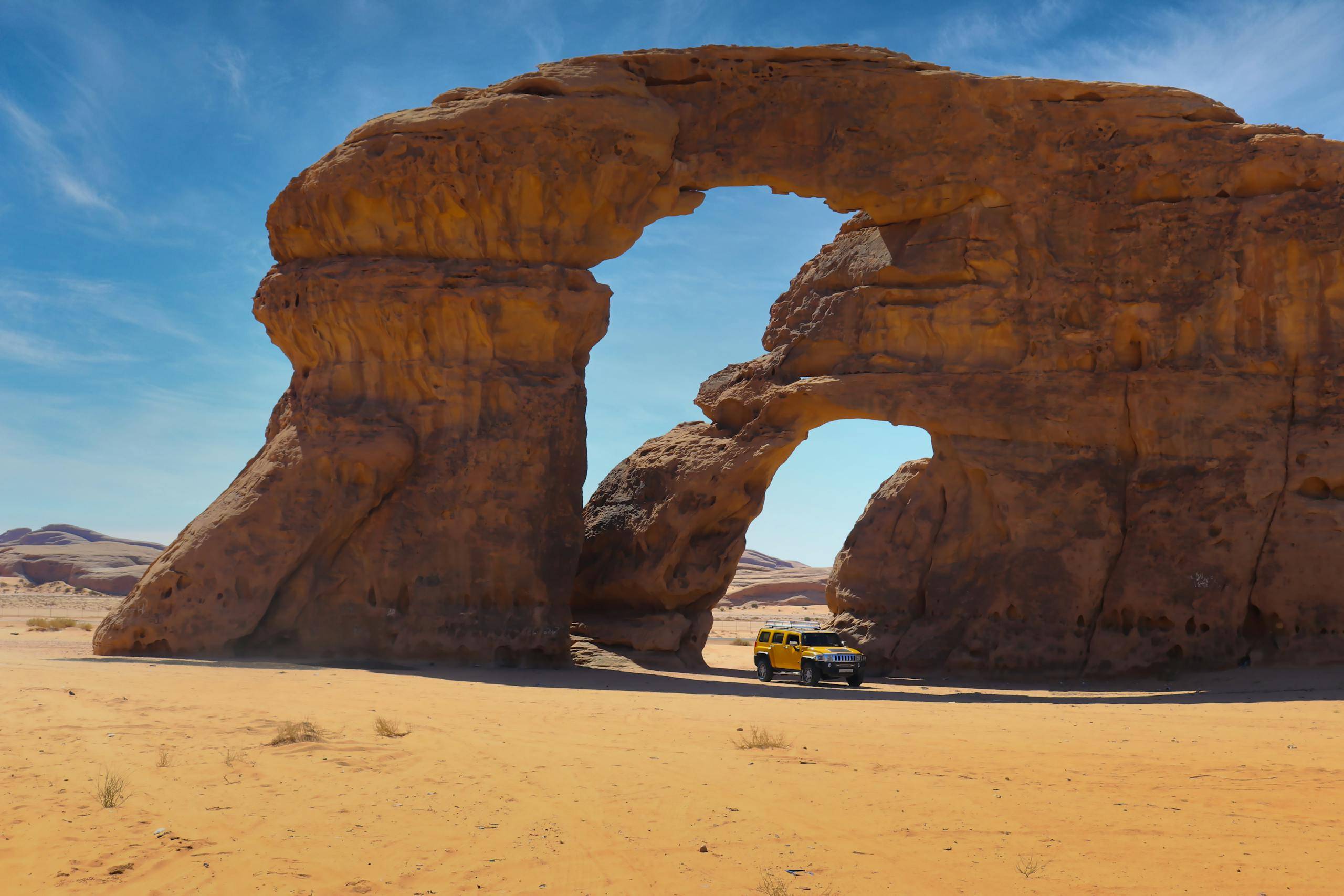
Explore 10,000-year-old rock art at Jubbah UNESCO site and camp in the red Nufud Desert. Includes Hail cuisine guide and expedition logistics.
Key Takeaways
- Jubbah's UNESCO-listed petroglyphs at Jabal Umm Sinman span about 10,000 years; entry is free, a visit takes 2-3 hours, and morning light is best for the main panels.
- Jubbah lies about 90 km northwest of Hail city on the southern edge of the Great Nufud Desert; visit October-April, as summer days exceed 44°C.
- Daily flights connect Riyadh and Hail in about one hour (from around SAR 160 one way); car hire from about SAR 150 per day, or book a Hail-based tour.
- Desert costs: dune drives from about SAR 400 per vehicle, camel rides SAR 150-250 per person, and overnight Nufud camps roughly SAR 800-1,200 per person.
- In Hail city, A'arif Fort at sunset, the Qishlah and the Regional Museum are the core sights; hotels run about SAR 250-600 per night.
- Saudi eVisa: citizens of 66 countries can apply online for SAR 535 (valid one year, multiple entry, up to 90 days per stay).
Jubbah & Hail: Rock Art and the Red Nufud Desert
Around 10,000 years ago, the land north of today's Hail city was savanna, with lakes, wild cattle and the hunters who followed them. Those hunters left a record: thousands of figures carved into the sandstone of Jabal Umm Sinman at Jubbah, now part of a UNESCO World Heritage Site. Add the red dunes of the Great Nufud Desert next door and the Najdi food culture of Hail, and you have one of Saudi Arabia's most rewarding trips beyond the main tourist circuit.
This guide covers how to see the petroglyphs properly, what a night in the Nufud actually costs, and how to use Hail city as your base — with prices and logistics for 2026.
Quick Facts for Your Trip
- Location: Jubbah is about 90 km northwest of Hail city, in Hail Province.
- UNESCO status: Part of "Rock Art in the Hail Region of Saudi Arabia", inscribed in 2015. The listing covers Jabal Umm Sinman at Jubbah plus Al-Manjor and Raat at Shuwaymis.
- Entry: The Jubbah site is managed by the Heritage Commission; entry is free.
- Best months: October to April. Winter days run 18–24°C; desert nights can drop below 5°C.
- Visa: Citizens of 66 countries can apply for the Saudi eVisa online — SAR 535 including mandatory health insurance, valid one year, multiple entry, up to 90 days per stay.
- Currency: Saudi Riyal (SAR); 1 USD ≈ 3.75 SAR.
- Dress: Modest clothing covering shoulders and knees. An abaya is not legally required for female tourists.
Jabal Umm Sinman: Reading the Rock
Jubbah is an open-air archive rather than a fenced-off monument. The main outcrop, Jabal Umm Sinman, rises from the desert floor west of Jubbah town, and its faces carry carvings spanning the Neolithic era to the early Islamic period — layered evidence of more than ten millennia of human presence.
Walk the marked paths and you'll spot oryx, ibex and camels, plus aurochs — wild cattle that disappeared from Arabia as the climate dried out. Human figures appear with bows, spears and elaborate headdresses, in hunting scenes and what archaeologists read as ritual dances. Signboards in Arabic and English explain the main panels, and a small visitor center adds context. Plan 2–3 hours on site, and go in the morning: the light hits the east-facing panels best, and there is little shade.
What to Look For
- Extinct fauna: Large aurochs figures point to a wetter Arabia; they are among the oldest carvings on the mountain.
- Layering: Newer carvings are cut over older ones — evidence the site stayed in use for thousands of years.
- Tools and dress: Bows, spears and headdresses help researchers date individual panels.
- Abstract marks: Geometric symbols whose meaning is still debated — possibly tribal markers or counting systems.
A local guide is worth arranging through your hotel or a Hail tour operator: the best panels are easy to miss, and guides know which rock faces catch good light at which hour. Never touch or wet the carvings — skin oils and water damage the dark surface patina that researchers use for dating.
The Red Nufud: Dunes and Desert Nights
The Great Nufud stretches across northern Saudi Arabia, and its southern edge runs close to the Jubbah road. Iron oxide gives the sand its rust-red color, strongest in the hour after sunrise and the hour before sunset — exactly when you want to be standing on a dune crest with a camera.
Tour operators in Hail run 4x4 dune drives, camel rides and overnight camps. Away from city light the desert sky is properly dark; on a moonless night the Milky Way is visible to the naked eye. If the budget allows, an overnight camp beats a day trip — dawn over red dunes is the image you came for.
Typical Prices (2026)
- Dune drive: from about SAR 400 per vehicle for a 2–3 hour session.
- Camel ride: SAR 150–250 per person for 1–2 hours.
- Overnight camp with meals: roughly SAR 800–1,200 per person; private glamping setups run SAR 2,000–4,000 per couple.
- Sandboarding: often included in dune tours, or rent a board on site.
Book desert trips with established operators, confirm the vehicle carries recovery gear and plenty of water, and skip the summer: from May to September, daytime temperatures in the Nufud regularly pass 44°C.
Hail City: Your Base
Hail sits on the old caravan and pilgrimage routes and is the natural base for Jubbah — about an hour's drive away, with hotels, restaurants and tour operators. It sees far fewer visitors than Riyadh or AlUla, which is part of its appeal; our separate Hail city guide goes deeper on the city itself.
In town, A'arif Fort — a mud-brick watchtower complex on a ridge — is the classic sunset spot, with views over the whole city. The Qishlah, a large 1940s courtyard fortress, and the Hail Regional Museum fill in the region's history from prehistory to the unification of Saudi Arabia. The traditional souq near the fort sells dates, spices, woven goods and pottery from local workshops.
Practicalities (2026)
- Getting there: Hail Regional Airport (HAS) has daily domestic flights — about one hour from Riyadh with one-way fares from around SAR 160, plus connections from Jeddah and Dammam. Driving from Riyadh takes 6–7 hours on good highways.
- Getting around: Taxis and ride-hailing apps work within the city. For Jubbah and the desert, hire a car (from about SAR 150/day), book a driver, or join a tour.
- Hotels: Mid-range chains such as Millennium and Golden Tulip run SAR 350–600 per night; simpler guesthouses SAR 250–450. Book ahead for winter weekends.
- City sights: A'arif Fort (free, best at sunset), the Qishlah, Hail Regional Museum and the Grand Souq.
Eating in Hail: Najdi Cooking
Hail is a good place to eat the food of the central region: slow-cooked, wheat- and rice-based dishes built for desert winters.
- Kabsa: spiced rice with lamb or chicken, the national dish — SAR 25–60 per plate in local restaurants.
- Gursan: thin wholewheat bread layered into a vegetable and meat broth; a specialty of the Hail region.
- Marqooq: rolled dough cooked in a meat and vegetable stew.
- Saleeg: creamy rice cooked in broth and milk, usually served with roast chicken.
- Harees: cracked wheat and meat cooked down to a porridge; a Ramadan staple available year-round.
- Dates and gahwa: Hail's oases grow good dates, and you will be offered them with cardamom-scented Arabic coffee more than once. Accept — it is the local welcome.
Traditional restaurants often serve meals on shared platters with floor seating. Eating with the right hand is customary; cutlery is always available if you ask.
Planning Your Trip
Route: The standard plan is two nights in Hail. Day one: Jubbah in the morning, Nufud dunes for sunset. Day two: A'arif Fort, the museum and the souq. Add a third night for a desert camp. Jubbah also slots neatly into a longer northern loop toward AlUla or Tabuk.
Visa: Apply for the eVisa at visitsaudi.com before you travel. Ensure your passport is valid for at least six months beyond your travel dates.
Packing: Breathable clothing for the day, a warm layer for desert evenings, closed walking shoes for the rocky site, sunscreen, a hat, a refillable water bottle, a power bank, and a headlamp if you are camping.
Site Etiquette
- Do not touch, climb on or wet the rock art, and leave no trace in the desert.
- Ask permission before photographing people, especially women.
- Dress modestly and be mindful of prayer times, when shops may close briefly.
- A few Arabic phrases — "salam alaikum" (hello), "shukran" (thank you) — go a long way.
Beyond Jubbah: Shuwaymis and the Wider Region
The second half of the UNESCO listing lies at Shuwaymis, several hours' drive south of Hail. The panels there are harder to reach and best visited with specialized transport arranged in advance, but they reward the effort: life-size camels, hunting scenes and some of the earliest known depictions of dogs — on leashes — anywhere in the world. If your schedule only allows one site, Jubbah is the accessible choice; if rock art is the reason you came, plan both.
Craft enthusiasts can ask their guide about visiting weaving and pottery workshops in Hail — a low-key way to meet locals and buy souvenirs directly from the people who make them.
Related Reading
- Saudi Desert Adventure: Dunes, Stars & Bedouin Culture
- Stargazing in Saudi Arabia: Desert Night Skies
- Best Kept Secrets of Saudi Arabia
Ready to put Jubbah on your route?
Hail pairs well with a Riyadh arrival or a northern loop toward AlUla — the free Trip Planner turns flights, driving times and a desert night into one itinerary, and our hotel guide covers where to sleep along the way.
Frequently Asked Questions
- What makes Jubbah's rock art significant?
- Jabal Umm Sinman at Jubbah carries thousands of petroglyphs spanning roughly 10,000 years, from Neolithic hunting scenes to early Islamic inscriptions. Together with Shuwaymis, it forms the 'Rock Art in the Hail Region' UNESCO World Heritage Site, inscribed in 2015. Entry is free.
- How do I get to Jubbah?
- Fly to Hail Regional Airport - about one hour from Riyadh, with one-way fares from around SAR 160 - then drive roughly 90 km northwest to Jubbah. Hire a car from about SAR 150 per day, book a driver, or join a tour from Hail; a local guide helps you find the best panels.
- When is the best time to visit Jubbah and the Nufud Desert?
- October to April. Winter days run a comfortable 18-24°C, though desert nights can drop below 5°C. From May to September daytime temperatures regularly exceed 44°C, which rules out midday site visits and most desert camping.
- What does a Nufud desert trip cost?
- Dune drives start around SAR 400 per vehicle for 2-3 hours, camel rides cost SAR 150-250 per person, and overnight camps with meals run roughly SAR 800-1,200 per person. Private glamping setups cost SAR 2,000-4,000 per couple.
- Is Hail city worth a day?
- Yes. A'arif Fort is the sunset viewpoint, the Qishlah fortress and Hail Regional Museum cover the region's history, and the souq sells dates and local crafts. Hail is also the place to try Najdi dishes like kabsa and gursan at local prices.