Saudi Arabia for Solo Travelers
Solo travel in Saudi Arabia in 2026: safety, dress code, alcohol laws, eVisa at SAR 535, Riyadh Metro from SAR 4, and the best destinations for going alone.
Key Takeaways
- Saudi Arabia opened to independent leisure travellers only in September 2019. The tourist eVisa costs SAR 535 via visa.visitsaudi.com, covers 66 nationalities, allows multiple entries for a year and stays up to 90 days.
- The abaya has not been required for foreign women since 2019. The standard is modesty: loose, opaque clothing covering shoulders and knees. Hair covering is required only inside mosques.
- Alcohol is illegal for everyone in Saudi Arabia, including tourists. There is no licensed hotel bar; the only exception is a store for non-Muslim diplomats in Riyadh's Diplomatic Quarter.
- Non-Muslims cannot enter Makkah, and this is checkpointed. Madinah's city is open to all, but the central Haram area around the Prophet's Mosque is not.
- The real risks are heat, solo desert driving and road traffic, not crime. Never drive into the desert alone; join a tour to Edge of the World or the AlUla backcountry.
- You do not need a car. Uber and Careem cover the cities, the Riyadh Metro charges SAR 4 for two hours, and the Haramain train links Jeddah and Madinah from about SAR 150.
Saudi Arabia only opened to independent leisure travellers in September 2019. That is recent enough that most of what people believe about travelling here alone is out of date, and a fair amount of what is written about it is written by people who have not been. This guide sets out what a solo trip actually involves in practice: the rules that apply to you, how you move around, what it costs, and where the real risks are, which are not the ones most first-timers worry about.
The short version: Saudi Arabia works well for solo travel. Ride-hailing covers the cities, the Riyadh Metro runs, domestic flights are frequent, English is common in hotels and tourism sites, and Saudi hospitality toward visitors is not a marketing line. What it demands from you is a small amount of homework, because the legal and cultural rules are different from Europe or North America, and ignorance of them is not a defence.
The rules that actually apply to you
Get these right and almost nothing else will trouble you.
Dress
The abaya has not been mandatory for foreign women since 2019, when the Kingdom replaced strict enforcement with a principles-based Public Decency Regulation. What remains is a modesty standard, and it applies to both sexes: clothing should be loose, opaque, and cover shoulders and knees in public. Hair covering is not required in public. It is required inside mosques. Men should keep to long trousers and a shirt with sleeves; shorts are fine on a beach or resort and out of place on a city street. Riyadh, Jeddah and Khobar are more relaxed in practice than smaller inland towns. Our full Saudi Arabia dress code guide goes into what to pack.
Alcohol
Alcohol is illegal in Saudi Arabia, for citizens, residents and tourists alike. There is no tourist exemption, no licensed hotel bar, and the reports that surface periodically about relaxations have been publicly denied by Saudi officials. The one narrow exception is a store in Riyadh's Diplomatic Quarter serving non-Muslim diplomats. Do not bring alcohol in your luggage, and do not assume duty-free rules from your departure airport apply on arrival.
Makkah, and how Madinah differs
Non-Muslims cannot enter Makkah. Roads into the city are checkpointed, and this is enforced. Madinah is different: the city itself is open to all visitors, but the central Haram area around the Prophet's Mosque is restricted to Muslims. If you are not Muslim and your itinerary passes near Jeddah, plan around this rather than hoping to talk your way through.
Public conduct
Public displays of affection are inappropriate. Photographing people without asking, particularly women, is both rude and can cause a genuine confrontation. Government buildings, military sites and airports are not photography subjects. Prescription medication should travel with its prescription and, ideally, a doctor's note; some drugs that are routine elsewhere are controlled here.
Is Saudi Arabia safe for a solo traveller?
By the ordinary measures a solo traveller cares about, yes. Violent crime against foreigners is rare, cities are heavily policed and well lit, and the practical experience most solo visitors report is one of being left alone or being helped, not hassled. Walking back to a hotel at night in central Riyadh or Jeddah is not the calculation it is in many capitals.
That is not the same as risk-free, and the real hazards are unglamorous:
- Heat. Interior summer temperatures are lethal to the unprepared. Between June and August, outdoor sightseeing between roughly 11:00 and 16:00 is not a plan, it is a medical event waiting to happen. Carry more water than feels necessary.
- Driving alone in the desert. Edge of the World, the Empty Quarter fringes, the tracks around AlUla: these look accessible on a map and are not. Phone coverage disappears, there is no traffic to flag down, and a soft-sand bogging in July is a survival situation. Go with a tour or a second vehicle.
- Road traffic. Statistically this is the most dangerous thing you will do in Saudi Arabia. Wear the seatbelt, including in the back of a Careem.
Our Saudi Arabia safety guide covers emergency numbers and health logistics. Solo women should also read our guide for women travelling to Saudi Arabia, which addresses the specific questions this article can only summarise.
Solo women: what changed, and what did not
Women can travel through Saudi Arabia independently. They can check into hotels alone, drive, hire a car, book domestic flights, and move between cities without a male companion or a guardian's permission. The guardianship rules that once governed women's movement do not apply to foreign visitors, and the driving ban ended in 2018.
What has not changed is the social texture. Segregated spaces still exist in some restaurants and mosques. Attention from men, where it occurs, is more often curiosity than harassment, but a firm and uninterested response is understood everywhere. Many solo women find that dressing conservatively is less about legal compliance than about lowering their own visibility, and that is a legitimate reason to pack an abaya even though nobody will demand it. It is also worth knowing that Saudi women will frequently be the ones who approach you, and those conversations are often the most interesting part of a trip.
Getting around alone
You do not need a car to travel solo in Saudi Arabia unless you specifically want the desert.
Ride-hailing. Uber and Careem cover Riyadh, Jeddah, Dammam, Khobar, Madinah and AlUla to varying degrees. The fare is shown before you confirm and charged to the card in the app, which removes both the haggling and the language barrier. Check the plate and driver against the app before getting in, the same as anywhere.
The Riyadh Metro. Six lines, 85 stations, running roughly 06:00 to midnight. A standard two-hour pass is SAR 4 and you can tap a contactless Visa or Mastercard, or Apple Pay, straight at the gate without buying a local card. For a solo traveller on a budget, this is the single biggest cost saving available in the capital.
Trains between cities. The Haramain high-speed line links Makkah, Jeddah, King Abdullah Economic City and Madinah. Jeddah to Madinah takes about two hours twenty minutes with economy fares starting around SAR 150. Note the Makkah rule above: non-Muslims should not book to or through the Makkah terminus.
Domestic flights. Saudia and flynas connect the main cities and AlUla. Book early, because AlUla capacity is limited and seasonal.
Car hire. Worth it for Asir, the Red Sea coast or long road trips. Bring an International Driving Permit alongside your home licence. Our transport guide compares the options properly.
What a solo week costs
Solo travel carries the usual penalty: you pay for a room designed for two. Everything else is manageable.
The fixed items are easy to price. The tourist eVisa costs SAR 535 through the official portal at visa.visitsaudi.com, is valid for a year, allows multiple entries and stays of up to 90 days, and includes mandatory health insurance. Citizens of 66 countries are eligible; the same nationalities can generally obtain a visa on arrival at major airports, which costs a little less because it skips the platform fee. Metro travel in Riyadh is SAR 4 for two hours or SAR 40 for a week. A Hegra coach tour in AlUla starts at SAR 95 per person for about two hours with an audio guide, and the hop-on hop-off version starts at SAR 150; both must be booked in advance through Experience AlUla.
Accommodation is where solo budgets diverge. Simple hotels and serviced apartments outside the prime districts sit well below the international chains, and eating at local restaurants rather than hotel dining rooms halves a food budget. Grocery stores are cheap and everywhere. For a full breakdown, see our budget travel guide to Saudi Arabia.
Where to go alone
Riyadh
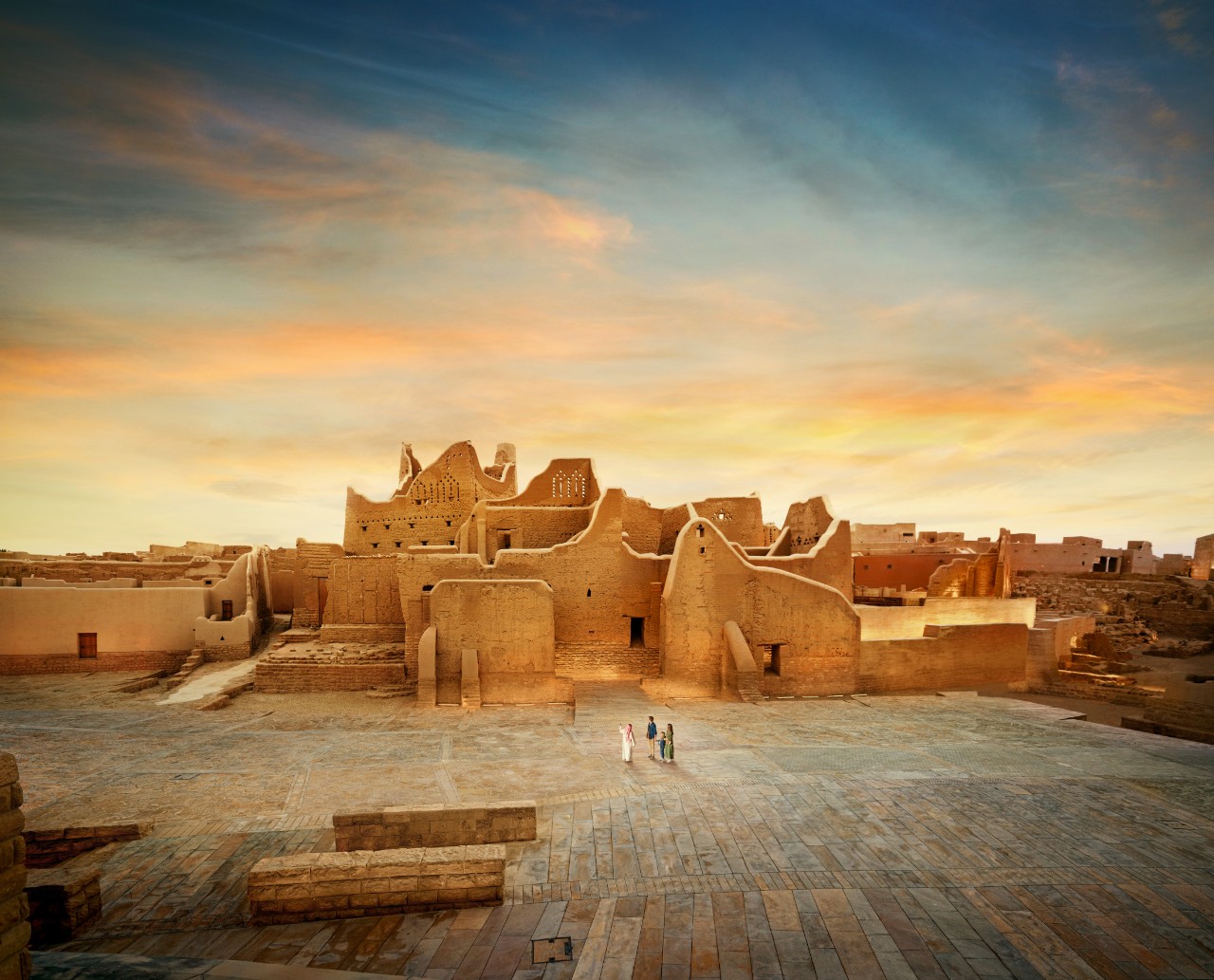
The easiest landing pad. At-Turaif in Diriyah, the mud-brick district where the first Saudi state began, is a UNESCO site reachable by metro and rideshare; the Diriyah Pass runs roughly SAR 50 to SAR 100 depending on season (free from 1 May to 30 September), with under-12s free, and the current price is on the official Diriyah site. Al-Masmak Fortress, where Riyadh was captured in 1902, sits beside Souq Al Zal, which is cash-only and good for an hour of wandering. The National Museum is genuinely well curated. Cafe culture in Riyadh is dense and solo diners are unremarkable.
Jeddah
Slower, coastal, older. Al-Balad, the UNESCO-listed historic core, is a lattice of coral-stone houses with carved wooden roshan screens, and it rewards being walked without a plan. The Corniche and King Fahd's Fountain, the tallest fountain in the world, fill an evening. Jeddah is where solo travellers tend to relax.
AlUla
The reason many people come. Hegra, Saudi Arabia's first UNESCO World Heritage site, holds more than a hundred monumental Nabataean tombs cut into sandstone, and it is quieter than Petra by a wide margin. Dadan and Jabal Ikmah, an open-air cliff face of ancient inscriptions, sit nearby. Tours are the standard way in and are a reliable place to meet other travellers. See our AlUla travel guide.
Abha and Asir
Mountains, cool air, juniper forests and the terraced villages of the southwest. Almost no international visitors. Hard to do without a car, and the most rewarding thing on this list if you have a week to spare. One caveat before you plan it: Abha and Khamis Mushayt sit under a US do-not-travel advisory in 2026 owing to drone and missile risk near the Yemen border, and other governments carry similar regional warnings. Check your own government's current guidance and your insurance terms before adding Asir to a solo route.
Meeting people
The structural fact of solo travel here is that Saudi Arabia has very few hostels, so the backpacker network that connects solo travellers elsewhere barely exists. You compensate in two ways. The first is organised day tours, to Edge of the World from Riyadh, to Hegra from AlUla, which reliably contain other people travelling alone. The second is the cafe. Saudi coffee culture is serious, the third-wave scene in Riyadh and Jeddah is dense, and sitting alone with a book in one is entirely normal.
Beyond that, expect to be spoken to. Curiosity about foreign visitors is high and hospitality is a real cultural obligation rather than an abstraction. Learning three words, salam alaikum, shukran, afwan, changes the tenor of a dozen interactions a day.
Before you book
Apply for the eVisa in advance and check your passport has six months of validity beyond your departure date. Set up Uber and Careem with a payment card before you land. Buy a local SIM at the airport, or activate an eSIM, because everything above depends on data. Plan around the weekend, which falls on Friday and Saturday, and around Friday midday prayers, when much of the country closes for a couple of hours. Check whether your travel dates overlap Ramadan, which changes opening hours across the board.
Then go. The country is more straightforward than its reputation, and the version of it you see travelling alone, at a coffee counter, on a metro platform, in a tour van with five strangers, is closer to the real thing than any package delivers. Start with our Saudi Arabia travel guide for the wider planning picture.
Travelling alone does not mean planning alone
Turn this guide into a day-by-day solo route — pace, budget and all — with our Trip Planner, then use the hotel guide to pick the districts in Riyadh, Jeddah and AlUla where staying solo is easiest.
Frequently Asked Questions
- Is Saudi Arabia safe for solo travellers?
- For the risks solo travellers usually worry about, yes. Violent crime against foreigners is rare, cities are heavily policed and well lit, and walking back to a hotel at night in central Riyadh or Jeddah is unremarkable. The genuine hazards are different: summer heat between June and August, driving alone into the desert where there is no phone coverage and no passing traffic, and road traffic accidents. Join a tour rather than driving to Edge of the World or the AlUla backcountry alone. Separately, the far southwest (Abha, Khamis Mushayt, Jizan, Najran) sits under a US do-not-travel advisory in 2026 — check current government guidance before adding the Asir region to a solo route.
- Can women travel solo in Saudi Arabia?
- Yes. Foreign women can check into hotels alone, drive, hire cars, book domestic flights and move between cities without a male companion. The guardianship rules do not apply to visitors and the driving ban ended in 2018. Since 2019 the abaya is not mandatory; the requirement is modest, loose clothing covering shoulders and knees, with hair covered only inside mosques. Some restaurants still have segregated seating areas.
- Can I drink alcohol in Saudi Arabia as a tourist?
- No. Alcohol is illegal throughout Saudi Arabia for citizens, residents and tourists. There are no licensed hotel bars or tourist zones where it is served, and periodic media reports of a relaxation have been denied by Saudi officials. The single exception is a store in Riyadh's Diplomatic Quarter restricted to non-Muslim diplomats. Do not bring alcohol in your luggage.
- Can I visit Makkah and Madinah as a non-Muslim solo traveller?
- You cannot enter Makkah. Access roads are checkpointed and the restriction is enforced. Madinah is different: non-Muslims may visit the city, but the central Haram area around the Prophet's Mosque is closed to them. If you are booking the Haramain high-speed train, plan your route accordingly rather than travelling to or through the Makkah terminus.
- How do I get around Saudi Arabia without a car?
- Uber and Careem cover Riyadh, Jeddah, Dammam, Khobar, Madinah and AlUla, with the fare shown before you confirm. The Riyadh Metro has six lines and 85 stations; a two-hour pass is SAR 4 and you can tap a contactless bank card or Apple Pay at the gate. The Haramain high-speed train runs Jeddah to Madinah in about two hours twenty minutes from around SAR 150. Saudia and flynas fly between the main cities and AlUla.
- Are there hostels in Saudi Arabia for meeting other travellers?
- Very few, which is the main structural difference from backpacking elsewhere. Solo travellers meet each other on organised day tours instead: Edge of the World trips from Riyadh, and Hegra tours from AlUla, which start at SAR 95 per person and must be booked in advance through Experience AlUla. Saudi cafe culture is also unusually strong, and sitting alone in one is completely normal.