Saudi Arabia Travel Guide 2026: Visa, Costs & Where to Go
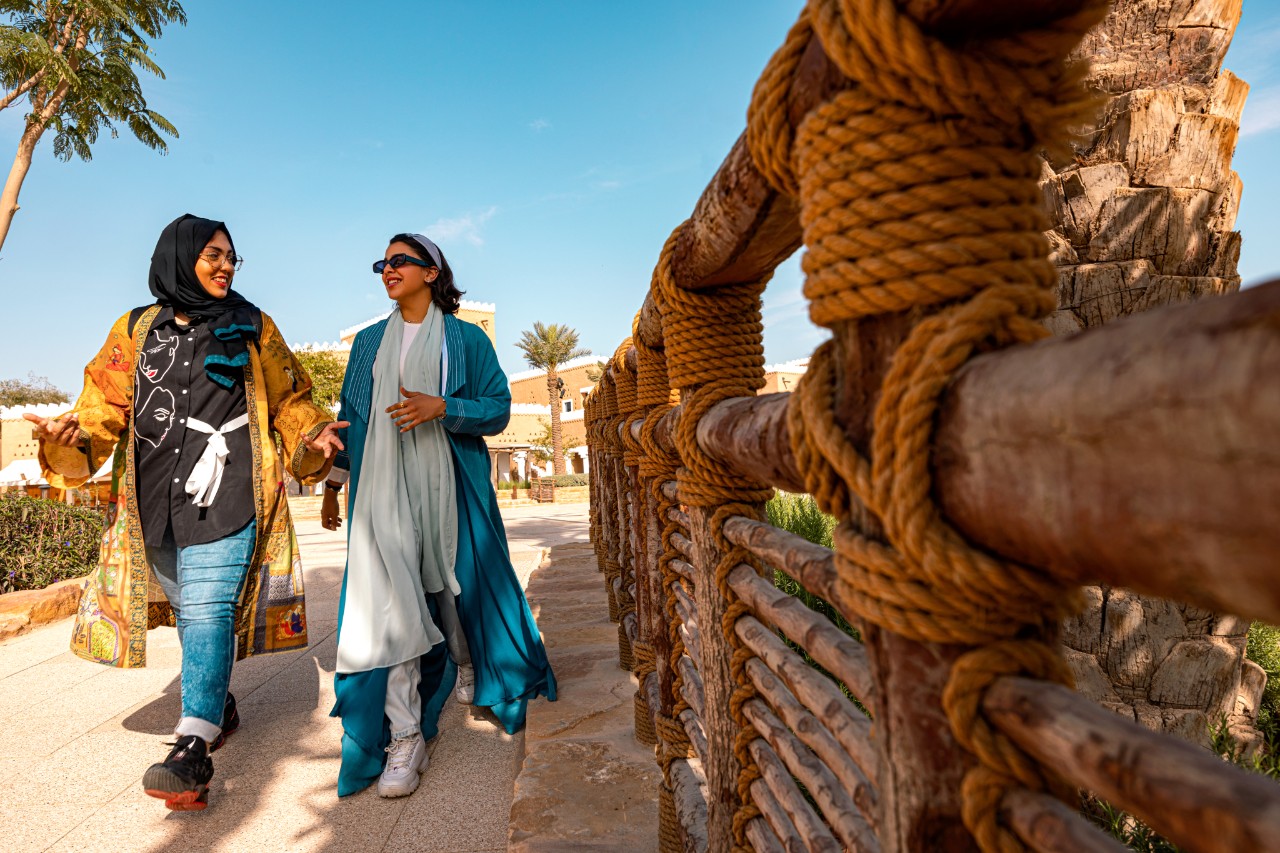
Planning Saudi Arabia in 2026? A practical, honest guide to visas, the best time to visit, costs, getting around, culture and the top regions.
Key Takeaways
- Saudi Arabia opened to tourism in 2019 — citizens of 66 countries can get an eVisa or visa on arrival, valid one year for stays up to 90 days
- The cool season from November to March is the best time to visit; inland summers regularly pass 40°C
- Most trips focus on the Riyadh–AlUla–Jeddah triangle, linked by short domestic flights
- Alcohol is illegal and dress is modest (no abaya required since 2019); Makkah is closed to non-Muslims
- The riyal is pegged near 3.75 to the US dollar, and cards are accepted almost everywhere
Saudi Arabia opened to leisure tourists in September 2019, and travelling here in 2026 is more straightforward than most first-time visitors expect. You can apply for a visa online in minutes, pay with a card almost everywhere, and reach rock-cut tombs, mountain villages and Red Sea reefs on good roads and a growing network of domestic flights. This guide covers the decisions that actually shape a trip — visa, timing, budget, transport and culture — and points you to the regions worth your time.
It is also a country with rules that matter. Alcohol is illegal, dress is modest, and one of its most famous cities is closed to non-Muslims. None of this makes a trip difficult; it simply rewards a little preparation. Here is what you need to know before you go.
Why visit now
Tourism here is genuinely new. Saudi Arabia issued its first leisure visas in September 2019 as part of Vision 2030, the national plan to diversify the economy away from oil, and the pace of change since has been hard to overstate: new museums and galleries, restored heritage districts, resorts opening along the Red Sea, and a year-round events calendar that barely existed a few years ago. Whole stretches of coastline and desert are being built into destinations from scratch.
For a traveller, the practical upshot is twofold. First, headline sites still see a fraction of the crowds you would meet at comparable places elsewhere in the region — you can have a 2,000-year-old tomb at Hegra almost to yourself. Second, the infrastructure that early visitors found patchy — airports, highways, hotels, English signage, card payments — improves noticeably year on year. The trade-off is that some areas are still building out their facilities and information dates quickly, which is exactly why it pays to check current details before you travel. Going now means seeing the country in a real moment of transition, before the rest of the world catches on.
Do you need a visa for Saudi Arabia?
Most leisure travellers enter on the tourist eVisa. As of 2026, citizens of 66 eligible countries — across Europe, North America, East and Southeast Asia and beyond — can either apply online in a few minutes or collect a visa on arrival at the main international airports in Riyadh, Jeddah, Dammam and Madinah. The visa is multiple-entry, valid for one year, and allows stays of up to 90 days per visit; the 90-day counter resets each time you re-enter.
The total cost is about SAR 535 (roughly USD 140), which already includes the mandatory medical insurance. Citizens of the Gulf Cooperation Council states — Bahrain, Kuwait, Oman, Qatar and the UAE — do not need a visa at all and can stay up to 90 days. If your nationality is not on the eVisa list, holding a previously used US, UK or Schengen visa can open alternative routes, and residents of those regions are often eligible too.
Two practical notes. Make sure your passport is valid for at least six months from arrival. And if you are only connecting through the country, Saudia and flynas offer a free stopover visa of up to 96 hours when you fly with them — useful for a short look at Riyadh or Jeddah. Visa rules change often, so confirm your eligibility and the current fee on the official portal before booking. Our Saudi visa guide walks through the application step by step.
When is the best time to visit?
The comfortable season runs from November to March, when daytime temperatures in Riyadh and the deserts sit around 20–28°C and evenings can be cool. This is the right window for AlUla, the central deserts and city sightseeing. From May to September the interior regularly passes 40°C, and outdoor plans become an early-morning affair.
The exceptions are worth knowing. The Asir highlands around Abha stay mild and often green even in summer, which is why many Saudis holiday there in July and August. The Red Sea coast near Jeddah and Umluj is warm year-round, with the best diving visibility in the cooler months. The cool season also brings the events calendar to life — Riyadh Season in the capital, Winter at Tantora in AlUla and the Soudah season in the south — though exact dates shift each year, so check before you plan around them.
One date to plan around is Ramadan, expected in February–March 2026. During the holy month, eating, drinking and smoking in public during daylight is avoided, many businesses move to evening hours, and the atmosphere after sunset is lively. It can be a rewarding time to visit if you adjust your expectations. Our best time to visit guide breaks the year down region by region.
Where to go in Saudi Arabia
Saudi Arabia is large — bigger than Western Europe — so a sensible trip focuses on two or three regions linked by a short domestic flight rather than trying to see everything. These are the anchors.
Riyadh and the centre
The capital pairs glassy modern districts and serious museums with Diriyah, the mud-brick birthplace of the first Saudi state and now a restored UNESCO World Heritage Site. The National Museum is a good first stop for context, and an hour out of town the Edge of the World (Jebel Fihrayn) gives you a cliff escarpment dropping to an empty plain. Riyadh has the most international flights, so many trips start here. Read the Riyadh travel guide or follow the 48-hour Riyadh itinerary to make the most of a first stop.
Jeddah and the Red Sea
Jeddah is the coastal gateway and the most easygoing of the big cities. Its old quarter, Al-Balad, is a UNESCO site of coral-stone houses and carved wooden balconies, best walked in the late afternoon. The coast north of the city — Umluj, Al Wajh and the new Red Sea resorts — has clear water, quiet islands and good snorkelling. Jeddah is also the usual jumping-off point for AlUla and a stop on the Haramain high-speed railway.
AlUla and the northwest
If you see one thing, make it AlUla. It holds Hegra (Mada'in Salih), Saudi Arabia's first UNESCO World Heritage Site: more than 100 rock-cut Nabataean tombs carved by the same civilisation that built Petra, but seen by a fraction of the visitors. Around it are Elephant Rock, the restored old town, the oasis trail and the mirrored Maraya concert hall. Give it at least two nights, and book Hegra tickets ahead in the busy winter months.
Asir and the south
The southwest is the cool, green side of the country. Abha sits high in mountains that catch the edge of the monsoon, and the stone village of Rijal Almaa, painted in bright geometric patterns, shows a culture quite distinct from the deserts — Asiri art, terraced farms and a milder climate. It is the natural choice for a summer trip when the rest of the country is hot, and it pairs well with the highland town of Taif and its rose farms.
The Eastern Province
On the Gulf coast, Al-Ahsa is one of the largest oases on earth and a UNESCO site, with millions of palms, natural springs and old souqs. Al-Khobar and Dammam are relaxed coastal cities and the closest point to the causeway to Bahrain. The east is less visited by tourists, which is part of its appeal. Browse every option on the destinations page.
Five experiences worth building a trip around
If you only have time for a handful of things, start here:
- Walk among the tombs at Hegra. The Nabataean necropolis at AlUla is the country's signature sight, and you can often have a tomb to yourself.
- Stand at the Edge of the World. A half-day trip from Riyadh to the Tuwaiq escarpment, where the cliffs fall away to an empty plain.
- Explore Al-Balad at dusk. Jeddah's old town is at its best in the late afternoon, when the coral-stone facades catch the light and the cafés fill up.
- Get out on the Red Sea. Snorkel or island-hop from Umluj, with its sandbars, reefs and clear, warm water.
- Cool off in Asir. Trade the desert for the green mountains around Abha and the painted stone village of Rijal Almaa.
Getting around
Distances are long, so most visitors fly between regions. Saudia, flynas and flyadeal connect all the main cities frequently and cheaply, and booking a week or two ahead keeps fares low. On the west coast, the Haramain high-speed train links Makkah, Jeddah, King Abdullah Economic City and Madinah at up to 300 km/h, and it is open to all travellers on that route.
For the deserts and AlUla, a rental car gives the most freedom; the highways are modern, fuel is inexpensive and signage is bilingual. Visitors from many countries can drive on a national licence, often alongside an International Driving Permit — the car rental guide has the country-by-country detail. In cities, Uber and Careem are everywhere and remove any need to agree a fare in advance, which makes them the easy default for getting around town.
Money, costs and staying connected
The currency is the Saudi riyal (SAR), pegged at about 3.75 to the US dollar, so prices are stable in dollar or euro terms. Cards are accepted almost everywhere through the local "mada" network, but carry some cash for souqs, small cafés, parking and tips. Saudi Arabia is not a budget destination on the level of Egypt or Jordan, but it is generally cheaper than the UAE for food and taxis.
As a rough guide, a mid-range day — a comfortable hotel, ride-hailing, meals out and an attraction or two — runs around SAR 400–700 per person, and less if you self-cater and plan your transport. Luxury, especially in AlUla and the Red Sea resorts, climbs quickly from there. For a fuller breakdown see the money and costs guide. For data, buy a local SIM from stc, Mobily or Zain at the airport, or set up an eSIM before you fly; coverage is strong in cities and along the main highways, patchier deep in the deserts.
Culture and etiquette
A handful of points shape daily travel, and getting them right makes everything smoother:
- Alcohol is illegal. Despite recurring media reports about licensed venues, no hotel, resort or restaurant serves alcohol to tourists as of 2026, and the penalties are severe. Do not pack any, and do not expect a drink with dinner. Coffee and fresh juice are the local social rituals instead.
- Dress modestly. Women are not required to wear an abaya or cover their hair — that rule was dropped in 2019 — but everyone should keep shoulders, chest and knees covered in public. Riyadh, Jeddah and Al-Khobar are noticeably more relaxed than smaller or more conservative towns.
- Prayer times. Shops and some sights pause briefly five times a day for prayer. The breaks are short, but it is worth checking the day's times so you are not caught out at a closed door.
- Photography and privacy. Ask before photographing people, especially women, and avoid government, military and some industrial sites.
- Weekend and tipping. The working week runs Sunday to Thursday; the weekend is Friday and Saturday, with Friday mornings quietest. Tipping is not required, but rounding up or about 10% for good service is appreciated.
The dress code guide and the cultural etiquette guide go into more depth, including what to pack for different settings.
Makkah and Madinah: the access rules
This is the one rule no traveller should get wrong. Makkah (Mecca) is closed to non-Muslims entirely. The highways approaching the city have checkpoints, and there is a designated bypass route for non-Muslim travellers, so plan any road journey in the region accordingly. Madinah is open to non-Muslims, and you can visit much of the city, but the area immediately around the Prophet's Mosque (Al-Masjid an-Nabawi) is reserved for Muslims. If you are not Muslim, you can still experience the Hejaz through Jeddah, Taif and the wider Madinah region — simply respect the boundaries, which are clearly signposted. Visiting for Umrah or Hajj requires a separate pilgrimage visa, not the tourist eVisa.
What to pack and practical essentials
Pack light, modest layers in natural fabrics, a scarf (useful for women at mosques and for sun), sunglasses, high-SPF sunscreen and a refillable water bottle — tap water is generally not drunk, so stick to bottled or filtered. Power sockets are mostly UK-style Type G at 220–230V, so bring a universal adapter. Pharmacies are well stocked and easy to find in cities, and standards of healthcare are high, though private care is expensive — which is exactly why the visa includes insurance. For emergencies, dial 999 for police, 997 for an ambulance and 998 for civil defence; 911 also works in major cities. Solo and female travellers tend to find the country calmer than its reputation suggests, with low street crime and women-only sections in some cafés and on public transport.
Sample routes to start planning
If you are deciding how to string a trip together, three shapes cover most visitors:
- One week — the classic triangle. Riyadh, AlUla and Jeddah, linked by two short flights, giving you the capital, the tombs and the coast. See the one-week itinerary.
- Long weekend. Riyadh plus a desert day trip to the Edge of the World, or Jeddah plus a day on the Red Sea coast.
- Two weeks. Add the Asir mountains in the south or the Al-Ahsa oasis in the east to the triangle above for a fuller picture of the country.
Browse ready-made plans on the itineraries page, and find places to stay, from heritage guesthouses to desert resorts, under hotels.
Quick answers
Is Saudi Arabia safe for tourists?
Violent crime against visitors is rare, and the main day-to-day risk is traffic. Check your own government's current travel advice before you go, as it is updated regularly.
Is it suitable for solo female travellers?
Many women travel here alone without trouble, helped by low street crime. Modest dress and ordinary travel awareness make it easier still.
Do I need to speak Arabic?
Arabic is the official language, but English is widely used in hotels, airports, restaurants and tourist sites. A few Arabic greetings are always welcomed.
Can I drink alcohol anywhere?
No. Alcohol is illegal throughout the country for visitors, with no licensed tourist venues as of 2026.
How many days do you need?
Five to seven days covers the classic Riyadh–AlUla–Jeddah triangle comfortably; two weeks lets you add the south or the east.
Is the food good for vegetarians?
Yes — rice dishes, grilled vegetables, hummus, falafel, dates and fresh bread are everywhere. See the food guide for what to try.
Saudi Arabia rewards travellers who plan a little and travel respectfully. Sort your visa, pick your season, choose two or three regions, and you will see a country that very few outsiders knew a decade ago.
Where to Go Next
- The Eastern Province — the Gulf coast, Dammam and Al-Ahsa.
- One week in Saudi Arabia — a tighter route for seven days.
- Emergency infrastructure — how the ambulance and hospital network works.
One item people leave until last and should not: see our Saudi Arabia travel insurance guide for what a policy needs to cover here.
Frequently Asked Questions
- What documents do I need to travel to Saudi Arabia?
- A valid passport (6+ months validity) and tourist visa are required for most nationalities. Saudi Arabia introduced the tourist eVisa in 2019; 66 countries are currently eligible. The online fee is SAR 535 and includes mandatory medical insurance. Applications are usually processed within minutes to 24 hours.
- How long should I spend in Saudi Arabia for a good visit?
- 7-10 days allows you to explore a main city (Riyadh or Jeddah) plus regional highlights like AlUla or Asir Mountains. First-time visitors benefit from 10-14 days to experience culture, food, and natural diversity without rushing.
- What is the best month to visit Saudi Arabia?
- November to February offers ideal weather with temperatures between 15-25°C, perfect for outdoor exploration and desert activities. March-April and September-October are also pleasant, while summer (June-August) exceeds 40°C and is less comfortable.
- What should I pack for a trip to Saudi Arabia?
- Lightweight, loose-fitting clothing suits the hot climate. An abaya is not required for foreign visitors and has not been mandatory since 2019; the standard is modest dress covering shoulders and knees, with a scarf for mosque visits. Pack sunscreen, sunglasses, a hat, comfortable walking shoes, and modest swimwear for private beaches or resort pools.