Saudi Arabia Night Sightseeing: Modern Landmarks
Saudi Arabia's modern landmarks glow after dark. Night sightseeing guide: Kingdom Tower, Boulevard Riyadh, Jeddah waterfront — tips and timings.
Key Takeaways
- Kingdom Centre Tower Sky Bridge illuminates blue at night — visible across the Riyadh skyline
- Jeddah King Fahd Fountain shoots illuminated water 312m high — best viewed from the Corniche after 8 PM
- Maraya concert hall in AlUla reflects the desert landscape in its mirrors — stunning at dusk and dawn
- The KAFD district in Riyadh has futuristic LED-lit towers that create a blade-runner skyline
- Ithra museum in Dhahran is architecturally dramatic with its pebble-shaped exterior lit at night
Why Saudi Arabia Truly Comes Alive at Night
In Saudi Arabia, the night is when the real magic happens. Because of the daytime temperatures, the most impressive modern landmarks are designed specifically to be experienced under the stars. I’ve found that the atmosphere completely shifts after the Isha prayer. You’ll see families, coffee enthusiasts, and photographers flooding the plazas. The lighting design isn't just functional; it is an art form that highlights the ambitious vision of the country. Visiting at night also means enjoying a more comfortable climate. Even in the height of summer, the evening breeze makes exploring the outdoor promenades of Riyadh and Jeddah a refreshing experience.Riyadh’s Neon Skyline: Kingdom Centre & KAFD
If you want to feel like you’ve stepped into a sci-fi movie, head straight to the King Abdullah Financial District (KAFD). I spent hours walking through the elevated pedestrian "Sky Loops," which connect the skyscrapers with glowing, geometric tunnels.Icon of the Capital: The Kingdom Centre
The Kingdom Centre remains the undisputed king of the skyline. I highly recommend taking the high-speed lift to the Sky Bridge on the 99th floor. Seeing the city's "necklace" of lights from 300 meters up is something you won't forget. Further south, the Al Faisaliyah Tower’s golden globe glows like a lantern. I suggest booking a table at The Globe restaurant for a 360-degree view. It’s expensive, but the orientation of the city at night is worth every riyal.For the best photos, head to the central plaza of KAFD around 9:00 PM. The reflection of the LED lights on the glass facades creates a stunning hall-of-mirrors effect.
Jeddah by Night: The Corniche and the Fountain
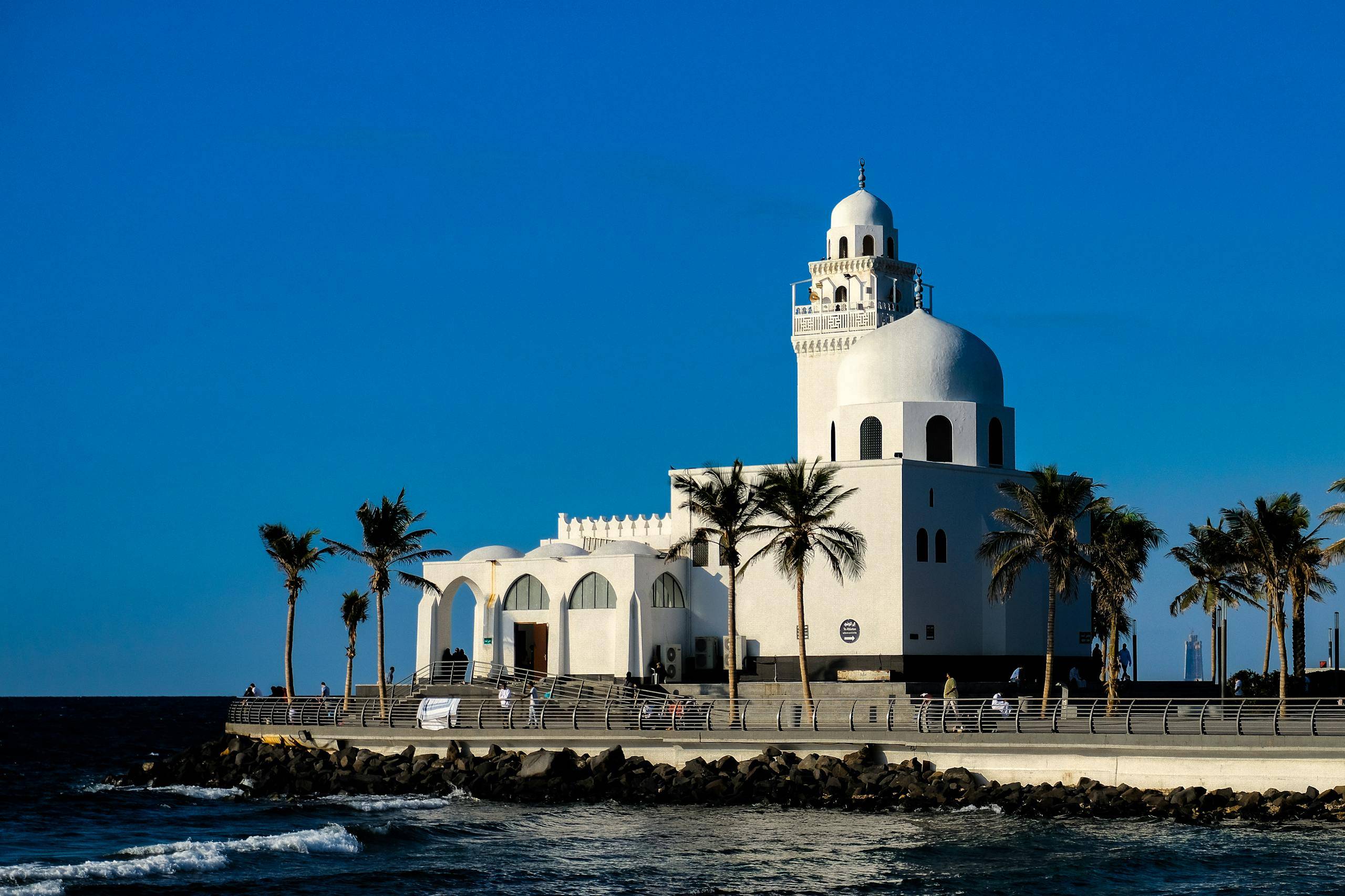
Jeddah has a different energy. It’s coastal, breezy, and the lighting is softer. The centerpiece is the King Fahd’s Fountain. Seeing this plume of water, lit by over 500 high-power spotlights, is a rite of passage for any traveler. I love walking the Jeddah Art Promenade. It’s a newer development tucked between the mosque and the Yacht Club. The modern sculptures here are illuminated in neon pinks and blues, casting a beautiful reflection on the Red Sea. Don’t miss the Island Mosque at night. While it is a place of worship, its modern lighting makes it appear as if it is floating on a sea of black glass. It is one of the most serene spots in the city.The Glow of Dhahran: Ithra’s Evening Brilliance
On the eastern coast, the King Abdulaziz Center for World Culture (Ithra) stands as a feat of modern engineering. During the day, it looks like giant pebbles; at night, it glows with a soft, ethereal light. I found the "Hidden Garden" at Ithra to be one of the best spots for quiet reflection. These subterranean pockets of greenery are lit with ambient floor lights that make the steel-wrapped building feel organic. The interior is just as impressive. Even if you don’t have a ticket for the cinema or theater, the Plaza area is free to enter. The way the light bounces off the stainless steel tubes that wrap the building is a photographer's dream.Architecture in the Desert: Maraya AlUla
You haven't seen modern architecture until you’ve seen Maraya in AlUla. It is the world's largest mirrored building, and at night, it practically disappears, reflecting the star-filled desert sky. I recommend visiting when there is a performance or a reservation at the rooftop restaurant. The lighting is kept minimal to protect the "Dark Sky" status of the region, which makes the building look like a shimmering mirage. The contrast between the ancient sandstone canyons and the sharp, reflective edges of Maraya is breathtaking. It is a testament to how Saudi Arabia blends its thousands of years of history with hyper-modern design.Cultural Context: Navigating the Saudi Evening
The social fabric of Saudi Arabia is woven together in the late-night hours within its vibrant coffee shops and open-air dining precincts. Unlike many global capitals that quiet down after 10:00 PM, Riyadh and Jeddah only reach their peak energy toward midnight. This nocturnal shift is a cultural necessity born from the heat, but it has evolved into a sophisticated coffee culture where specialized roasteries stay packed until 2:00 AM. In neighborhoods like Riyadh’s Al Nakheel or Jeddah’s Al Rawdah, you will find crowds of locals discussing everything from tech startups to poetry. Navigating the rhythmic pulse of Saudi Arabia requires an understanding of the five daily prayer breaks, which dictate the opening hours of almost every commercial establishment. I have found that syncronizing your schedule with the prayer times—especially the Maghrib (sunset) and Isha (evening) prayers—is the key to a stress-free evening.Hidden Gems: Escaping the Main Stream
If you want to escape the crowds, there are several "under the radar" spots that shine at night: 1. Wadi Hanifa observation points: These offer a distant, glowing silhouette of the Riyadh skyline without the traffic noise. 2. Jeddah Art Promenade Alleys: Tucked behind the main walk, you’ll find smaller LED installations that most tourists miss. 3. The Sky Loop at KAFD: Most people stay on the ground level, but the futuristic pedestrian bridges offer incredible "cyberpunk" photo ops.Saudi Arabia’s modern landmarks are built for the night. To see the Kingdom in its best light, plan your main sightseeing between 8 PM and 1 AM.
A short drive from the city center, the historic district of Diriyah offers a more cinematic encounter with the night. As the ancestral home of the Saudi state, the At-Turaif UNESCO World Heritage site is now illuminated with a precision that honors its mud-brick architecture while emphasizing its 2026 status as a premier luxury destination. Walking through the Bujairi Terrace at night provides a striking juxtaposition; you can dine at internationally acclaimed restaurants while looking across the Wadi Hanifa at the softly lit, amber-hued ruins of the citadel.
The lighting design here is deliberate, using warm tones to mimic the flicker of traditional lanterns against the Najdi textures. It is an intellectual experience as much as a visual one, showcasing how Saudi Arabia preserves its 18th-century roots through the lens of modern, sustainable tourism. The cooler evening air makes the walk through the palm groves far more pleasant than a daytime visit, allowing the complex historical narrative of the site to unfold in the silence of the desert night.
Photography & Timing: When to Go
Most of these landmarks turn on their full light displays right after Maghrib (sunset). However, I’ve found that "Blue Hour"—that 20-minute window just after the sun goes down—is the best time for photography. The Boulevard City in Riyadh is a must-see for high-energy night photography. It stays open until 2:00 AM and is filled with giant LED screens that rival Times Square in New York. If you are using a professional camera, be respectful. While photography of landmarks is encouraged, try to avoid capturing locals directly in your shots without permission. Tripods are generally allowed in public plazas but may require a permit inside malls or private districts.Logistics: Transport, Dress Codes, and Safety
Getting around at night is incredibly easy. I almost exclusively use Uber or Careem. It’s safer and more reliable than trying to hail a taxi on the street, and the drivers often know the best drop-off points for the big landmarks. 1. Dress Code: Even at modern landmarks, modesty is key. Men should wear long trousers; women should wear loose-fitting modest clothing. Abayas are optional but I find them very comfortable for evening breezes. 2. Safety: Saudi cities are among the safest I’ve ever visited. There is a high security and CCTV presence around all modern landmarks. 3. Temperature: Bring a light jacket! It sounds strange in the desert, but the air conditioning in buildings like the Kingdom Centre is kept very low.If you want a window-side table at any landmark restaurant, book at least 48 hours in advance via the 'The Chefz' or 'MyTable' apps.
Related Reading
- Renting a Car in Saudi Arabia: The 2026 Complete Guide
- Getting Connected in Saudi Arabia - SIM Cards & WiFi
Final Thoughts
Saudi Arabia Night Sightseeing: Modern Landmarks is a testament to Saudi Arabia's remarkable transformation under Vision 2030. Whether you're seeking ancient history, adrenaline-filled adventures, or world-class hospitality, this destination delivers on every front. Don't wait — the Kingdom is evolving rapidly, and there's never been a better time to visit.
Plan Your Saudi Adventure
Ready to experience the Kingdom? Our AI-powered Trip Planner creates personalized itineraries based on your interests, budget, and travel dates. From Riyadh's skyline to AlUla's ancient tombs — let us help you discover Saudi Arabia your way.
Frequently Asked Questions
- What are the best modern landmarks to see at night in Saudi Arabia?
- The Kingdom Centre Tower in Riyadh offers stunning skybridge views after dark, while the Jeddah Corniche and King Fahd Fountain are spectacular when illuminated. Boulevard Riyadh City and The Groves in Diriyah provide world-class nighttime entertainment districts with restaurants, shows, and art installations.
- Is it safe to go sightseeing at night in Saudi Arabia?
- Yes, Saudi Arabia is one of the safest countries for nighttime sightseeing with very low crime rates and well-lit public spaces. Major landmarks and entertainment districts have security presence, and cities like Riyadh and Jeddah are bustling well past midnight, especially during Riyadh Season events.
- What time do Saudi landmarks close at night?
- Most outdoor landmarks like the Jeddah Corniche and King Fahd Fountain are accessible 24/7, while observation decks typically close around 11 PM-midnight. Entertainment districts like Boulevard Riyadh City stay open until 1-2 AM on weekends, and during Riyadh Season many venues operate even later.
- Are there guided night tours available in Saudi cities?
- Yes, several tour operators in Riyadh and Jeddah offer evening city tours covering illuminated landmarks, rooftop dining, and cultural districts. Prices range from SAR 200-500 per person and typically include transportation, with popular routes covering Diriyah at night and the Riyadh skyline from Edge of the World at sunset.