How to Get to Saudi Arabia - Flights & Airports Guide
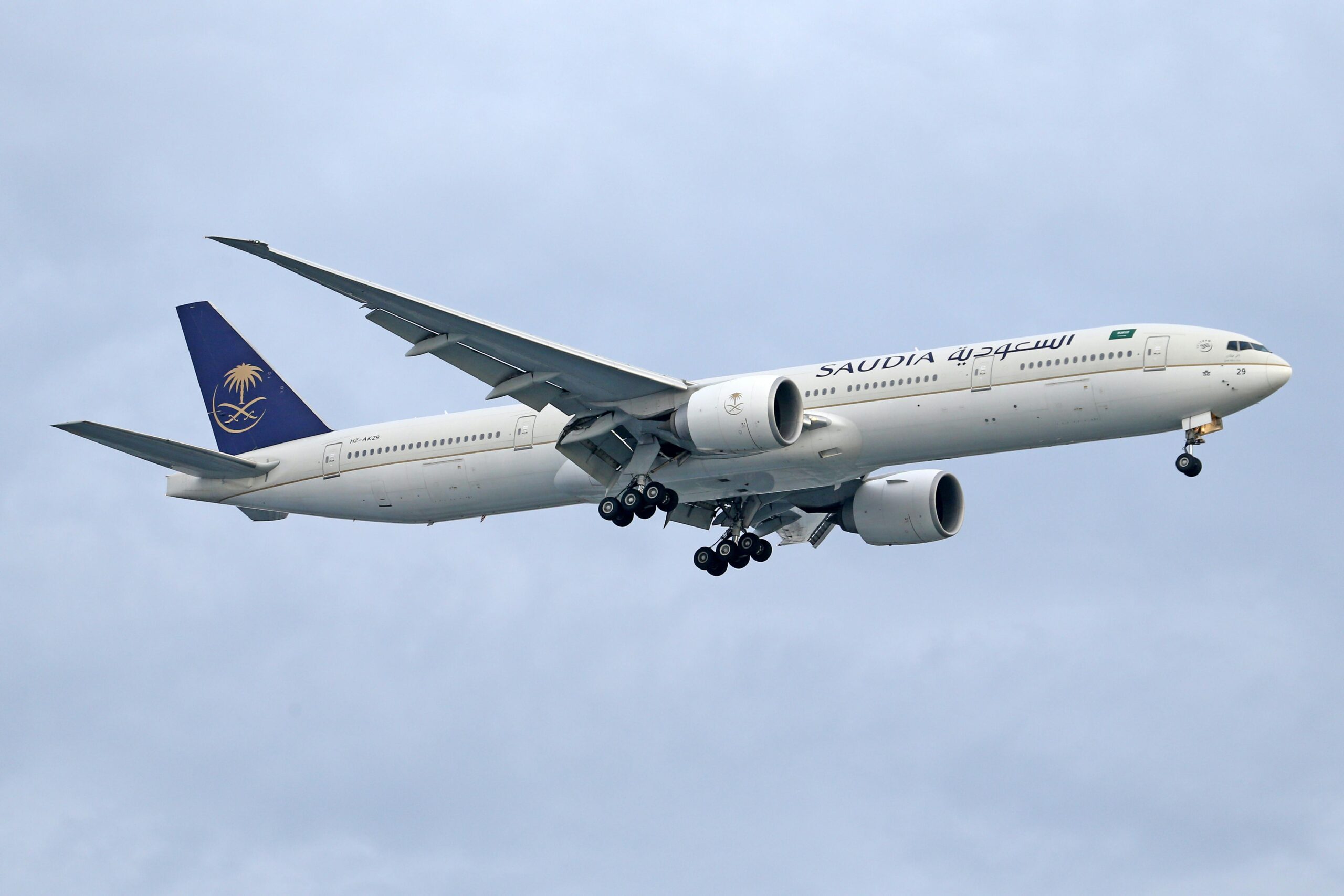
Fly into Riyadh (RUH), Jeddah (JED) or Dammam (DMM). Terminals changed in February 2026 - plus the SAR 535 eVisa for 66 nationalities and transfers.
Key Takeaways
- Three international gateways: King Khalid (RUH, Riyadh) for the interior and the AlUla hop, King Abdulaziz (JED, Jeddah) for the Red Sea and the Haramain train, King Fahd (DMM, Dammam) for the Eastern Province and the Bahrain causeway.
- Riyadh airport reallocated all five terminals between 16 and 25 February 2026: Terminals 1-2 are now international flights on Saudi carriers, Terminals 3-4 all domestic flights, Terminal 5 foreign airlines. Older guides say the opposite - check your boarding pass on the day.
- The tourist visa costs SAR 535 online at visa.visitsaudi.com or about SAR 480 on arrival (5-15 minutes at the counter). Same permission either way: 66 nationalities, valid one year, multiple entry, up to 90 days per entry and no more than 180 days per year.
- Riyadh Metro Line 4 (yellow) links the RUH terminals with the King Abdullah Financial District in about 30 minutes for SAR 4, paid with a contactless card or Apple Pay. Jeddah has no metro - the planned network is still in design with no operating date.
- The Haramain High-Speed Railway station is inside JED Terminal 1, running 453 km at up to 300 km/h. Non-Muslims cannot enter Makkah - the whole city, enforced at road checkpoints. Madinah city is open to all; its central Haram area is not.
- Alcohol is prohibited throughout the Kingdom and cannot be imported, including duty-free. Pork products, narcotics and weapons are also prohibited; declare anything you are unsure about.
Almost everyone arrives in Saudi Arabia by air, through one of three gateways: King Khalid International in Riyadh (RUH), King Abdulaziz International in Jeddah (JED) and King Fahd International in Dammam (DMM). Which one you pick decides more about your trip than the airline does, because the country is roughly the size of Western Europe and the three airports face three different halves of it.
One thing to check before you travel, even if you have flown to Riyadh before: King Khalid International reallocated all five of its terminals in February 2026, and many flights moved without changing their flight number. The detail is below.
Which airport to fly into
Riyadh — King Khalid International (RUH)
The capital's airport sits about 35 km north of the centre and is the main gateway for the interior: Riyadh itself, Diriyah, Qassim and the Empty Quarter approaches. It is also the natural start for the standard first-timer loop, since AlUla is a short domestic hop from here.
The terminal change you need to know about. Between 16 and 25 February 2026 the airport moved to a functional layout, the largest reorganisation since it opened. As it now stands:
- Terminals 1 and 2 — international flights on Saudi carriers (Saudia, Riyadh Air, flyadeal).
- Terminals 3 and 4 — all domestic flights (Saudia, flynas, flyadeal).
- Terminal 5 — international flights on foreign airlines.
If you are reading an older guide, it will tell you the opposite, because the previous layout put foreign carriers in Terminals 1 and 2 and domestic traffic in Terminal 5. Check the terminal on your boarding pass or the departure screens on the day rather than trusting a bookmark.
Getting into the city. Riyadh Metro's Line 4 (yellow) runs from the airport terminals to the King Abdullah Financial District in around 30 minutes, with trains every five to seven minutes. A standard two-hour ticket costs SAR 4, and you tap a contactless Visa or Mastercard or Apple Pay at the gate — no local card needed. Uber and Careem both operate at the airport and show the fare before you confirm, which removes the negotiation. Airport taxis are metered.
Jeddah — King Abdulaziz International (JED)
Jeddah is the Red Sea gateway: the old town of Al-Balad, the coast, the diving, and the connection onward to the Haramain high-speed line. It is also the arrival airport for the overwhelming majority of Hajj and Umrah pilgrims, which shapes the whole operation.
The Haramain High-Speed Railway station is built into Terminal 1, so you can walk from arrivals to a train without leaving the airport. The line runs 453 km at up to 300 km/h, linking Jeddah, the airport and King Abdullah Economic City with Makkah and Madinah.
An important qualification on that: non-Muslims cannot enter Makkah. This applies to the entire city, not just the Grand Mosque, and road checkpoints on every approach enforce it. Madinah is different — the city itself is open to all visitors, while the central Haram area around the Prophet's Mosque is restricted to Muslims. If you are not Muslim, the Haramain train is still useful for Jeddah–Madinah and for reaching King Abdullah Economic City; it is not a route to Makkah.
Terminal 1 is roughly 20 km from the city centre. Ride-hailing and metered taxis cover the trip; there is no metro in Jeddah, and despite recurring headlines the planned Jeddah Metro is still in design, with no operating date.
Dammam — King Fahd International (DMM)
DMM serves the Eastern Province: Dammam, Khobar, Dhahran, Al-Ahsa and the causeway to Bahrain. It is the least touristed of the three and the easiest to move through. If your interest is the Al-Ahsa oasis, Gulf diving or a road trip across the interior, this is the sensible entry point. Road links to Dammam and Khobar are straightforward; taxis, ride-hailing and the usual car rental desks are all in the terminal.
Domestic airports worth knowing
- AlUla (ULH) — the reason most itineraries include a domestic flight. Capacity is limited and seasonal, so book this leg before anything else.
- Abha (AHB) — the Asir mountains in the southwest, cooler and green, and a genuinely different country to the desert interior.
- Madinah (MED) — heavy Umrah traffic; useful if Madinah or the northwest is your focus.
- Tabuk (TUU) and Yanbu (YNB) — the northern Red Sea coast.
Airlines flying to Saudi Arabia
Saudia is the national carrier and has the widest network into and within the Kingdom, from all three international gateways.
Riyadh Air is new and worth checking, because it did not exist when most guides to this subject were written. It began commercial flights in June 2026 with Riyadh–London Heathrow, and through the summer added Dubai, Cairo, Jeddah, Madrid, Manchester, Malaga, Kuala Lumpur, Mumbai, Dhaka, Islamabad and Lahore. Its stated launch network is 15 destinations, so schedules are still moving — check directly rather than assuming a route exists.
flynas and flyadeal are the low-cost carriers. Both are strong on domestic routes and on regional international ones, which matters if your plan involves two or three Saudi cities.
Foreign carriers are well represented. Emirates, Qatar Airways, Etihad, Turkish Airlines and flydubai connect through the nearby hubs; British Airways, Lufthansa, Air France and KLM fly from Europe; Air India and IndiGo from South Asia. Connecting through Dubai, Doha or Istanbul is often cheaper than flying direct, and the trade-off is a few hours.
The visa, before you book the flight
Citizens of 66 countries can get a Saudi tourist visa without visiting an embassy. There are two routes to the same permission:
- eVisa online — SAR 535 at the official portal, visa.visitsaudi.com. The fee bundles the visa itself with the compulsory medical insurance.
- Visa on arrival — about SAR 480 at dedicated counters in the major airports, typically 5–15 minutes.
Either way the permission is the same shape: valid one year, multiple entry, up to 90 days per entry. Your passport needs at least six months of validity beyond your departure date.
Two extra routes are easy to miss. Holders of a valid US, UK or Schengen visa that has already been used at least once can apply regardless of nationality when flying on a Saudi carrier. And residents of the UAE, Kuwait, Qatar, Bahrain or Oman can apply through a simplified process whatever their passport. Eligibility is decided at the portal, not by a guide — check yours there before you buy a ticket. Our visa on arrival guide covers the counter process in detail.
Hajj and Umrah use separate visa categories. A tourist visa cannot be converted to a Hajj visa on arrival.
When to book, and what actually moves the price
Fares to Saudi Arabia are less about the calendar month than about three specific pressures, and knowing them is worth more than a booking-window rule of thumb:
- Hajj and Umrah seasons. These follow the Islamic lunar calendar, so they shift roughly eleven days earlier each year. Jeddah and Madinah are hit hardest; Riyadh and Dammam far less. If your dates fall near Hajj, book far ahead or route through a different city.
- Eid holidays and Saudi school breaks. Domestic flights are the pinch point here, not international ones. AlUla is the first route to sell out.
- The good-weather window. October to March is when the country is comfortable to travel in and when demand concentrates. Our guide to the best time to visit Saudi Arabia breaks the seasons down by region.
Set a price alert on a comparison site rather than watching one airline. And book the AlUla leg first if it is in your plan — the rest of an itinerary bends around it more easily than it bends around a Riyadh flight.
Arrival: what happens between the gate and the taxi
Immigration. Fingerprints and a photograph are taken at the counter. Have your visa confirmation, return ticket and first night's accommodation reachable on your phone; you may be asked for the address.
Customs. Saudi rules are stricter than in most countries and the enforcement is real, not nominal. Alcohol is prohibited throughout the Kingdom and cannot be brought in — not duty-free, not in a checked bag, not as a gift. Pork products, narcotics, weapons and pornographic material are also prohibited. Rules on printed and religious material are tighter than you may be used to; if you are carrying something unusual, check the official customs guidance before you pack rather than after you land. When in doubt, declare it.
Connectivity. STC, Mobily and Zain all sell tourist SIMs in the arrivals halls, and eSIMs are usually cheaper and set up before you fly. Our connectivity guide compares the options.
What to wear off the plane. Loose, opaque clothing covering shoulders and knees is the norm for men and women. The abaya has not been required for foreign women since 2019; a headscarf is needed inside mosques. Our what to wear guide has the specifics by region and setting.
Money. The riyal has been pegged at 3.75 to the US dollar since 1986, so there is no exchange rate to shop around for. Contactless cards and Apple Pay work almost everywhere, including metro gates. Carry SAR 100–200 in small notes for souqs and tips. See our money guide.
Getting from the airport to where you are staying
- Ride-hailing (Uber, Careem) is the default in all three cities. The price is fixed in the app before you confirm.
- Airport taxis are metered and clearly marked. Confirm the meter is running.
- Riyadh Metro Line 4 from RUH, SAR 4 for two hours, is the cheapest option anywhere in the country.
- Haramain High-Speed Railway from JED Terminal 1, for onward travel to Madinah or King Abdullah Economic City.
- Car rental desks are in all three airports. Worth it for the Eastern Province or a road trip, not for Riyadh or Jeddah city centres.
- Hotel transfers are common at the upper end — ask when you book rather than on arrival.
For intercity travel once you are in the country, including where the train beats the plane, see our transport guide.
Related reading
- Saudi Arabia in 5 days: the first-timer itinerary
- Health guide: vaccinations and medical care
- All destinations
Know your airport — now build the trip around it
Whether you land in Riyadh, Jeddah or Dammam changes which route makes sense and how many domestic flights you need. Our Trip Planner works backwards from your arrival airport and dates, and our hotel guide covers where to stay for a first night close to each gateway.
Arriving at Jeddah airport, you can continue north by rail without going into the city first — the airport has its own stop on the Haramain High-Speed Railway.
Frequently Asked Questions
- Which airport should I fly into for Saudi Arabia?
- It depends on your route, not on which is biggest. Fly into Riyadh (RUH) for the capital, Diriyah and a short domestic hop to AlUla. Fly into Jeddah (JED) for Al-Balad, the Red Sea coast and the Haramain high-speed train. Fly into Dammam (DMM) for the Eastern Province, the Al-Ahsa oasis and the causeway to Bahrain. All three take long-haul flights, so the question is which half of the country you want to see first.
- Which terminal do I use at Riyadh airport?
- King Khalid International reallocated its terminals between 16 and 25 February 2026, the largest change since it opened. Terminals 1 and 2 now handle international flights on Saudi carriers such as Saudia, Riyadh Air and flyadeal; Terminals 3 and 4 handle all domestic flights; Terminal 5 handles international flights on foreign airlines. Many flights moved without their flight number changing, so check your boarding pass or the day-of departure screens rather than an older guide.
- Do I need a visa to fly to Saudi Arabia as a tourist?
- Citizens of 66 countries can get one without an embassy visit. The eVisa costs SAR 535 through the official portal at visa.visitsaudi.com and includes compulsory medical insurance; a visa on arrival at the major airports costs about SAR 480 and takes 5-15 minutes. Either way it is valid for one year with multiple entries, allowing up to 90 days per entry and no more than 180 days in total per year. Holders of a used US, UK or Schengen visa can also apply regardless of nationality when flying a Saudi carrier, and residents of the UAE, Kuwait, Qatar, Bahrain or Oman have a simplified route. Confirm your own eligibility at the portal before booking.
- Which airlines fly to Saudi Arabia?
- Saudia has the widest network into and within the Kingdom. Riyadh Air started commercial flights in June 2026 and added London, Dubai, Cairo, Jeddah, Madrid, Manchester, Malaga, Kuala Lumpur, Mumbai, Dhaka, Islamabad and Lahore over the summer, so its schedule is still expanding - check it directly. flynas and flyadeal are the low-cost carriers and are strongest on domestic and regional routes. Among foreign airlines, Emirates, Qatar Airways, Etihad, Turkish Airlines and flydubai connect through nearby hubs, and British Airways, Lufthansa, Air France, KLM, Air India and IndiGo fly in from Europe and South Asia.
- How do I get from the airport into the city?
- In Riyadh, Metro Line 4 (yellow) runs from the airport terminals to the King Abdullah Financial District in about 30 minutes, every five to seven minutes, for SAR 4 on a two-hour ticket paid by contactless card or Apple Pay. In Jeddah there is no metro - the planned network is still in design - so use ride-hailing or a metered taxi from Terminal 1, roughly 20 km from the centre, or take the Haramain train from inside the terminal for onward travel. In Dammam, ride-hailing and taxis cover Dammam and Khobar. Uber and Careem operate at all three airports and fix the fare in the app before you confirm.
- Can I bring alcohol or duty-free into Saudi Arabia?
- No. Alcohol is prohibited throughout the Kingdom and cannot be imported in any form, including duty-free purchases and gifts, in hand luggage or checked bags. Pork products, narcotics, weapons and pornographic material are also prohibited. Rules on printed and religious material are stricter than in most countries, so check the official customs guidance before you pack anything unusual. If you are unsure about an item, declare it rather than risk it.