
More Than a Drink: The Sacred Art of Saudi Coffee
Discover the language of hospitality. From the southern highlands to the heart of Najd, explore the ritual that welcomes, binds, and honors.
Cultural Authority
In Saudi Arabia, coffee — commonly known as Arabic coffee and officially referred to as Saudi Coffee since 2022 — is not a beverage of convenience. It is a social contract, a gesture of peace, and a symbol of generosity (hafawah). It is the first offering to a guest and the final act before departure.
The traditions surrounding Arabic coffee were inscribed on UNESCO's Intangible Cultural Heritage list in 2015, recognizing its role across the Arabian Peninsula as a shared cultural practice. In 2022, Saudi Arabia further highlighted its own contribution by celebrating the Year of Saudi Coffee, drawing attention to local preparation styles and to the cultivation of Khawlani coffee beans in the southern Jazan highlands.
Unlike dark, heavily roasted Western coffee, Saudi coffee is a light, aromatic infusion. Pale in color and scented with spices such as cardamom and saffron, it is designed not to stimulate haste, but to slow conversation, signal respect, and create social harmony.
Vessels of Welcome
Understanding Saudi coffee begins with understanding its tools.
The Dallah
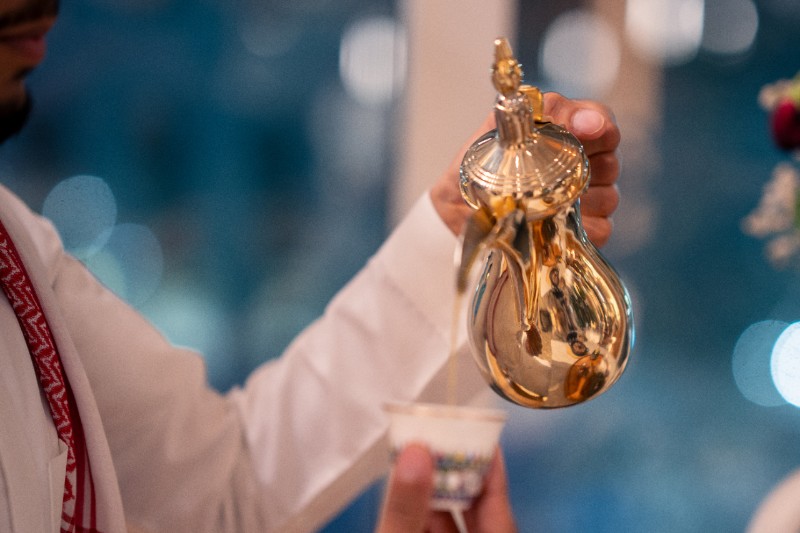
الدلةThe long-spouted coffee pot is the most recognizable symbol of hospitality in the Kingdom. Traditionally made of brass or copper, its shape varies subtly by region. The Dallah's presence signals readiness to receive guests and is so culturally significant that it appears in national iconography.
The Finjal
الفنجالThe small, handle-less cup is intentionally minimal. Holding only a few sips, it ensures repeated refilling and sustained interaction between host and guest. The act of service matters more than the volume consumed.
The Mihmas
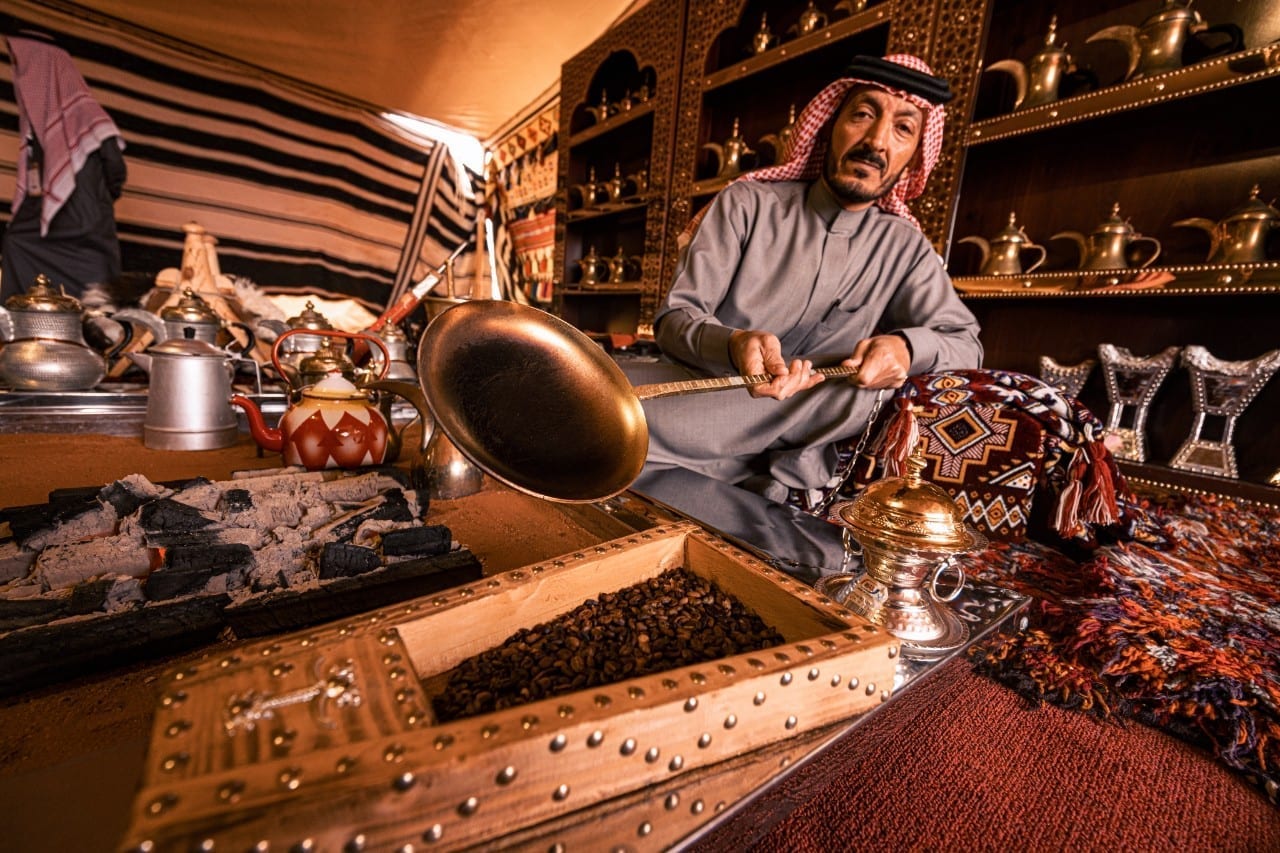
المحماسBeans are traditionally roasted in the mihmas, an iron pan held over open fire. The roasting process requires constant attention and skill to achieve the desired light color.
The Najr
النجرGrinding is done with the najr, a heavy mortar and pestle often made of brass. Historically, the rhythmic sound of grinding carried across desert camps, announcing hospitality to passersby and neighbors.
One Nation, Many Expressions
Saudi coffee is unified by ritual, but diversified by region.
Central (Najd)
نجدLightly roasted to a pale golden color, Najdi coffee is defined by generous cardamom and, on special occasions, saffron. The result is floral, bright, and aromatic.
The Rules of the Pour
Saudi coffee service follows an unwritten but widely understood code.
The Pour
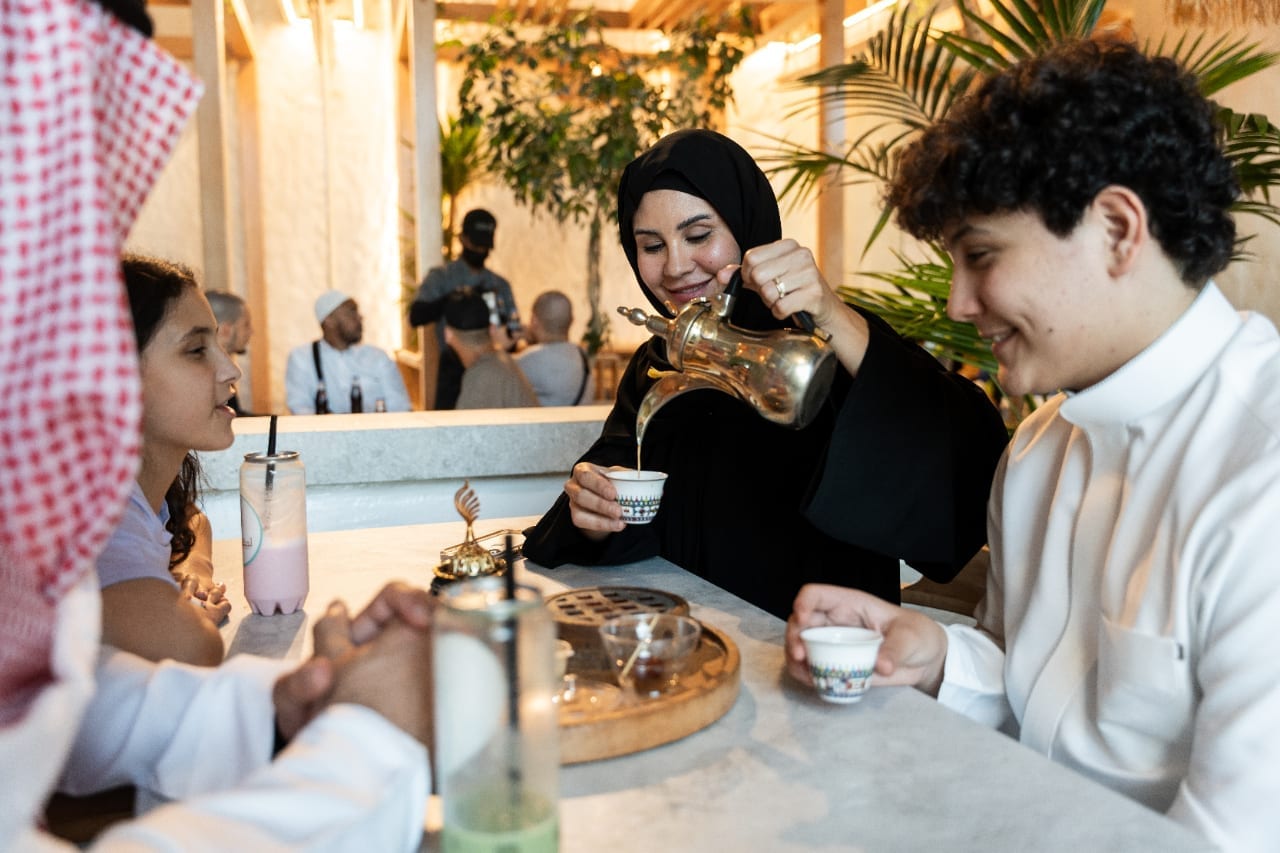
The server (muqahwi) traditionally holds the Dallah in the left hand and the Finjal in the right, serving while standing.
The Quantity
The cup is filled only partially — roughly one-third full. This signals generosity and an invitation to remain.
The Hand
Guests must receive and return the cup with the right hand, a gesture of respect and cleanliness.
The Shake
To indicate satisfaction, the guest gently shakes the empty cup from side to side before returning it. Without this signal, the cup will be refilled.
The Order
Service begins with the guest of honor or eldest present and proceeds from right to left.
Haif, Dhaif, and Kaif
In Bedouin tradition, cups may carry symbolic meaning.
Al-Haif
الهيفThe Host's CupTasted first to demonstrate trust and quality.
Al-Dhaif
الضيفThe Guest's CupThe first cup for the guest, marking acceptance of hospitality.
Al-Kaif
الكيفThe Enjoyment CupThe second cup for enjoyment and relaxation.
Al-Saif
السيفThe Sword CupRarely invoked, symbolizing loyalty and alliance. Today, it remains a cultural reference rather than a practical obligation.
Sweetness from the Earth
Saudi coffee is never sweetened. Instead, sweetness comes from dates served alongside it.
The contrast between bitter, spiced coffee and rich fruit sugars creates balance. Together, coffee and dates form a complete gesture of welcome.
Sukkari
QassimSweet, caramel-like flavor with soft texture
Khalas
Al-AhsaRich, honey-sweet with firm flesh
Ajwa
MadinahDark, intensely sweet with deep flavor
Master the Pour
Experience Saudi coffee beyond the cup. Join a traditional roasting and brewing session and learn the rhythm, etiquette, and meaning behind every pour.
Coffee Culture
The Saudi coffee ritual is a UNESCO-listed treasure and a cornerstone of the culinary tradition. Experience qahwa on guided food tours or during a Bedouin hospitality encounter. Understanding coffee ceremony etiquette enriches the experience — the three-cup protocol carries deep meaning. Coffee culture intersects with Saudi Arabia's art and heritage scene. Find premium coffee beans and traditional dallah pots at souks and markets.
trust.sourcesReferences
- [1]
- [2]Saudi Tourism Authority — Heritage & Culture — Saudi Tourism Authority (trust.accessed Mar 15, 2026)