Guide culturel de l'Arabie saoudite - Langue et étiquette
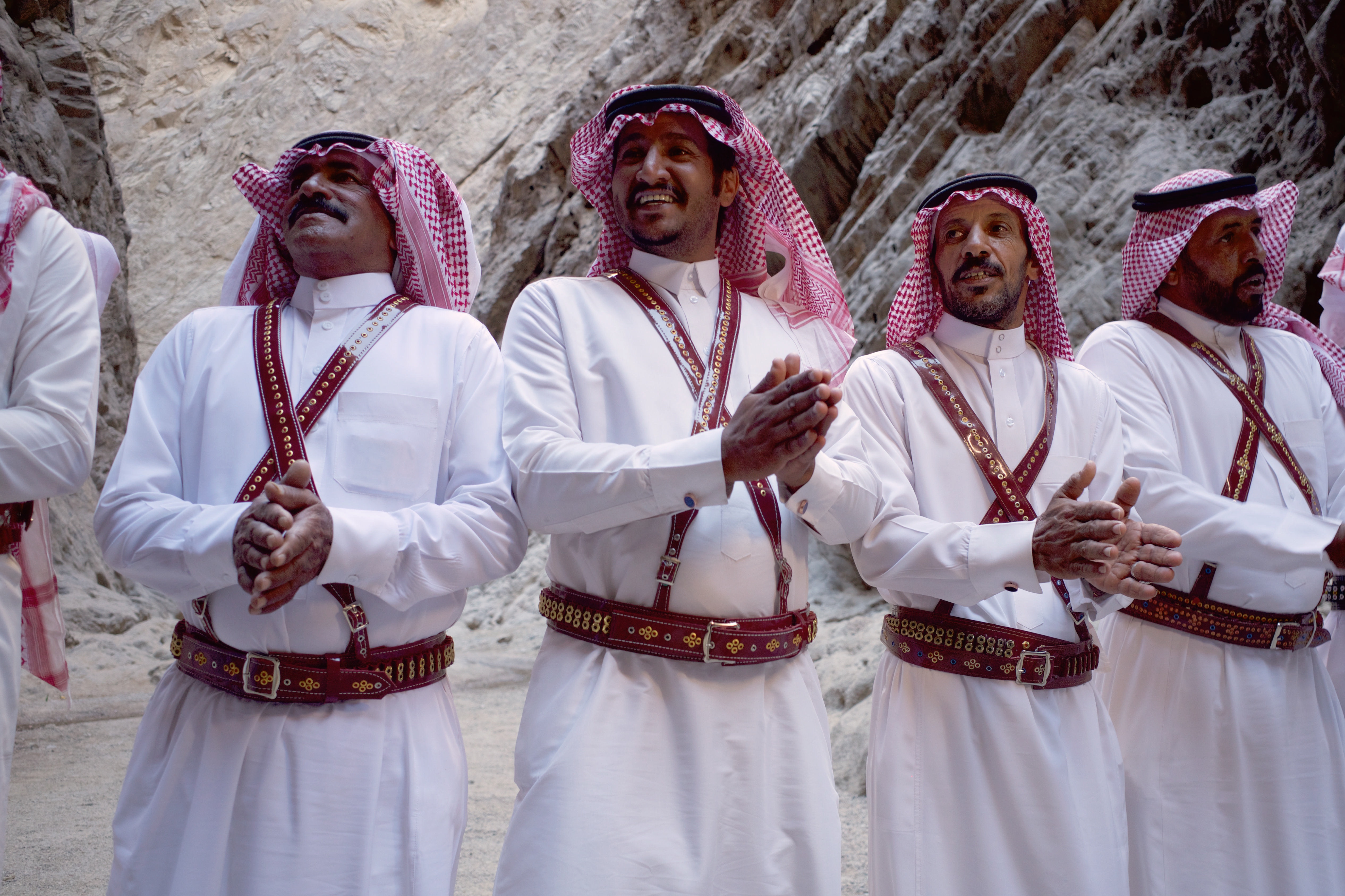
Découvrez la culture saoudienne : langue, coutumes, étiquette et conseils pour un voyage respectueux en Arabie Saoudite.
L'essentiel à retenir
- Arabic is the official language but English is widely spoken in cities, hotels, and tourist areas
- Friday noon prayer (12-1:30 PM) pauses commercial life — shops close briefly then reopen
- Saudi hospitality culture is legendary — accepting offered coffee, dates, and food is expected etiquette
- The dress code has relaxed significantly for tourists but modesty (covered knees and shoulders) is still expected
- Photography of people requires permission — especially women, religious sites, and military installations
Guide culturel de l'Arabie saoudite
Comprendre la culture saoudienne transforme votre voyage, du simple tourisme à une véritable connexion. Le Royaume connaît un changement social sans précédent tout en conservant des racines profondément ancrées dans la tradition — composer avec cet équilibre est la clé d'une visite enrichissante.
La vie quotidienne en Arabie saoudite
Le rythme plutôt que la routine
La vie quotidienne en Arabie saoudite obéit davantage à un rythme qu'à une routine. Si les emplois du temps apparents peuvent ressembler à ceux d'autres sociétés modernes, la manière dont le temps est vécu paraît souvent plus fluide. Les obligations sociales, les liens familiaux et les rencontres spontanées l'emportent fréquemment sur une planification rigide, créant un sentiment de flexibilité qui caractérise les interactions quotidiennes.
Une grande partie de ce rythme se déploie discrètement — dans les foyers, les cafés de quartier et les rassemblements informels — où la conversation et la présence comptent plus que l'efficacité. Ces moments modestes, souvent inaperçus, constituent le socle de la vie quotidienne et éclairent la façon dont tradition et modernité se croisent sans négociation permanente.
Variations urbaines et régionales
Il importe également de reconnaître que la vie quotidienne en Arabie saoudite varie considérablement selon l'âge, le lieu et le contexte personnel. Les centres urbains évoluent à un rythme plus soutenu, rythmé par les horaires de travail, la technologie et les influences internationales, tandis que les communautés plus petites conservent souvent un rythme plus lent et plus communautaire. Aucune de ces expériences ne résume l'ensemble.
Cette diversité reflète une société en transition, où des valeurs sociales de longue date coexistent avec des modes de vie en évolution. Plutôt que de suivre un schéma unique, la vie quotidienne s'adapte — discrètement, continuellement — aux personnes et aux environnements qui la façonnent.
Comprendre l'étiquette saoudienne
L'étiquette en Arabie saoudite relève moins de règles formelles que d'une attention portée à autrui. De nombreuses interactions sociales sont guidées par le contexte — qui est présent, le cadre, la relation entre les personnes — plutôt que par des consignes fixes. Ce qui peut sembler subtil ou tacite aux visiteurs reflète souvent des valeurs profondément ancrées telles que l'hospitalité, la générosité et le respect mutuel.
Plutôt que d'attendre des invités qu'ils connaissent chaque coutume, la société saoudienne accorde traditionnellement plus d'importance à l'intention et au comportement. Un ton courtois, de la patience et une volonté d'observer comptent souvent plus qu'une connaissance parfaite. Cette souplesse permet aux coutumes de s'adapter naturellement à différentes situations, des réunions familiales aux environnements urbains modernes.
La réalité de terrain
L'Arabie saoudite s'est transformée de façon spectaculaire depuis 2019. Les femmes peuvent conduire, voyager de façon indépendante et s'habiller plus librement. Divertissements, concerts et événements mixtes sont désormais courants. L'Arabie saoudite reste cependant un pays musulman conservateur — l'alcool y est interdit, les démonstrations d'affection en public sont déplacées, et le respect des pratiques islamiques est essentiel. L'équilibre a nettement basculé vers plus d'ouverture, mais il reste important de comprendre les valeurs locales.
Étiquette sociale
Salutations
- Même genre : la poignée de main est courante ; les amis proches peuvent s'embrasser
- Genres différents : attendez que la personne saoudienne tende la main en premier. De nombreux Saoudiens et Saoudiennes préfèrent ne pas se serrer la main avec le genre opposé. Un signe de tête et un sourire sont toujours appropriés.
- Expressions en arabe : « As-salamu alaykum » (que la paix soit sur vous) et « Marhaba » (bonjour) sont appréciées
Code vestimentaire
L'Arabie saoudite s'est nettement assouplie, mais une tenue modeste reste de mise :
Pour les femmes :
- L'abaya n'est plus obligatoire (sauf sur les sites religieux)
- Une tenue ample et modeste couvrant les épaules et les genoux est appropriée
- Le foulard n'est pas requis pour les non-musulmanes (sauf dans les mosquées)
- Le maillot de bain est admis dans les piscines d'hôtel et sur les plages privées
Pour les hommes :
- Le short est désormais accepté dans les zones touristiques et les centres commerciaux
- Les t-shirts et tenues décontractées conviennent
- Évitez les vêtements très moulants ou révélateurs
Consultez notre guide détaillé Que porter en Arabie saoudite.
Mode et identité
En Arabie saoudite, le vêtement est rarement purement fonctionnel. Il porte plusieurs strates de sens — signalant la région, l'occasion, le contexte familial et la position personnelle. Ce qui peut paraître sobre traduit souvent une réflexion attentive, façonnée par le cadre social et le choix individuel.
Le vêtement comme communication discrète
La mode en Arabie saoudite fonctionne comme une forme de communication discrète. Les choix vestimentaires signalent souvent le contexte, l'intention et l'appartenance plutôt qu'une mise en avant individuelle.
Ce qui peut sembler uniforme de loin révèle, observé de plus près, des strates de variation façonnées par le cadre, la génération et la préférence personnelle.
Cet équilibre entre continuité et expression permet à la mode de fonctionner comme un cadre culturel plutôt que comme un code figé. Elle laisse place à l'interprétation, s'adaptant aux influences modernes tout en restant ancrée dans une signification sociale.
Les vêtements traditionnels en contexte
Pour les hommes, le thobe reste un vêtement du quotidien dans une grande partie du pays. Sa coupe, son tissu et le style de son col varient selon la région et les préférences — des détails porteurs de sens pour qui en connaît la signification.
Pour les femmes, l'abaya est passée d'un uniforme obligatoire à une toile d'expression personnelle. Les créations contemporaines intègrent couleur, broderie et coupe travaillée, permettant à celles qui la portent de naviguer entre tradition et individualité.
Évolutions générationnelles
Les jeunes Saoudiens mêlent souvent mode internationale et éléments traditionnels, créant des styles qui traduisent une conscience mondiale sans abandonner les marqueurs culturels. Cela se remarque particulièrement dans les centres urbains, où les codes vestimentaires se sont nettement assouplis depuis 2019.
Pourtant, même si les options se multiplient, beaucoup continuent de porter des vêtements traditionnels par choix — les considérant non pas comme des contraintes mais comme des expressions d'identité et d'appartenance.
L'identité à travers les choix quotidiens
Dans la société saoudienne contemporaine, la mode reflète un dialogue permanent entre patrimoine et individualité. Les vêtements traditionnels continuent de porter un poids culturel, tandis que de nouvelles formes d'expression émergent par ajustements subtils plutôt que par rupture manifeste.
Cette évolution souligne la façon dont l'identité se négocie à travers les choix quotidiens. La mode devient un espace où expression personnelle et valeurs collectives coexistent, éclairant la manière dont la société gère le changement sans renoncer à la continuité.
Le conseil de l'initié
Le code vestimentaire varie selon le lieu. Dans les centres commerciaux et quartiers de divertissement de Riyad, vous verrez de tout, du thobe traditionnel au jean et t-shirt. Dans les villes plus petites ou les zones traditionnelles, habillez-vous de façon plus conservatrice. Dans les restaurants et hôtels haut de gamme, la tenue chic décontractée est la norme. En cas de doute, observez ce que portent les Saoudiens autour de vous et ajustez-vous en conséquence.
Langue
Bases d'arabe
L'arabe est la langue officielle, mais l'anglais est largement parlé dans les zones touristiques :
| Français | Arabe | Prononciation |
|---|---|---|
| Bonjour | مرحبا | Marhaba |
| Que la paix soit sur vous | السلام عليكم | As-salamu alaykum |
| Merci | شكرا | Shukran |
| Oui | نعم | Na'am |
| Non | لا | La |
| S'il vous plaît | من فضلك | Min fadlak (m) / Min fadlik (f) |
| Combien ? | كم | Kam? |
| Délicieux | لذيذ | Lazeez |
Où l'anglais fonctionne
- Hôtels, aéroports, grands restaurants
- Attractions touristiques et visites guidées
- Applications Uber/Careem
- Centres commerciaux et commerces
- Les jeunes Saoudiens (la plupart parlent un excellent anglais)
Où l'arabe aide
- Souks et marchés traditionnels
- Petits restaurants locaux
- Zones rurales et petites villes
- Échanger avec les Saoudiens plus âgés
Religion et heures de prière
L'islam façonne la vie quotidienne en Arabie saoudite. Comprendre cela enrichit votre expérience :
Heures de prière
Les musulmans prient cinq fois par jour. Pendant les heures de prière (environ 20 à 30 minutes chacune) :
- Les commerces et restaurants ferment brièvement
- Un appel à la prière (adhan) retentit depuis les mosquées
- L'activité normale reprend après la prière
Les horaires varient selon la saison :
- Fajr : à l'aube (avant le lever du soleil)
- Dhuhr : à midi (12 h – 13 h 30)
- Asr : l'après-midi (15 h – 16 h 30)
- Maghrib : au coucher du soleil
- Isha : le soir (20 h – 21 h 30)
Astuce : les centres commerciaux restent souvent ouverts pendant la prière, mais les boutiques individuelles ferment. Prévoyez en conséquence.
Mosquées
- Les non-musulmans ne peuvent pas entrer dans les mosquées saintes de La Mecque et de Médine
- Certaines mosquées dans d'autres villes accueillent les visiteurs — demandez d'abord
- Retirez vos chaussures avant d'entrer
- Habillez-vous modestement (les femmes doivent se couvrir les cheveux)
La religion dans la société saoudienne
En Arabie saoudite, l'islam n'est pas une simple religion — il constitue le fondement de l'identité nationale, du cadre juridique et du rythme quotidien. Le pays abrite les deux lieux les plus sacrés de l'islam, La Mecque et Médine, et cette centralité façonne la vie publique de manière à la fois visible et subtile.
Un cadre culturel partagé
La religion en Arabie saoudite fonctionne comme un cadre culturel partagé plutôt que comme l'expression singulière d'une croyance. La pratique islamique façonne les rythmes quotidiens, la vie publique et les interactions sociales, souvent de façon subtile plutôt qu'ostentatoire.
Les heures de prière, les observances saisonnières et les repères éthiques s'intègrent aux routines quotidiennes, créant un sentiment de continuité entre les générations.
Pour beaucoup, la pratique religieuse fait partie de la vie collective — elle oriente le comportement social et la réflexion personnelle sans nécessiter d'articulation explicite. Cette intégration permet à la foi de rester présente tout en s'adaptant aux réalités de la société moderne.
La foi dans la vie quotidienne
L'appel à la prière ponctue la journée à cinq reprises, et de nombreux commerces suspendent leur activité pendant les heures de prière. Ce rythme est tissé dans la trame de la société, influençant les emplois du temps, les rassemblements sociaux et jusqu'à l'architecture — les mosquées ne sont jamais loin.
Pour la plupart des Saoudiens, la pratique religieuse ne se distingue pas de la routine quotidienne mais s'y intègre. Cette continuité entre croyance et comportement traduit une vision du monde où la foi apporte à la fois structure et sens.
Expression publique et dévotion privée
Si l'observance religieuse publique est courante, la dévotion personnelle varie considérablement. Certains la pratiquent avec un engagement visible ; d'autres vivent leur foi de façon plus privée. Cette diversité s'inscrit dans un cadre de valeurs culturelles partagées plutôt que dans une uniformité rigide.
La présence de la religion dans l'espace public — de l'architecture aux coutumes sociales — n'exclut pas une variation individuelle dans la pratique. Ce qui demeure constant, c'est le respect culturel accordé à l'observance religieuse, même chez ceux qui la vivent différemment.
Tradition et vie contemporaine
À mesure que la société saoudienne évolue, les institutions et pratiques religieuses s'adaptent, comme les autres aspects de la vie. La réforme de l'éducation, les changements sociaux et l'ouverture croissante sur le monde ont fait naître de nouvelles discussions sur la tradition et la modernité.
Ces évolutions se déploient dans un contexte où la religion reste centrale sans être figée. La relation entre la foi et la vie contemporaine continue de se négocier à travers des choix quotidiens plutôt que par des ruptures spectaculaires.
Comprendre par le contexte
Pour qui cherche à comprendre la religion en Arabie saoudite, le contexte compte plus que la généralisation. Le paysage religieux du pays est façonné par l'histoire, la géographie et un changement social continu — des facteurs qui produisent une réalité plus nuancée que ne le suggèrent souvent les gros titres.
Ce qui en ressort n'est ni le fondamentalisme ni la sécularisation, mais une société où la foi conserve son sens tout en s'adaptant aux conditions contemporaines.
Des variations au sein d'un cadre partagé
Dans le même temps, l'expérience religieuse en Arabie saoudite n'est pas uniforme. L'interprétation individuelle, l'observance personnelle et le contexte régional influencent tous la manière dont la foi est vécue et exprimée. Les environnements urbains reflètent souvent un éventail de pratiques plus diversifié, tandis que les communautés plus petites peuvent privilégier des routines partagées et une participation collective.
Comprendre la religion dans ce contexte suppose de reconnaître à la fois son rôle structurel et sa dimension personnelle. La foi constitue un fondement de la vie sociale, tout en laissant place à des variations façonnées par l'environnement, l'éducation et le choix individuel.
Le ramadan
Le ramadan comme expérience vécue
En Arabie saoudite, le ramadan se vit comme un rythme collectif plutôt que comme une observance privée. Le rythme de la vie quotidienne se modifie subtilement, façonné par les heures de jeûne, les rassemblements du soir et des moments de réflexion tissés dans les routines ordinaires. Les rues se font plus calmes le jour, tandis que les nuits s'animent de visites familiales, de repas partagés et d'un sentiment de continuité paisible.
Loin de se définir uniquement par la pratique religieuse, le ramadan porte aussi une forte dimension sociale. L'hospitalité, la générosité et l'attention portée aux autres deviennent plus visibles, exprimées autant par des gestes quotidiens que par des traditions formelles. Pour beaucoup, ce mois relève moins d'une observance stricte que d'une présence — ralentir, renouer des liens, et créer un espace de réflexion au sein de la vie moderne.
Pendant le mois sacré du ramadan :
- Les musulmans jeûnent de l'aube au coucher du soleil
- Les restaurants sont fermés pendant les heures de jour (certains restaurants d'hôtel servent les clients)
- Manger, boire ou fumer en public pendant les heures de jeûne est déplacé
- Les soirées s'animent après le coucher du soleil (le festin de l'iftar)
- Les attractions ont souvent des horaires spéciaux pendant le ramadan
Notre point de vue
Vivre le ramadan en Arabie saoudite est en réalité une expérience magnifique — l'atmosphère du soir après l'iftar est magique, avec des familles qui célèbrent et des mets spéciaux partout. Nous avons séjourné sur place pendant le ramadan à deux reprises et l'avons trouvé enrichissant, non contraignant. Il suffit de s'organiser en conséquence : mangez à l'hôtel pendant la journée, et rejoignez les festivités après le coucher du soleil. La générosité que montrent les Saoudiens pendant le ramadan est touchante — ne soyez pas surpris si l'on vous invite à partager un repas.
Expressions régionales et urbaines
Si les fondements spirituels du ramadan restent constants, son expression en Arabie saoudite est façonnée par des influences régionales, générationnelles et urbaines. Dans les grandes villes, les longues soirées se prolongent souvent en rassemblements sociaux dans des cafés ou des foyers familiaux, mêlant tradition et modes de vie contemporains. Dans les communautés plus petites, le mois peut sembler plus intime, centré sur les liens de voisinage et les routines partagées.
Cette diversité reflète une société où tradition et modernité coexistent naturellement. Le ramadan, dans ce contexte, n'est pas une expérience uniforme mais un cadre partagé qui permet différentes expressions de la foi, de la communauté et de la vie quotidienne — chacune façonnée par l'environnement, le rythme personnel et le lien social.
Musique et arts en Arabie saoudite
La musique et l'expression artistique en Arabie saoudite plongent leurs racines loin dans le paysage culturel. De la poésie et de la musique folklorique aux arts visuels et au spectacle vivant, les traditions créatives façonnent la vie communautaire depuis des générations, reflétant la diversité régionale et une identité partagée.
Patrimoine et expression privée
La musique et l'expression artistique en Arabie saoudite ont longtemps existé dans des espaces privés et communautaires, façonnées par la tradition, la région et le contexte social. Ces formes de créativité se sont souvent développées discrètement, transmises par les réunions familiales, les célébrations et une mémoire culturelle partagée plutôt que par des institutions publiques.
Ces dernières années, l'expression créative est devenue plus visible, gagnant de nouveaux espaces tout en restant liée aux formes héritées. Cette visibilité ne traduit pas une rupture avec le passé, mais un élargissement de la manière dont l'art est partagé et vécu au sein de la société.
Formes traditionnelles
La musique traditionnelle saoudienne couvre un large éventail de styles régionaux, de l'ardah rythmée des régions centrales aux chants maritimes des zones côtières. Chacun reflète des histoires et des paysages distincts, transmis par la tradition orale et la pratique communautaire.
Les arts visuels puisent de même dans le patrimoine — la calligraphie, les motifs géométriques et les décors textiles ont longtemps servi des fins à la fois décoratives et symboliques, reliant les objets du quotidien à une signification culturelle plus profonde.
Créativité contemporaine
L'expression artistique contemporaine s'est considérablement développée ces dernières années. De nouvelles galeries, installations d'art public et salles de spectacle ont émergé, créant des espaces de dialogue à la fois local et international.
Cette expansion inclut les médias numériques, le cinéma et les formes expérimentales, souvent produits par une jeune génération cherchant à explorer son identité à travers la pratique créative. Il en résulte un paysage où tradition et innovation coexistent.
Préservation et expérimentation
Le paysage artistique contemporain en Arabie saoudite reflète un équilibre entre préservation et expérimentation. Les rythmes traditionnels, les motifs visuels et les formes narratives continuent d'informer les expressions plus récentes, créant une continuité entre les générations.
Plutôt que de suivre une direction unique, la musique et l'art évoluent par le dialogue — entre passé et présent, privé et public, expression individuelle et identité collective. Cette dynamique éclaire la façon dont la créativité fonctionne à la fois comme mémoire culturelle et comme pratique vivante.
La vie sociale en Arabie saoudite
La vie sociale en Arabie saoudite s'articule autour du lien — entre la famille, les amis et la communauté. Les rassemblements sont fréquents, souvent spontanés, et durent généralement plus longtemps que dans des cultures plus rythmées par les emplois du temps. Ce rythme de convivialité constitue le socle de l'expérience sociale quotidienne.
Proximité et présence
La vie sociale en Arabie saoudite se déploie souvent par la proximité plutôt que par la planification. Les relations s'entretiennent par des contacts fréquents et informels — du temps partagé, de la conversation, de la présence — plutôt que par des occasions programmées. Ces interactions peuvent avoir lieu dans les foyers, les cafés ou les espaces publics, selon le contexte plutôt que selon des routines fixes.
Cette fluidité permet aux liens sociaux de rester adaptables. Les invitations naissent de façon organique, et les rassemblements s'élargissent ou se resserrent selon les circonstances, traduisant une culture qui valorise la réactivité plutôt que la structure.
Réunions privées et hospitalité
Une grande partie de la vie sociale saoudienne se déroule dans des espaces privés — foyers, résidences familiales et salons de réception dédiés. Recevoir et être reçu occupent une place centrale dans l'identité sociale, avec une générosité et une chaleur attendues de tous les participants.
Ces réunions sont rarement formelles. La conversation circule librement, la nourriture se partage, et le temps s'écoule sans urgence. L'accent porte sur la présence plutôt que sur un programme.
Espaces publics et normes en mutation
Ces dernières années, les espaces sociaux publics se sont considérablement développés. Cafés, restaurants et lieux de divertissement servent désormais de points de rencontre pour les amis et les familles, en particulier dans les zones urbaines. Cette évolution a créé de nouveaux contextes d'interaction sociale, aux côtés des contextes traditionnels.
Il en résulte un paysage social à plusieurs strates, où hospitalité privée et vie sociale publique coexistent, chacune répondant à des finalités et suivant des rythmes différents.
Amitié et communauté
Les amitiés en Arabie saoudite se nouent souvent au sein de réseaux existants — via la famille, l'école, le travail ou le voisinage. Ces liens ont tendance à durer, entretenus par des contacts réguliers et une obligation mutuelle.
Les liens communautaires dépassent les cercles immédiats. Voisins, collègues et famille élargie se croisent fréquemment, créant un tissu social où les relations se superposent et se renforcent mutuellement.
L'observation plutôt que la généralisation
Pour qui cherche à comprendre la vie sociale saoudienne, l'attention portée au contexte révèle davantage que les stéréotypes. Les normes sociales varient selon les régions, les générations et les préférences individuelles — ce qui demeure constant, c'est la valeur accordée au lien lui-même.
Ce qui en ressort, c'est une société où la vie sociale est à la fois structurée par la tradition et réceptive au changement, façonnée par des valeurs durables et des attentes en évolution.
Continuité et adaptation
Si la vie sociale conserve de forts éléments communautaires, elle reflète aussi des changements plus larges. L'urbanisation, la communication numérique et l'évolution des modes de vie ont influencé la manière dont les gens se lient, en particulier chez les jeunes générations. Les échanges en ligne complètent de plus en plus les rencontres en face à face plutôt que de les remplacer.
Ces évolutions illustrent un paysage social défini par la continuité et l'adaptation. La vie sociale reste ancrée dans la relation et la présence, même si les cadres et les formes d'interaction continuent d'évoluer.
La nourriture comme pratique sociale
En Arabie saoudite, l'acte de manger dépasse largement la simple subsistance. La nourriture est un medium à travers lequel les relations se nouent, s'entretiennent et se célèbrent. Partager un repas, c'est offrir du temps et de l'attention — des gestes qui pèsent dans une culture façonnée par l'hospitalité et les valeurs communautaires.
La nourriture comme langage partagé
La nourriture en Arabie saoudite fonctionne comme un langage partagé plutôt que comme une mise en valeur de la cuisine. Les repas sont façonnés par l'occasion et la compagnie, se déroulant souvent lentement et collectivement. L'accent porte moins sur la présentation que sur la présence, le fait de manger étant compris comme un acte social qui renforce le lien et l'hospitalité.
Au sein des foyers, la nourriture marque le rythme et la continuité — reliant les générations par des saveurs familières et une préparation partagée. Ces pratiques quotidiennes entretiennent discrètement la mémoire culturelle, même si les ingrédients et les habitudes évoluent avec les modes de vie.
Le sens des repas partagés
En Arabie saoudite, la nourriture porte un sens qui dépasse la nutrition. Les repas fonctionnent comme des occasions sociales — des espaces où les relations s'entretiennent, où la générosité s'exprime, et où le temps s'offre plutôt qu'il ne se gère.
Que ce soit dans un foyer privé ou un cadre public, manger ensemble signale l'appartenance, et le geste de partager la nourriture en dit souvent plus que les mots.
Cet accent mis sur la présence plutôt que sur la précision façonne le déroulement des repas. Les portions sont généreuses, les invitations sincères, et l'expérience tend vers l'ouverture plutôt que vers le formalisme.
Ce qui compte n'est pas le menu mais l'instant — une approche qui reflète des valeurs culturelles plus larges autour de l'hospitalité et du lien.
Cuisine familiale et repas communs
De nombreux repas saoudiens se prennent au sol, réunis autour de grands plats communs. Le riz à l'agneau ou au poulet en reste le cœur, souvent préparé selon des recettes transmises de génération en génération.
Le cadre est informel, le rythme sans hâte, et l'on s'attend à ce que les invités mangent généreusement.
Dans ce contexte, cuisiner est en soi une forme d'hospitalité. Préparer un repas pour autrui — famille ou invités — est un geste d'attention, impliquant souvent un effort et un temps considérables.
Il en résulte non pas un simple repas mais une expérience partagée, qui renforce les liens entre les personnes par le simple geste de manger ensemble.
Espaces publics et restauration urbaine
Dans des villes comme Riyad et Jeddah, la culture culinaire a évolué pour inclure des cuisines internationales, des cafés de spécialité et des expériences de restauration qui mêlent tendances mondiales et traditions locales.
Les jeunes Saoudiens se retrouvent en café autant qu'à la maison, adaptant des valeurs d'hospitalité héritées à des cadres contemporains.
Pourtant, même en milieu urbain, la fonction sociale de la nourriture persiste. Les repas restent des occasions de converser, de prendre des nouvelles, de lancer des invitations qui n'impliquent d'autre obligation que la présence.
Le cadre peut changer, mais la finalité sous-jacente — le lien à travers l'expérience partagée — demeure constante.
Continuité générationnelle
À travers les générations, la nourriture en Arabie saoudite constitue un fil reliant le passé et le présent. Les plats traditionnels se transmettent non seulement comme des recettes mais comme des rituels — des façons de se réunir, de marquer les occasions, d'exprimer l'attention sans les mots.
Si la vie urbaine introduit de nouvelles influences, les valeurs sous-jacentes demeurent. Que le repas soit un kabsa partagé au sol en famille ou un café dans un établissement de Riyad, la finalité persiste : être présent, offrir du temps, et créer du lien.
La nourriture comme fondement de la vie sociale
Si les plats et ingrédients régionaux varient d'un bout à l'autre du pays, la signification sociale de la nourriture reste constante. Que ce soit dans un cadre familial ou une réunion plus informelle, les repas créent un espace où la hiérarchie s'estompe et où la conversation prend le pas.
Cette approche reflète une valeur culturelle plus large accordée à la convivialité. La nourriture devient un medium par lequel les relations s'entretiennent et se renouvellent, s'adaptant aux contextes modernes sans perdre son rôle de fondement de la vie sociale.
La vie de famille en Arabie saoudite
La famille reste le principe organisateur central de la société saoudienne. Les relations entre générations, les responsabilités au sein des foyers et les obligations sociales sont façonnées par des liens qui dépassent largement le noyau familial. Cette interconnexion influence les routines quotidiennes, les décisions de vie et la manière dont le temps est employé.
Proximité et continuité
La vie de famille en Arabie saoudite est souvent façonnée par la proximité et la continuité. Les réseaux familiaux élargis jouent un rôle visible dans les routines quotidiennes, influençant la prise de décision, les interactions sociales et le rythme de la vie de tous les jours.
Ces relations s'entretiennent par des contacts réguliers plutôt que par une obligation formelle, créant un sentiment de stabilité qui dépasse le foyer.
Dans ce cadre, la famille fonctionne à la fois comme un ancrage social et comme une source de flexibilité. Les rôles et responsabilités se comprennent selon le contexte, s'adaptant naturellement aux circonstances changeantes plutôt qu'à une structure rigide.
Continuité générationnelle
Les foyers multigénérationnels et les liens familiaux élargis étroits restent courants, même si les modes de vie varient entre milieux urbains et ruraux. Grands-parents, parents et enfants partagent souvent non seulement un toit mais aussi des responsabilités, créant un rythme d'entraide qui définit la vie quotidienne.
Cette continuité n'est pas seulement structurelle — elle traduit une vision du monde où l'identité familiale pèse à travers les générations. Les réussites et les difficultés individuelles se vivent souvent comme des enjeux collectifs.
Rythmes du foyer
La vie quotidienne au sein des familles saoudiennes est rythmée par les repas partagés, les réunions régulières et une attente de disponibilité. Les week-ends et les soirées se centrent fréquemment sur le temps en famille, les visites aux proches formant une part constante de la routine sociale.
Ces rythmes créent un sentiment d'appartenance qui dépasse le foyer lui-même. Cousins, tantes et oncles jouent souvent un rôle important dans l'éducation des enfants, et les événements familiaux ponctuent le calendrier social tout au long de l'année.
Des attentes en évolution
Si les structures familiales restent solides, les attentes qu'elles portent continuent d'évoluer. Les jeunes générations concilient de plus en plus les obligations traditionnelles avec les ambitions personnelles, les engagements professionnels et les préférences individuelles.
Cette négociation se joue discrètement, au sein des foyers plutôt que dans le débat public. Il en résulte une adaptation progressive des rôles familiaux aux conditions contemporaines — sans abandonner la valeur accordée au lien et à la responsabilité mutuelle.
Comprendre par la présence
Pour qui cherche à comprendre la vie de famille saoudienne, l'observation révèle davantage que la généralisation. La chaleur des réunions familiales, le respect manifesté entre générations et le soutien pratique échangé au quotidien éclairent un tissu social bâti sur des liens durables.
Ce qui en ressort n'est ni la rigidité ni l'uniformité, mais une structure souple où tradition et modernité coexistent à travers une négociation vécue, permanente.
Continuité et changement
Dans le même temps, la vie de famille reflète un changement sociétal plus large. L'urbanisation, l'éducation et la mobilité professionnelle ont introduit de nouveaux modes de vie, en particulier chez les jeunes générations. Ces évolutions influencent la manière dont les familles organisent le temps, l'espace et les attentes, sans dissoudre les liens de longue date.
Cette coexistence de la continuité et du changement définit la vie de famille dans l'Arabie saoudite contemporaine. Les relations restent centrales, même si les formes qu'elles prennent évoluent discrètement aux côtés des modes de vie modernes.
L'hospitalité saoudienne
L'hospitalité comme réflexe social
L'hospitalité en Arabie saoudite tient moins du geste formel que du réflexe social. Elle s'exprime par l'attention portée à autrui — offrir du temps, de l'espace et du soin — souvent sans attente de retour. Ces gestes peuvent paraître discrets, se déployant à travers la conversation, la présence partagée ou de simples actes de générosité qui signalent l'accueil plutôt que la cérémonie.
Ancrée dans des valeurs sociales de longue date, l'hospitalité continue de s'adapter à la vie contemporaine. Que ce soit dans un foyer familial, un lieu de travail ou une rencontre fortuite, l'accent reste mis sur l'aisance et le respect, permettant aux relations de se développer naturellement plutôt que par un formalisme ritualisé.
Les Saoudiens sont réputés pour leur hospitalité (appelée « karam ») :
La culture du café
- Le café arabe (qahwa) accompagné de dattes est un accueil traditionnel
- Il est poli d'accepter au moins une tasse
- Secouez légèrement la tasse lorsque vous en avez assez
- Le café est souvent parfumé à la cardamome et servi dans de petites tasses
Invitations
- Les Saoudiens peuvent vous inviter chez eux ou à partager un repas
- Ces invitations sont sincères, et les accepter est apprécié
- Apportez un petit cadeau si vous êtes invité chez quelqu'un (douceurs, dattes ou fleurs)
- Retirez vos chaussures si vous voyez les autres le faire à l'entrée
Étiquette à table
- De nombreux Saoudiens mangent assis au sol autour de plats communs
- Utilisez votre main droite pour manger (la main gauche est considérée comme impure)
- Goûtez un peu de tout ce qui vous est proposé — refuser un plat peut sembler impoli
- Les repas sont souvent de longues occasions de convivialité
Des expressions d'accueil en évolution
À mesure que la société évolue, l'expression de l'hospitalité évolue aussi. En milieu urbain, elle peut prendre des formes plus discrètes — un café partagé, un temps de conversation prolongé, ou des conseils offerts sans instruction. Dans des contextes plus traditionnels, l'hospitalité peut sembler plus cérémonielle, façonnée par des coutumes héritées et des attentes partagées.
Ces variations reflètent une culture où l'accueil dépend de la situation plutôt que d'un scénario fixe. L'hospitalité fonctionne comme un langage social, s'ajustant au lieu, à la relation et au moment, tout en conservant sa finalité première : créer un sentiment d'appartenance par l'attention et la considération.
Sensibilités culturelles
Photographie
- Demandez toujours l'autorisation avant de photographier des personnes, en particulier des femmes
- Les installations militaires, bâtiments gouvernementaux et certains sites religieux interdisent les photos
- Paysages, architecture et plats sont généralement sans problème
Comportement en public
- Alcool : totalement interdit — n'en apportez pas
- Démonstrations d'affection : déplacées en public
- Pointer du doigt : utilisez toute la main, pas un seul doigt
- Pieds : ne montrez pas la plante de vos pieds à autrui
- Critique : évitez de critiquer l'islam, la famille royale ou les politiques saoudiennes en public
Les femmes dans la société saoudienne
Le rôle des femmes en Arabie saoudite a connu une transformation significative ces dernières années. Si le changement est tangible, il reste inégal — façonné par la région, la génération et la situation individuelle. Comprendre cette complexité exige une attention portée aux réalités vécues plutôt qu'à de vastes généralisations.
Au-delà d'un récit unique
Les expériences des femmes en Arabie saoudite ne peuvent se comprendre à travers un récit unique. La vie quotidienne est façonnée par une combinaison de choix personnel, de contexte familial, d'environnement professionnel et de cadre régional.
Ces facteurs influencent la manière dont les femmes participent à l'espace public, au travail, à l'éducation et à la vie sociale, de façon souvent discrète et hautement individuelle.
Plutôt que de suivre un schéma uniforme, les rôles et routines des femmes varient selon les générations et les communautés. Cette diversité reflète une société où le changement se déploie progressivement, façonné par l'expérience vécue plutôt que par des jalons isolés.
Un paysage en mutation
Depuis 2017, les femmes saoudiennes ont obtenu le droit de conduire, de voyager de façon indépendante sans l'accord d'un tuteur masculin pour de nombreuses démarches, et de participer plus visiblement à la vie publique et professionnelle.
Ces changements politiques ont modifié le rythme quotidien de nombreuses femmes, élargissant l'accès à l'emploi, à l'éducation et à des espaces sociaux auparavant moins accessibles.
Pourtant, droits formels et expérience vécue ne coïncident pas toujours. La mise en œuvre varie, et les attentes sociales continuent de façonner les choix aux côtés du cadre juridique.
Vie quotidienne et présence publique
Dans les grandes villes, les femmes sont désormais visiblement présentes dans les cafés, les quartiers commerçants, les lieux de divertissement et les lieux de travail. Les environnements mixtes sont devenus courants, d'une manière qui aurait été rare il y a une décennie.
La participation professionnelle s'est nettement élargie. Les femmes occupent aujourd'hui des postes dans l'administration, la finance, le tourisme et les arts. L'entrepreneuriat féminin est activement encouragé, et le niveau d'études des femmes dépasse celui des hommes dans de nombreux domaines.
Continuité et changement
Pour de nombreuses Saoudiennes, le changement coexiste avec la continuité. La famille reste centrale dans la vie sociale, et les valeurs traditionnelles autour de la pudeur, de la communauté et de la responsabilité persistent — non pas comme des contraintes imposées de l'extérieur, mais comme des cadres au sein desquels chacune exerce ses choix.
Cela signifie que les généralisations saisissent rarement la diversité des expériences. Une jeune professionnelle à Riyad peut vivre très différemment d'une femme dans une ville plus petite, et pourtant toutes deux participent à la même société en évolution.
L'observation plutôt que la présomption
Pour qui cherche à comprendre la vie des femmes en Arabie saoudite, l'observation et l'ouverture d'esprit comptent plus que les cadres préconçus. Le pays n'est ni la société restrictive souvent dépeinte dans les récits anciens, ni un simple récit de libération linéaire.
Ce qui en ressort est plus nuancé : une société où les femmes façonnent activement leurs rôles, naviguant entre tradition et modernité, et participant à la vie publique selon des termes qui continuent d'évoluer.
Continuité et transformation
Dans l'Arabie saoudite contemporaine, les femmes évoluent dans un paysage défini à la fois par la continuité et la transformation. Une participation accrue à l'éducation, à la vie professionnelle et au débat public fait désormais partie du quotidien de beaucoup, tandis que des structures sociales de longue date continuent d'influencer attentes et choix.
Comprendre cet équilibre exige une attention à la nuance. Le progrès n'est ni linéaire ni uniforme, et les expériences individuelles diffèrent largement. Vue sous cet angle, la vie des femmes en Arabie saoudite reflète un tissu social complexe façonné par le contexte, l'agentivité et des normes en évolution.
La culture du travail en Arabie saoudite
La culture du travail en Arabie saoudite reflète une société en transition. Les hiérarchies traditionnelles et les pratiques fondées sur les relations coexistent avec des structures en modernisation, en particulier dans les secteurs façonnés par les initiatives de Vision 2030. Il en résulte un paysage professionnel qui allie formalisme et flexibilité.
Les relations avant les rôles
La culture du travail en Arabie saoudite est façonnée autant par les relations que par les rôles. Les environnements professionnels accordent souvent une importance forte à la confiance, au lien personnel et au respect mutuel, ce qui peut influencer la manière dont se déroulent la collaboration et la prise de décision.
Ces dynamiques coexistent avec des structures formelles, créant des lieux de travail qui équilibrent hiérarchie et sensibilité interpersonnelle.
Le temps et le rythme se négocient fréquemment selon le contexte plutôt que selon des horaires fixes. Réunions, discussions et avancées s'adaptent souvent aux circonstances, reflétant une culture du travail qui valorise la présence et le dialogue autant que la productivité.
Les relations et la vie professionnelle
Les relations professionnelles en Arabie saoudite dépassent souvent l'échange transactionnel. Bâtir la confiance et établir un rapport restent des éléments importants des interactions d'affaires, en particulier dans les secteurs traditionnels. Cet accent mis sur la relation crée un environnement de travail où lien personnel et obligation professionnelle se recoupent fréquemment.
Les réunions peuvent débuter par de longues salutations et conversations avant d'aborder les affaires — un rythme qui reflète des valeurs culturelles plus larges autour de l'hospitalité et du respect.
Hiérarchie et collaboration
Les structures organisationnelles de nombreux lieux de travail saoudiens maintiennent des hiérarchies claires, la prise de décision se concentrant souvent parmi les figures les plus expérimentées. Dans le même temps, les approches collaboratives se généralisent, en particulier dans les secteurs récents et les environnements multinationaux.
Naviguer ces structures exige une attention au contexte. Formalisme et respect de l'ancienneté coexistent avec une ouverture aux idées nouvelles, créant une dynamique qui varie sensiblement selon les secteurs et les générations.
Des lieux de travail en évolution
Ces dernières années ont vu des évolutions significatives dans la culture du travail saoudienne. La participation accrue des femmes au marché du travail, l'essor de l'entrepreneuriat et l'exposition aux pratiques d'affaires mondiales ont introduit de nouvelles attentes et possibilités.
Ces changements se déploient de façon inégale selon les secteurs et les régions, mais la trajectoire d'ensemble pointe vers la diversification. La culture du travail s'adapte — non par rupture, mais par intégration progressive de nouvelles pratiques aux côtés des normes établies.
L'observation plutôt que la présomption
Pour qui cherche à comprendre la culture du travail saoudienne, l'observation et l'adaptabilité comptent plus que les cadres préconçus. L'environnement professionnel n'est ni purement traditionnel ni entièrement mondialisé — il occupe un espace intermédiaire, façonné par le contexte, le secteur et les organisations elles-mêmes.
Ce qui en ressort est une culture du travail en évolution active, où le respect de la hiérarchie coexiste avec une ouverture croissante à l'innovation et au changement.
Évolution et coexistence
À mesure que le paysage professionnel évolue, la culture du travail continue de s'adapter. La collaboration internationale, le changement technologique et l'évolution des attentes chez les jeunes professionnels ont introduit de nouveaux styles de travail, en particulier dans les centres urbains. Ces influences coexistent avec les normes établies plutôt que de les remplacer.
Comprendre la culture du travail en Arabie saoudite suppose donc de reconnaître cette réalité à plusieurs strates — un environnement professionnel façonné par la tradition, le changement, et la négociation permanente entre les deux.
Langue et communication en Arabie saoudite
La communication en Arabie saoudite dépasse la parole. Langue, geste, ton et contexte se conjuguent pour transmettre du sens, reflétant une culture où les relations se construisent par un échange nuancé plutôt que par la seule affirmation directe.
Au-delà du langage parlé
La communication en Arabie saoudite dépasse le langage parlé. Le ton, le rythme et le geste portent souvent autant de sens que les mots eux-mêmes. Les conversations peuvent se dérouler progressivement, façonnées par le contexte et la relation plutôt que par l'échange direct, permettant à la compréhension de se construire par l'attention plutôt que par l'immédiateté.
Cette approche stratifiée de la communication accorde de la valeur à la présence. Le silence, les pauses et l'expression indirecte ne sont pas des absences mais des éléments à part entière de l'interaction, signalant le respect et la considération au sein de l'échange social.
L'arabe comme fondement culturel
L'arabe est la langue première de communication, porteuse de siècles de signification poétique, religieuse et sociale. La langue parlée varie selon les régions, avec des dialectes distincts qui reflètent l'identité et l'histoire locales.
Même pour les non-arabophones, la conscience du poids culturel de la langue enrichit la compréhension. Salutations, expressions de gratitude et marques de respect portent un sens qui dépasse la traduction littérale.
Au-delà des mots
La communication non verbale joue un rôle important dans les interactions saoudiennes. Gestes, contact visuel et proximité physique transmettent respect, attention et statut relationnel. Ces éléments tacites pèsent souvent autant que ce qui est dit.
Le silence, lui aussi, porte un sens. Les pauses dans la conversation peuvent signaler la réflexion plutôt que la gêne, et une écoute patiente témoigne d'un respect qu'une réponse rapide ne traduit pas.
Contexte et relation
Les styles de communication s'adaptent au contexte. Les cadres formels appellent un langage mesuré et une conscience de la hiérarchie, tandis que les réunions informelles laissent place à la chaleur, à l'humour et à la franchise. Naviguer ces variations exige une attention aux signaux sociaux.
La relation façonne la communication autant que le contenu. Confiance, familiarité et respect mutuel influencent non seulement ce qui est dit, mais la manière dont c'est reçu et interprété.
Écouter comme mode de communication
En Arabie saoudite, une communication efficace implique souvent plus d'écoute que de parole. L'attention portée au ton, au contexte et à l'espace entre les mots révèle un sens que les affirmations directes ne transmettent pas toujours.
Cette approche de la communication reflète des valeurs culturelles plus larges : la patience, le respect, et l'idée que le lien se construit par la présence plutôt que par la performance.
Langue et manière
Si l'arabe reste le fondement culturel de la communication, les environnements multilingues se généralisent, en particulier en milieu urbain et professionnel. Ces strates linguistiques coexistent sans se supplanter, reflétant une société habituée à composer avec la différence par le contexte plutôt que par l'uniformité.
Comprendre la communication en Arabie saoudite suppose donc de reconnaître à la fois la langue et la manière. Le sens réside souvent dans la façon dont une chose est dite — ou tue — plutôt que dans les mots seuls.
L'étiquette de voyage en Arabie saoudite
Voyager en Arabie saoudite appelle une forme d'attention façonnée par le contexte culturel plutôt que par des règles rigides. Comprendre comment les gens interagissent dans l'espace public, communiquent et mènent leur vie quotidienne offre aux visiteurs un cadre pour un engagement respectueux.
La conscience situationnelle
L'étiquette de voyage en Arabie saoudite est moins façonnée par des attentes formelles que par la conscience de la situation. Les déplacements dans l'espace public, les rencontres avec des inconnus et les interactions quotidiennes sont guidés par l'attention plutôt que par des règles explicites. Observer la manière dont les gens interagissent entre eux offre souvent une orientation plus claire que la préparation préalable.
Cet accent mis sur l'attention permet aux rencontres de rester flexibles. Le respect se communique par le ton, la patience et la réactivité, laissant place à une interaction qui se déploie naturellement plutôt que par le respect d'un comportement prédéfini.
L'attention plutôt que les règles
L'étiquette en Arabie saoudite relève moins de la mémorisation de comportements précis que du développement d'une sensibilité au contexte. Les normes sociales varient selon la région, le cadre et la génération — ce qui s'applique dans un marché traditionnel peut différer d'un café cosmopolite.
Cette fluidité récompense l'attention. Observer la manière dont les habitants gèrent les situations offre souvent des repères plus clairs qu'une liste écrite d'attentes.
Espace public et présence
Les espaces publics en Arabie saoudite ont leurs propres rythmes et attentes. La tenue tend vers la modestie, même si les normes se sont assouplies dans les centres urbains. La conscience de son environnement — en particulier pendant les heures de prière — relève de la considération plutôt que de l'obligation.
La photographie dans les espaces publics est généralement acceptée, même si demander la permission avant de photographier des personnes témoigne de respect. De nombreux Saoudiens apprécient que les visiteurs montrent de l'intérêt pour leur culture sans présupposés.
Interaction et communication
Les salutations comptent dans la culture saoudienne. Un échange chaleureux de politesses précède souvent toute conversation pratique. La patience à ces moments-là signale le respect et la volonté de s'engager selon les termes locaux.
Les normes de genre dans l'interaction continuent d'évoluer. Si la mixité sociale est devenue courante dans de nombreux contextes, la sensibilité au confort de chacun reste appréciée. Suivre l'exemple des personnes qui vous entourent permet généralement de naviguer ces situations avec aisance.
La valeur de l'observation
Pour les visiteurs cherchant à évoluer en Arabie saoudite avec respect, l'observation offre le guide le plus fiable. Les normes culturelles s'inscrivent sur un spectre, façonné par le choix personnel, les variations régionales et un changement social continu.
Ce qui demeure constant, c'est la valeur accordée à la sincérité et à la bonne intention. Une curiosité authentique et un engagement respectueux sont reconnus et appréciés, même lorsque des coutumes précises restent méconnues.
Une boussole sociale
À mesure que le voyage dans le pays se diversifie, l'étiquette continue de s'adapter. Environnements urbains, sites patrimoniaux et cadres informels portent chacun leurs propres codes sociaux, façonnés par le contexte et une compréhension partagée. Ces codes sont rarement rigides, reposant plutôt sur une reconnaissance et un ajustement mutuels.
Vue ainsi, l'étiquette de voyage fonctionne comme une boussole sociale plutôt que comme un ensemble d'instructions. Elle accompagne le déplacement dans des environnements peu familiers en encourageant l'observation, la considération et l'ouverture à la différence.
Coutumes et traditions en Arabie saoudite
Les coutumes en Arabie saoudite ne se donnent pas en spectacle — elles sont tissées dans la texture de la vie quotidienne, façonnant la manière dont les gens se saluent, se rassemblent et marquent le passage du temps. Ces pratiques portent un sens accumulé au fil des générations, adapté aux rythmes contemporains sans en perdre le caractère essentiel.
Coutumes et traditions en Arabie saoudite sont tissées dans la vie de tous les jours plutôt que confinées aux occasions formelles. De nombreuses pratiques se déploient discrètement à travers des gestes habituels, des attentes sociales et une compréhension partagée, souvent inaperçues par ceux qui les vivent. Ces coutumes façonnent l'interaction par la familiarité plutôt que par la cérémonie.
Leur persistance tient à leur capacité d'adaptation. Les traditions perdurent non pas parce qu'elles demeurent inchangées, mais parce qu'elles se réinterprètent dans des contextes modernes, permettant à la continuité de coexister avec des modes de vie en évolution.
La tradition comme pratique vivante
En Arabie saoudite, la tradition n'est pas préservée comme un artefact mais pratiquée comme une continuité. Les coutumes entourant l'hospitalité, la famille et la vie communautaire restent présentes dans les routines quotidiennes — exprimées par le geste, la langue et une compréhension partagée plutôt que par une instruction formelle.
Cette intégration fait que tradition et modernité coexistent sans friction. La vie contemporaine absorbe les pratiques héritées, les adaptant à de nouveaux contextes tout en conservant leur poids social et culturel.
Hospitalité et accueil
L'hospitalité occupe une place centrale dans les coutumes saoudiennes. Offrir le café — souvent accompagné de dattes — relève à la fois du rituel et de la relation, signalant l'accueil et établissant un lien. Cette pratique se retrouve dans tous les cadres, des réceptions formelles aux rencontres informelles.
L'acte de recevoir porte obligation et honneur. Les invités sont traités avec une générosité qui rejaillit sur l'hôte, créant une dynamique réciproque enracinée dans le respect et la cohésion sociale.
Rituel et rythme
La vie quotidienne en Arabie saoudite est ponctuée de rituels qui marquent le temps et renforcent la communauté. Les heures de prière structurent la journée, créant des pauses partagées qui influencent le commerce, la conversation et les déplacements. Ces rythmes ne sont pas des interruptions mais des intégrations — une part de la manière dont le temps se vit collectivement.
Les observances saisonnières et religieuses ajoutent d'autres strates. Le ramadan, l'Aïd et d'autres occasions créent des cycles d'attente, de célébration et de réflexion qui façonnent le calendrier et renforcent les liens communautaires.
Famille et liens sociaux
La famille reste le principe organisateur de la vie sociale saoudienne. Les obligations s'étendent à travers les générations et les branches, créant des réseaux d'entraide et de responsabilité partagée. Ces liens s'entretiennent par des réunions régulières, des célébrations et les échanges informels du quotidien.
Les coutumes sociales renforcent ces liens. Visites, repas partagés et occasions communautaires forment le tissu à travers lequel les relations se maintiennent — moins par l'événement formel que par une présence constante.
La continuité au sein du changement
À mesure que la société saoudienne évolue, les coutumes s'adaptent sans disparaître. Les jeunes générations participent aux traditions héritées tout en les façonnant aux contextes contemporains. Ce qui en ressort n'est pas la rupture mais le dialogue — une négociation continue entre passé et présent.
Comprendre les coutumes en Arabie saoudite suppose donc de reconnaître cette qualité dynamique. La tradition se vit, elle ne se fige pas, et ses significations continuent de se développer par la pratique.
La pérennité de la tradition en Arabie saoudite reflète un équilibre entre héritage et agentivité. Chacun s'engage avec les coutumes de façon sélective, guidé par le contexte, l'influence familiale et l'expérience personnelle. Cette souplesse empêche la tradition de se figer, lui permettant de rester pertinente à travers les générations.
Vues ainsi, les coutumes fonctionnent moins comme un comportement prescrit que comme des repères culturels. Elles offrent un cadre partagé qui soutient la cohésion sociale tout en accueillant la différence et le changement.
La sécurité en Arabie saoudite
Pour de nombreux visiteurs, les questions de sécurité surgissent avant les questions de culture ou d'itinéraire. Ces inquiétudes sont souvent façonnées par la distance — par des récits formés ailleurs, filtrés par les médias ou les présomptions plutôt que par l'expérience.
Les perceptions du voyage en Arabie saoudite sont souvent façonnées par la distance plutôt que par l'expérience. Des récits formés par les médias, des témoignages indirects ou des présomptions datées peuvent persister longtemps après que la réalité a changé. Ces impressions reflètent rarement la complexité de la vie quotidienne ou la diversité des environnements présents à travers le pays.
Comprendre la sécurité exige donc une attention au contexte. De nombreuses présomptions naissent de la généralisation plutôt que de l'observation, laissant de côté la manière dont l'interaction sociale, les infrastructures et les routines quotidiennes fonctionnent en pratique.
Les perceptions de la sécurité sont souvent façonnées par la méconnaissance plutôt que par l'expérience directe. En Arabie saoudite, la vie quotidienne se déroule à travers des interactions routinières dans les espaces publics, les quartiers et les environnements partagés qui privilégient l'ordre et la conscience sociale. Ces cadres tendent à paraître structurés, avec des attentes claires autour de la conduite et de la considération mutuelle.
La sécurité, dans ce contexte, se vit moins comme une préoccupation explicite que comme une condition de fond. Les activités quotidiennes — se déplacer, socialiser, passer du temps en public — se déroulent avec un sentiment de prévisibilité façonné par les normes sociales et la présence communautaire.
La sécurité comme réalité quotidienne
En Arabie saoudite, la sécurité est moins un sujet de discussion qu'une présomption tacite. Rues, espaces publics et systèmes de transport fonctionnent avec un ordre que les visiteurs remarquent souvent. Ce sentiment de sécurité est intégré aux routines quotidiennes plutôt qu'imposé par des mesures visibles.
En pratique, cela signifie que se déplacer dans le pays — que ce soit dans les villes ou dans des zones plus reculées — tend à paraître ordinaire. L'absence d'inquiétude visible est elle-même révélatrice.
Espace public et présence
Les espaces publics en Arabie saoudite s'organisent autour de l'accessibilité et de la visibilité. Rues bien éclairées, infrastructures entretenues et urbanisme cohérent contribuent à un environnement où l'on s'oriente facilement. Les foules se rassemblent pour des événements, des marchés et le commerce quotidien sans la tension qui caractérise certains centres urbains ailleurs.
Pour les visiteurs, cela se traduit par un sentiment d'aisance. Marcher, explorer et interagir en public exige rarement la vigilance requise dans d'autres destinations.
Routine quotidienne et déplacements
La vie quotidienne en Arabie saoudite se déroule selon un rythme qui privilégie l'ordre. Circulation, commerce et interaction sociale suivent des schémas qui permettent de se déplacer sans friction. Cette régularité — que ce soit à Riyad, à Jeddah ou dans des villes plus petites — crée un environnement prévisible aussi bien pour les visiteurs que pour les habitants.
La routine elle-même devient une forme de sécurité. La familiarité avec les coutumes locales, les heures de prière et les rythmes sociaux permet de se repérer sans devoir anticiper la perturbation.
À mesure que le voyage devient plus accessible, l'expérience vécue remplace de plus en plus l'abstraction. Les rencontres dans l'espace public, les interactions informelles et les moments ordinaires remettent souvent en cause les idées préconçues plus efficacement qu'une simple explication.
En ce sens, les inquiétudes se dissipent non par la réassurance mais par la proximité. L'engagement direct révèle une réalité façonnée par la nuance, la variation et la normalité du quotidien — des éléments qui coïncident rarement avec les récits simplifiés.
Il importe aussi de reconnaître que le sentiment de sécurité est subjectif et dépend de la situation. Centres urbains, communautés plus petites et environnements sociaux différents portent chacun leur propre dynamique, influencée par le moment, le lieu et le contexte personnel. Ces variations font partie de tout environnement vécu et se négocient par l'attention plutôt que par l'instruction.
Comprendre la sécurité en Arabie saoudite implique donc de dépasser l'abstraction. L'expérience quotidienne, façonnée par la routine et l'interaction sociale, offre un prisme plus juste que la perception distante ou la présomption.
Le contexte plutôt que la généralisation
Comprendre la sécurité en Arabie saoudite gagne à s'appuyer sur le contexte plutôt que sur des affirmations catégoriques. Comme dans tout pays, les expériences varient selon le lieu, le moment et les circonstances. Ce qui reste constant, c'est un socle d'ordre public qui façonne la vie quotidienne à travers les régions.
Pour les visiteurs, l'orientation la plus fiable vient de l'observation — remarquer comment les habitants se déplacent, se rassemblent et interagissent sans inquiétude.
Idées reçues sur le voyage en Arabie saoudite
L'Arabie saoudite occupe depuis longtemps une place particulière dans l'imaginaire mondial — façonnée par les médias, la distance et une information incomplète. Pour les visiteurs qui arrivent avec des idées préconçues, la réalité se révèle souvent plus nuancée que l'attente.
Les perceptions du voyage en Arabie saoudite sont souvent façonnées par la distance plutôt que par l'expérience. Des récits formés par les médias, des témoignages indirects ou des présomptions datées peuvent persister longtemps après que la réalité a changé. Ces impressions reflètent rarement la complexité de la vie quotidienne ou la diversité des environnements présents à travers le pays.
Comprendre les idées reçues sur le voyage exige donc une attention au contexte. De nombreuses présomptions naissent de la généralisation plutôt que de l'observation, laissant de côté la manière dont l'interaction sociale, les infrastructures et les routines quotidiennes fonctionnent en pratique.
Perception et réalité
De nombreuses présomptions sur l'Arabie saoudite proviennent d'informations datées ou d'impressions généralisées sur la région dans son ensemble. Le pays a profondément changé ces dernières années et continue d'évoluer de façons qui peuvent surprendre même les observateurs assidus.
Comprendre cet écart entre perception et réalité ne consiste pas à corriger des idées fausses, mais à aborder le pays avec l'ouverture nécessaire pour accueillir ce que l'on y rencontre réellement.
Accessibilité et accueil
Une idée persistante veut que l'Arabie saoudite soit difficile ou peu accueillante pour les visiteurs. En pratique, le pays a investi massivement dans les infrastructures touristiques, l'accessibilité du visa et la formation à l'hospitalité. Les visiteurs remarquent fréquemment la chaleur et la générosité qu'ils rencontrent.
L'éventail des possibles — du divertissement à la tenue vestimentaire en passant par la mixité sociale — s'est considérablement élargi. Ce qui était autrefois restreint peut désormais paraître banal.
La diversité de l'expérience
Autre simplification courante : traiter l'Arabie saoudite comme un bloc monolithique. En réalité, les variations régionales sont considérables. Jeddah diffère de Riyad ; toutes deux diffèrent d'AlUla ou de la Province orientale. Géographie, histoire et culture locale créent des expériences distinctes à travers le pays.
De même, les différences générationnelles et individuelles font qu'aucune rencontre isolée ne représente l'ensemble. Les visiteurs qui s'engagent avec curiosité plutôt qu'avec des présupposés découvrent souvent une complexité là où ils s'attendaient à de l'uniformité.
À mesure que le voyage devient plus accessible, l'expérience vécue remplace de plus en plus l'abstraction. Les rencontres dans l'espace public, les interactions informelles et les moments ordinaires remettent souvent en cause les idées préconçues plus efficacement qu'une simple explication.
En ce sens, les idées reçues se dissipent non par la correction mais par la proximité. L'engagement direct révèle une réalité façonnée par la nuance, la variation et la normalité du quotidien — des éléments qui coïncident rarement avec les récits simplifiés.
L'ouverture comme boussole
Aborder l'Arabie saoudite sans attentes figées permet une découverte authentique. Le pays récompense la curiosité et la patience, révélant des strates que les idées préconçues occultent souvent.
Ce que trouvent les visiteurs correspond rarement à ce qu'ils avaient anticipé — non pas parce que les idées reçues sont simplement fausses, mais parce que la réalité résiste aux catégories simples.
La jeunesse saoudienne et le changement
La population jeune de l'Arabie saoudite représente la majorité de ses citoyens, façonnant la vie culturelle, la participation économique et les dynamiques sociales. Leurs expériences reflètent une société qui compose simultanément avec la tradition et la transformation.
Une génération en transition
Les jeunes Saoudiens d'aujourd'hui habitent un paysage nettement différent de celui de leurs parents. L'accès aux médias mondiaux, à l'enseignement supérieur et à de nouvelles opportunités professionnelles a élargi les possibles tout en maintenant le lien avec la famille et le patrimoine.
Cette expérience générationnelle se caractérise moins par la rupture que par la négociation — un équilibre entre valeurs héritées et aspirations émergentes, de façon personnelle, variée et continue.
Aspiration et réalité
L'ambition chez les jeunes Saoudiens s'étend à des domaines variés : technologie, arts, entrepreneuriat et développement social. Les initiatives gouvernementales ont ouvert de nouvelles voies, même si les expériences individuelles varient largement selon le lieu, le milieu et les circonstances.
La réalité quotidienne de nombreux jeunes Saoudiens consiste à composer avec ces opportunités aux côtés des attentes traditionnelles. Éducation, carrière et considérations familiales s'entremêlent, créant des vies qui échappent à toute catégorisation simple.
Changement social et identité
Les normes sociales ont considérablement évolué ces dernières années. Divertissement, dynamiques de genre et vie publique ont tous changé, souvent portés ou reflétés par l'engagement de la jeunesse. Ces changements se vivent plutôt qu'ils ne s'observent simplement.
La formation de l'identité chez les jeunes Saoudiens implique d'intégrer de multiples influences — religieuses, nationales, mondiales et personnelles. Il en résulte une génération à l'aise avec la complexité, qui ne rejette pas son patrimoine mais ne l'accepte pas non plus sans esprit critique.
La continuité au sein du changement
Comprendre la jeunesse saoudienne suppose de reconnaître que changement et continuité ne s'opposent pas. De nombreux jeunes embrassent de nouvelles possibilités tout en conservant des liens profonds avec la famille, la foi et l'identité culturelle.
Ce qui en ressort n'est pas une génération définie par la rébellion ou le conformisme, mais par le travail continu de construction d'une vie porteuse de sens au sein d'une société elle-même en mouvement.
L'Arabie saoudite en mutation
Tradition et modernité en coexistence
En Arabie saoudite, tradition et vie moderne ne s'opposent pas. Elles se croisent au contraire de façon subtile, souvent inaperçue. Des coutumes sociales de longue date continuent de façonner les interactions quotidiennes, tandis que la technologie, les échanges mondiaux et l'évolution des modes de travail influencent la manière dont les gens communiquent, se rassemblent et se déplacent dans l'espace public.
Cette coexistence permet à la tradition de rester présente sans rester figée. Plutôt que d'être préservées comme un repère fixe, les pratiques culturelles évoluent par l'usage — s'adaptant à de nouveaux environnements tout en conservant leur sens profond.
Depuis Vision 2030, lancée en 2016, l'Arabie saoudite s'est transformée rapidement :
- Divertissement : cinémas, concerts et événements sportifs désormais courants
- Droits des femmes : conduite, liberté de voyager et participation au marché du travail élargies
- Tourisme : investissement massif pour accueillir les visiteurs internationaux
- Espaces mixtes : hommes et femmes se mêlent librement dans la plupart des espaces publics
- Culture des jeunes : les jeunes Saoudiens sont cosmopolites et connectés au monde
Si le changement est réel, il est inégal. Les grandes villes sont progressistes ; les petites villes restent traditionnelles. Prenez la mesure du contexte et ajustez-vous en conséquence.
La continuité à travers le changement
La relation entre tradition et modernité en Arabie saoudite relève donc moins du remplacement que de l'intégration. Les formes plus anciennes d'organisation sociale continuent d'informer les modes de vie plus récents, créant un paysage culturel à plusieurs strates plutôt qu'une transition linéaire.
Pour l'observateur, cette dynamique peut se comprendre comme une continuité à travers le changement. Ce qui en ressort n'est pas une rupture avec le passé, mais une négociation permanente entre valeurs héritées et réalités contemporaines — une négociation façonnée par le contexte, le choix et l'expérience quotidienne.
Variations régionales et générationnelles
Il importe également de reconnaître que l'étiquette en Arabie saoudite n'est pas monolithique. Les pratiques peuvent différer selon les régions, les générations et les cadres sociaux. Ce qui paraît approprié dans un contexte rural peut différer des attentes dans des villes comme Riyad ou Jeddah, où la vie quotidienne est façonnée par les affaires internationales, des communautés diverses et un rythme urbain soutenu.
Pour les visiteurs, cette diversité signifie que l'observation compte souvent plus que la mémorisation. Répondre avec ouverture, courtoisie et attention permet aux interactions de se dérouler naturellement. En ce sens, l'étiquette culturelle en Arabie saoudite se comprend mieux non pas comme un code figé, mais comme un langage social évolutif façonné par la tradition et la vie contemporaine.
Dernière mise à jour : janvier 2026
Questions fréquentes
Quelle est la meilleure période pour visiter ?
D'octobre à mars offre le climat le plus agréable. Les températures sont douces et idéales pour les visites. Évitez la période de juin à août, sauf pour les zones côtières.
Ai-je besoin d'un visa ?
Les ressortissants de 66 pays éligibles peuvent obtenir un e-Visa touristique en ligne pour 535 SAR, assurance médicale incluse. La démarche est simple via le portail officiel des visas saoudiens.
L'Arabie saoudite est-elle adaptée aux familles ?
Oui ! L'Arabie saoudite a beaucoup investi dans les divertissements familiaux, les parcs et les expériences culturelles adaptés à tous les âges.
Que dois-je porter ?
Une tenue modeste est attendue en public. Les tissus légers et respirants sont les plus adaptés. Les femmes n'ont plus besoin de porter l'abaya, mais les épaules et les genoux doivent être couverts.
Planifiez votre aventure saoudienne
Prêt à découvrir le Royaume ? Notre planificateur de voyage propulsé par l'IA crée des itinéraires personnalisés selon vos centres d'intérêt, votre budget et vos dates de voyage. De la skyline de Riyad aux tombeaux millénaires d'AlUla — laissez-nous vous aider à découvrir l'Arabie saoudite à votre façon.
Questions fréquentes
- What language do people speak in Saudi Arabia?
- Arabic is the official language with Modern Standard Arabic in formal settings and Gulf Arabic in daily conversation. English is widely spoken in tourism, business, and hospitality sectors. Learning basic Arabic phrases is appreciated but not necessary for tourists.
- What are the most important cultural etiquettes to follow?
- Key customs include dressing modestly, avoiding public displays of affection, and showing respect during prayer times. Remove shoes in homes or mosques, use your right hand for eating and greetings, and avoid discussing politics or religion casually.
- What should women wear when visiting Saudi Arabia?
- Dress modestly: cover shoulders, knees and chest. In cosmopolitan areas such as Jeddah and Riyadh, Western-style modest clothing is widely accepted. An abaya is not required for foreign visitors and has not been mandatory since 2019. Inside mosques, women need loose full-length clothing and a headscarf.
- Is it disrespectful to eat during Ramadan in public?
- Eating, drinking, or smoking in public during daylight in Ramadan is disrespectful to fasting Muslims. While tourists are not required to fast, eating discreetly indoors is strongly encouraged. Restaurants close during fasting hours and reopen after sunset.