
The Fortress of the Clouds
Step inside Rijal Almaa, a centuries-old stone village that guarded the mountain passes of Arabia and preserved a living cultural legacy.
Essential Information
The Living Heritage
Hidden deep within the steep folds of the Sarawat Mountains, Rijal Almaa is not merely a village. It is a testament to human resilience, collective memory, and architectural intelligence. Established over nine centuries ago, the settlement occupied a strategic position along the ancient incense and trade routes linking southern Arabia with the Levant and the Mediterranean world.
Its location, anchored into sheer mountain slopes above the Tihama valleys, made it one of the most formidable fortified settlements in the Asir region. Historical accounts record repeated Ottoman attempts to assert control over the area, ultimately resulting in negotiated agreements rather than military occupation. Today, Rijal Almaa stands as one of the finest surviving examples of traditional Asiri architecture and remains on UNESCO's World Heritage Tentative List, not as a relic, but as a place where history is still lived, narrated, and preserved by its people.
Nine Centuries of History
Key moments in Rijal Almaa's journey from mountain fortress to UNESCO-recognised heritage site
Settlement established along mountain trade routes connecting Tihama coast to highland interior
Stone palaces (husn) expanded to current scale; quartz window decorations become signature architectural element
Ottoman campaigns reach the Asir region; Rijal Almaa negotiates autonomy rather than submitting to military occupation
Village incorporated into the modern Kingdom of Saudi Arabia under King Abdulaziz
Local community cooperative formed to preserve deteriorating heritage structures; museum collection begins
Rijal Almaa Museum opens in restored Al-Alwan Palace, housing 2,800+ community-donated artefacts
Saudi Arabia nominates Rijal Almaa to the UNESCO World Heritage Tentative List
Al-Qatt Al-Asiri wall painting inscribed on UNESCO Intangible Cultural Heritage List
Ongoing restoration and visitor infrastructure improvements under Saudi Heritage Commission and Vision 2030
The Vertical Palaces
Architecture of Defense
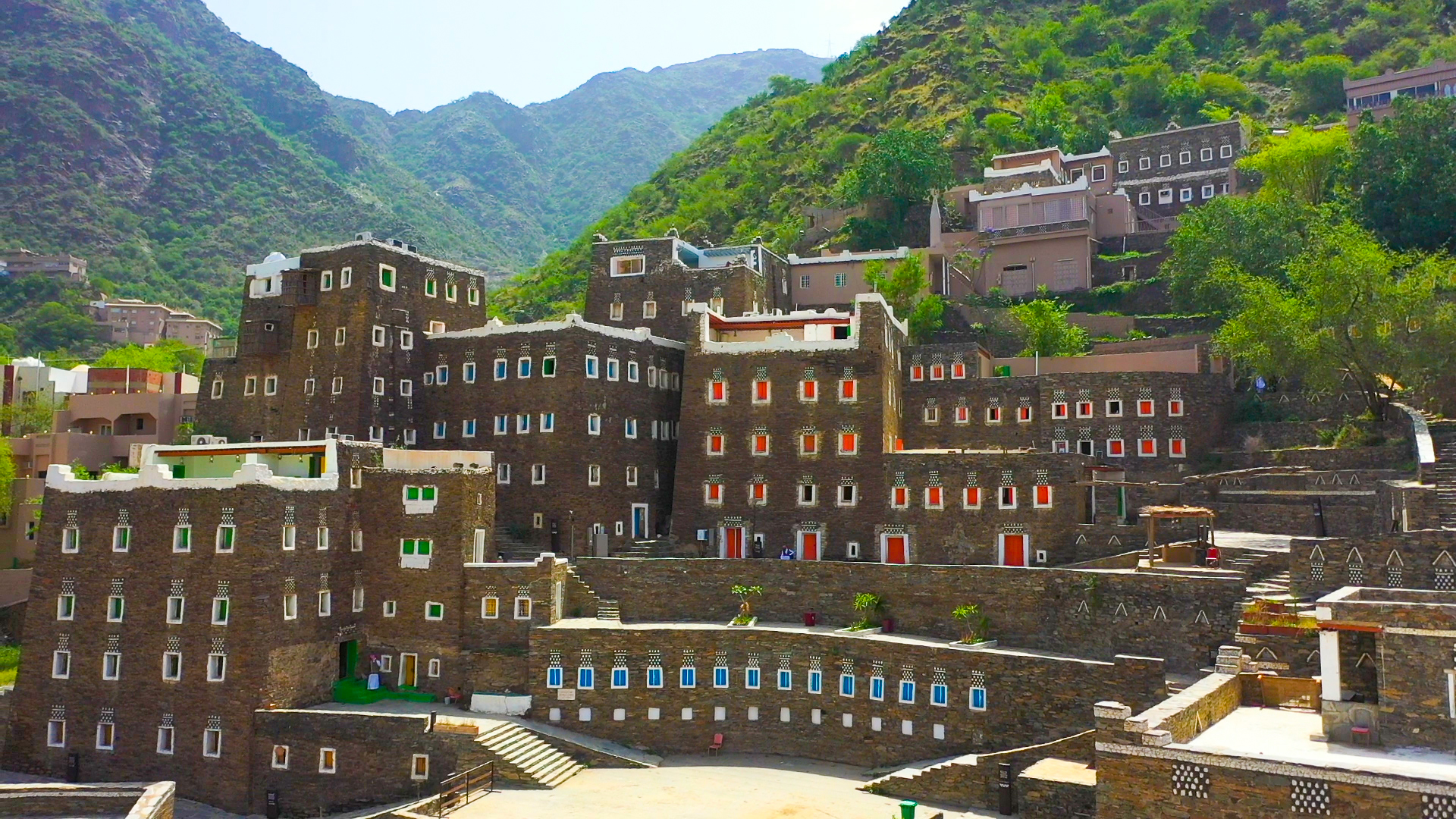
Rijal Almaa is a masterclass in defensive and sustainable mountain architecture. The village is composed of approximately 60 multi-story stone palaces (husn), constructed entirely from locally sourced basalt without the use of steel reinforcement or modern concrete.
The structures rise vertically up to seven or eight stories, with walls exceeding one meter in thickness at their base and gradually tapering as they ascend. Builders employed dry-stone masonry techniques, relying on gravity, precision, and friction. In many cases, the mountain cliff itself forms the rear wall, effectively merging architecture with geology and anchoring the settlement directly into the landscape.
The Quartz Code
Embedded around windows and door frames are carefully placed white quartz stones. Beyond their decorative value, oral history suggests a practical function: reflecting moonlight and starlight into narrow alleys before the advent of artificial lighting, subtly guiding movement through the village at night. Whether symbolic, functional, or both, these quartz markers remain one of Rijal Almaa's most distinctive visual signatures.
.jpg)
Guardians of the Peaks
The Flower Men of Asir
The mountains surrounding Rijal Almaa are the ancestral homeland of Asiri and Qahtani tribal communities, internationally recognized for the floral head garlands worn by men, often referred to as the "Flower Men."
These garlands are not ceremonial costumes but expressions of living identity. Crafted from wild basil, marigold, fenugreek, jasmine, and other local plants, they serve both aesthetic and practical purposes, offering natural fragrance and cooling in the mountain climate. Visitors may encounter men navigating steep trails with remarkable agility, wearing the traditional futa wrap and, on formal occasions, the janbiya dagger, symbols of honor rather than weapons. Their presence reinforces that Rijal Almaa is not an open-air museum, but a living cultural landscape.
A World of Color Inside the Stone
Al-Qatt Al-Asiri
Behind the austere grey stone facades lies an unexpected interior world of vivid geometry and colour. Al-Qatt Al-Asiri, inscribed on UNESCO's Intangible Cultural Heritage List in 2017, is a traditional wall art practised by women of the Asir region.
Using natural pigments, indigo for blue, alfalfa for green, pomegranate skins for red, soot for black, women adorned majlis walls with rhythmic geometric compositions. Each element carries symbolic meaning: triangular forms often associated with femininity, vertical lines representing rain and fertility, and complex borders reflecting unity and continuity. These interiors transform domestic spaces into visual archives of social values, memory, and aesthetic mastery.
.jpg)
.jpg)
Preserved by the People
The Museum of Memory
Rijal Almaa's survival owes much to local initiative. In the 1980s, as traditional life patterns shifted and structures began to deteriorate, villagers formed a cooperative to preserve their heritage rather than abandon it.
Housed within Al-Alwan Palace, the village museum contains one of the most significant community-curated collections in the region. More than 2,800 artifacts donated by local families are displayed, including historical manuscripts, traditional weaponry, trade coins from multiple eras, agricultural tools, and silver jewelry that once formed bridal dowries. The museum is not curated from a distance; it is maintained by descendants of the original inhabitants, offering an intimate and unfiltered narrative of mountain life.

Plan Your Ascent
Visitor's Guide
Rijal Almaa rewards travellers who approach it with preparation and respect.
Getting There
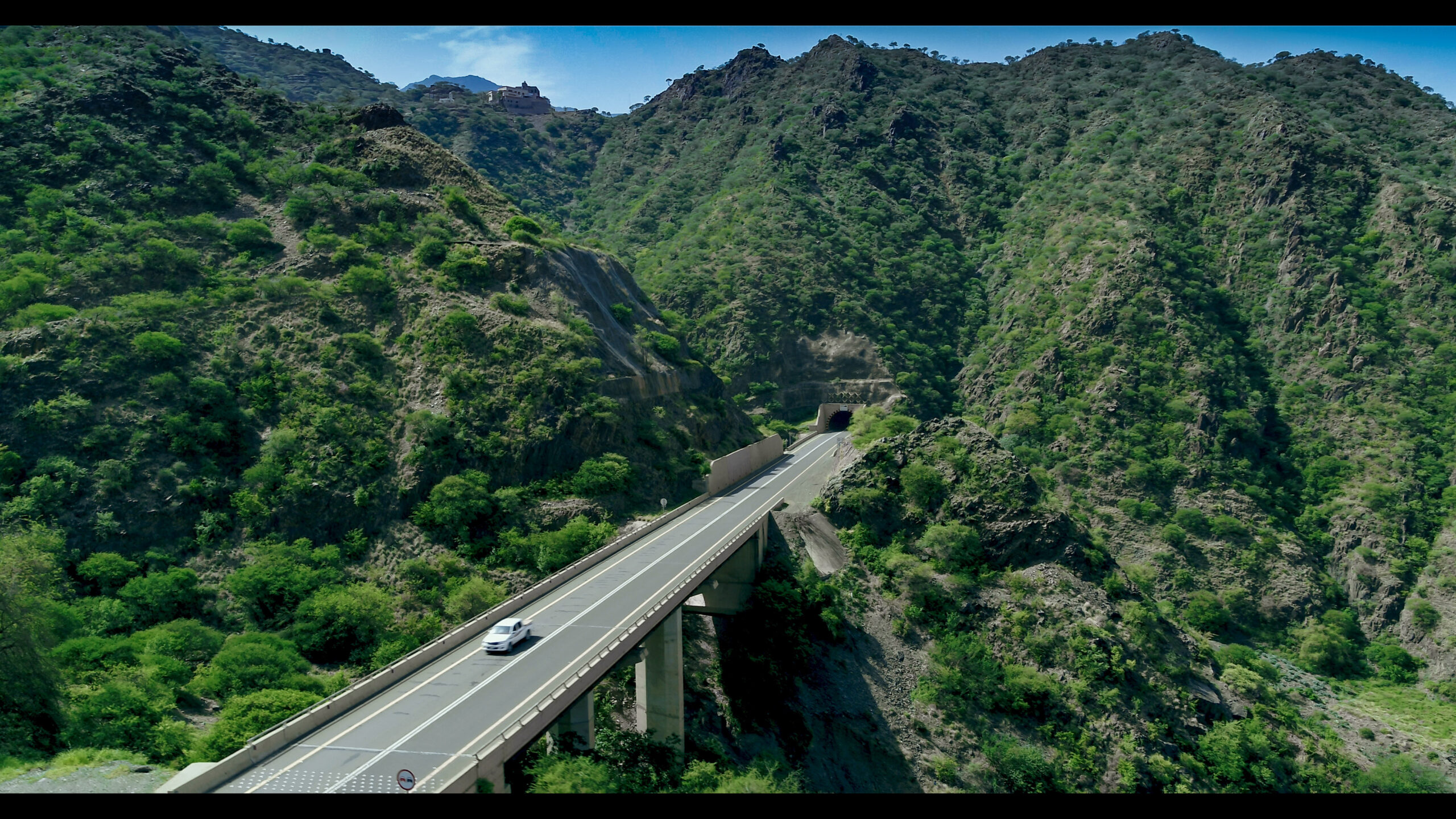
The village lies approximately 45 minutes by road from Abha via winding mountain routes overlooking the Tihama plains. Access conditions may vary seasonally. Cable car viewpoints in the Soudah region offer panoramic perspectives of the surrounding mountains, though direct cable access to the village itself is subject to operational availability.
Best Time to Visit
October to April offers 10–25°C highland temperatures ideal for walking. The Asir Rose & Honey Festival (March–April) adds cultural depth. Summer is domestic peak season — book Abha hotels 2–3 weeks ahead.
Etiquette & Photography
Always ask permission before photographing locals, especially the Flower Men. Drone flights require Asir Development Authority permits. Interior museum photography is usually allowed; flash is discouraged near restored Al-Qatt walls.
What to Wear
Comfortable closed-toe shoes are essential — the village pathways are uneven stone. Layers are recommended: mountain mornings can be cool (10°C) while midday sun reaches 25°C. Modest dress is expected in the village and museum.
Duration & Pacing
Allow 2–3 hours for the village and museum. A full day trip from Abha can include the scenic mountain drive, a local lunch of Asiri Aseeda or Madhbi, and a stop at Al-Soudah viewpoints on the return.
Explorez les hauts plateaux de l'Asir
Combine Rijal Almaa with Abha, Jabal Sawda, and Asir National Park in a personalised mountain itinerary.
Walk Through History
The stones of Rijal Almaa carry centuries of memory. Experience them with a local heritage guide who can interpret architectural details, tribal history, and the silent language of quartz and paint.
Strategic Context
Regional Tourism Relevance
Rijal Almaa is a fortified heritage village located in the Asir Mountains, approximately 45 kilometres west of Abha. The village occupies a strategic position along historic trade routes connecting the highland interior with the Tihama coastal plain. As one of the most architecturally intact traditional settlements in Saudi Arabia, Rijal Almaa has become a flagship destination for heritage tourism in the Asir region, attracting both domestic visitors and international cultural travellers. Saudi Arabia's submission of Rijal Almaa to the UNESCO World Heritage Tentative List in 2015 underscores its significance within the Kingdom's cultural patrimony.
Cultural Importance
Rijal Almaa's 60+ multi-storey stone towers represent one of the most remarkable examples of vernacular mountain architecture in the Arabian Peninsula. The buildings, constructed from locally quarried stone, decorated with quartz and alabaster window frames, and featuring the distinctive Al-Qatt Al-Asiri geometric painting tradition, demonstrate sophisticated building techniques adapted to steep terrain and defensive requirements. The village museum, housed in a restored tower complex, preserves over 2,800 artefacts documenting Asiri daily life, trade connections, and artistic traditions spanning centuries.
Infrastructure Evolution
Access to Rijal Almaa has been enhanced through road improvements connecting the village to Abha and the broader Asir highway network. The village museum and visitor centre provide structured interpretation for tourists, while local guides offer walking tours through the tower complex and surrounding agricultural terraces. Nearby accommodation options in Abha and Al-Soudah provide a range of hospitality standards. The Asir Development Authority's investment in heritage village preservation ensures that restoration work follows conservation best practices while maintaining community access and cultural continuity.
Vision 2030 Alignment
Heritage village tourism is a cornerstone of Vision 2030's cultural tourism strategy. Saudi Arabia's National Heritage Preservation Programme targets the restoration and activation of over 300 heritage sites nationwide, with Rijal Almaa serving as a model for community-based heritage tourism. The village demonstrates how traditional settlements can generate sustainable tourism revenue while preserving architectural integrity and cultural practices. The Kingdom's broader goal of UNESCO World Heritage inscription for Rijal Almaa would significantly elevate its international profile and visitor volumes.
Visitor Profiles
Rijal Almaa attracts architecture and design professionals studying vernacular mountain building techniques; cultural heritage travellers interested in Saudi Arabia's pre-oil traditions; photography enthusiasts drawn to the village's dramatic stone towers and decorative elements; academic researchers documenting Al-Qatt Al-Asiri painting traditions; and domestic Saudi visitors rediscovering regional heritage as part of growing cultural tourism trends. The village is most comfortably visited during the October-to-April season, though the Asir highlands' moderate climate permits year-round access.
Rijal Almaa Village: Frequently Asked Questions (2026)
Plan your visit to Saudi Arabia's most impressive heritage village
Last updated: March 2026Can't find what you're looking for? Contact us for more help.
Southern Heritage
Rijal Almaa is a painted stone village near Abha in the Asir highlands. It is one of Saudi Arabia's most striking hidden gems. The colourful facades are a photographer's dream: see our photography guide. The village connects to the broader art and culture heritage of the region. Combine with heritage village walks across the Asir mountains. The region is part of Saudi Arabia's emerging eco-tourism movement.
trust.sourcesReferences
- [1]
- [2]Saudi Heritage Commission — Heritage Sites Programme — Saudi Heritage Commission (trust.accessed 15 mars 2026)
- [3]
- [4]Rijal Almaa — UNESCO World Heritage Tentative List — UNESCO World Heritage Centre (trust.accessed 15 mars 2026)
Pourquoi ces informations sont fiables
Explore Saudi is an independent Saudi Arabia travel intelligence platform focused on structured discovery, cultural context, and long-term tourism transformation under Vision 2030.
Notre cadre de contenu est basé sur
- Données touristiques officielles
- Annonces gouvernementales
- Programmes de développement régional
- Documentation du patrimoine culturel
- Logique d'itinéraire éprouvée sur le terrain
We do not aggregate generic listicles. We build layered travel architecture.
For partnership inquiries or data validation requests: partners@explore-saudi.com
Last updated: March 2026 · Fact-checked against Saudi Heritage Commission & UNESCO sources