EXPLORE SAUDI
Skip to main content

Hafawah: The Art of Welcome

Enter the 'Bayt Al-Sha'ar' (House of Hair). Experience the legendary generosity that has sustained life in the desert for centuries.

trust.lastUpdated 1 mars 2026
RE
trust.reviewedBy Reham Elshrkawy
Middle East Cultural Heritage & Regional Travel Expert · 15 mars 2026

In the desert, a guest is a gift from God. This belief is the foundation of 'Hafawah,' the Saudi concept of extreme hospitality. For the Bedouin, hospitality was not just politeness; it was a survival pact in a harsh environment. Today, this tradition remains the cornerstone of Saudi identity. It is found in the scent of cardamom-spiced coffee, the warmth of the fire, and the communal nature of the feast. To experience Bedouin hospitality is to be treated not as a tourist, but as a member of the family, honored with the best the host has to offer.

Sacred Traditions

The Rituals

Four pillars of Bedouin hospitality, each with its own story and significance.

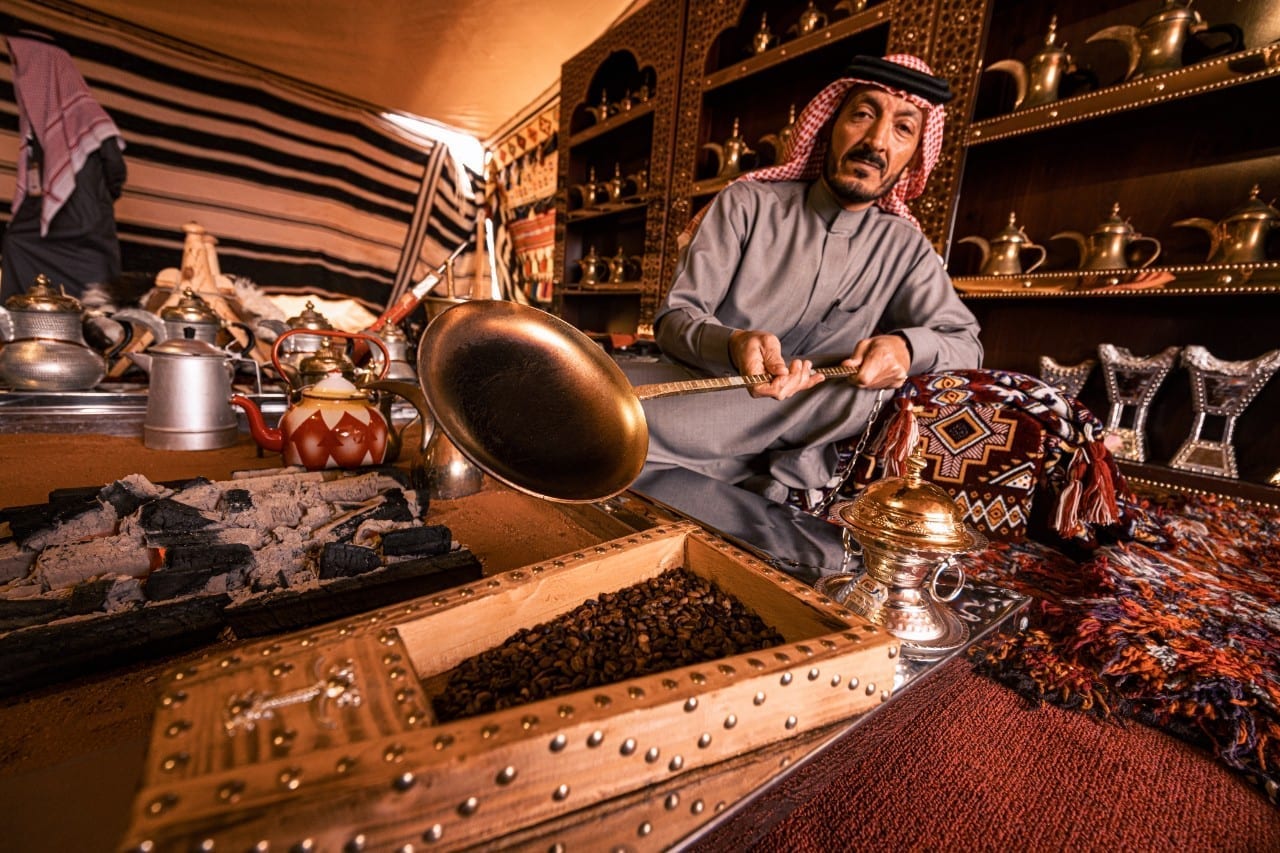
Traditional Bedouin man roasting coffee beans over an open fire in a tent
UNESCO Intangible Cultural Heritage

The Coffee Ritual (Gahwa)

Saudi coffee is the symbol of generosity. It is never sugar-sweetened, but flavored with cardamom, saffron, and cloves, and always served with sweet dates to balance the bitterness.

The Etiquette

There is a language to the coffee. The host holds the 'Dallah' (pot) in their left hand and offers the 'Fenjan' (cup) with their right. You must accept it with your right hand. Your cup will be filled only a quarter full—this is not stinginess, but respect; it ensures the coffee remains hot and allows the host to serve you repeatedly (pouring 'Wajif'). To signal you are finished, shake your cup gently from side to side; otherwise, it will be refilled indefinitely.

القهوة—Gahwa
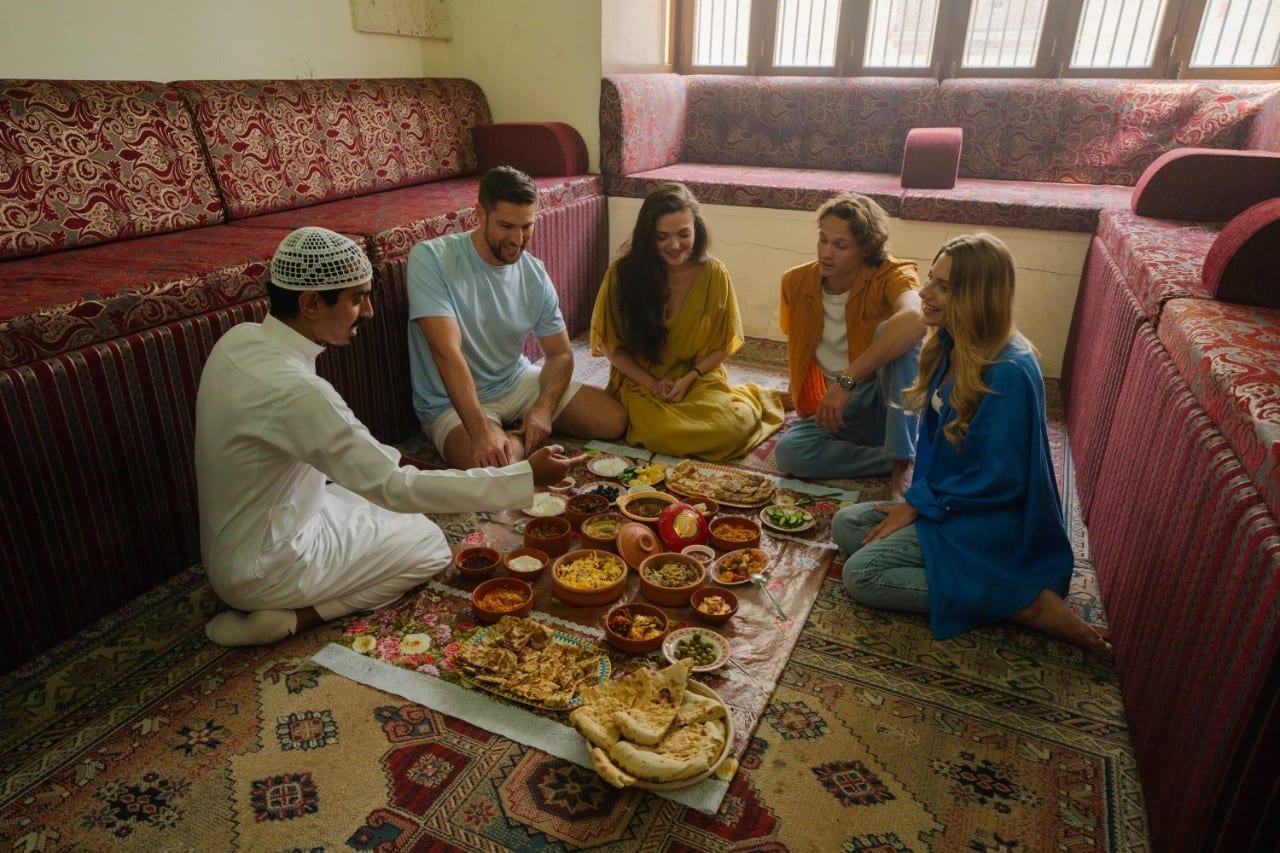
Guests gathering for a traditional meal inside a Bedouin tent

The Tent (Bayt Al-Sha'ar)

The traditional Bedouin tent is woven from black goat hair. It is an engineering marvel—waterproof when wet (the fibers swell), breathable in the summer, and insulated in the winter. Inside, the space is divided by decorative 'Sadu' weavings. Sitting here, on floor cushions around the central hearth, is the authentic setting for storytelling, poetry, and the passing of oral history.

بيت الشعر—House of Hair
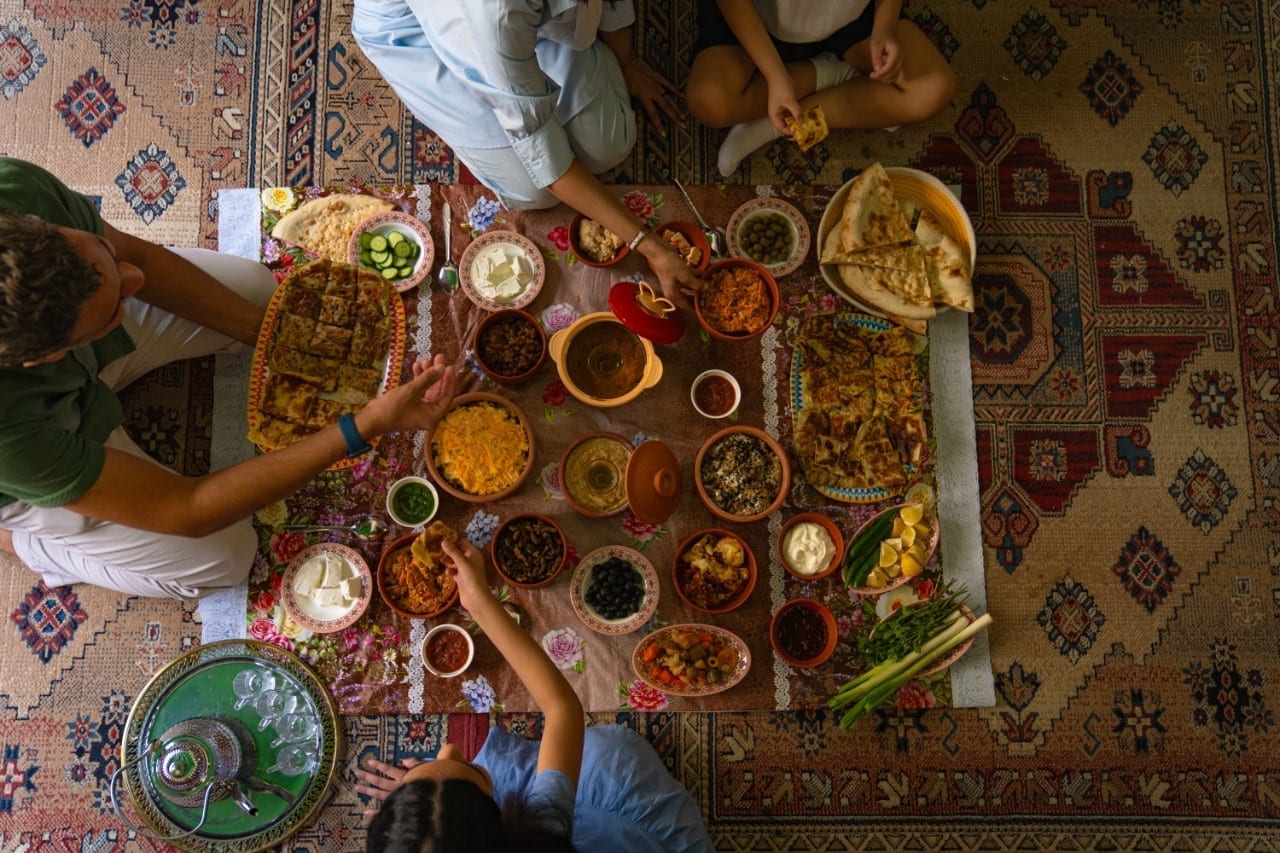
Overhead view of a traditional Arabian feast with many dishes on colorful rugs

The Feast (Mandi & Madfoon)

Food is the language of love in Arabia. The traditional desert feast often centers around 'Mandi' or 'Madfoon'—meat (usually lamb) slow-cooked in a 'Taboon' (an underground clay oven). The meat is sealed in the earth with hot coals and left for hours until it is incredibly tender, then served on a massive communal platter of spiced rice. Eating is done with the right hand, traditionally from the communal dish, reinforcing the bond between everyone sharing the meal.

الولائم—The Feasts

The 'Rawi' (The Storyteller)

Before writing, there was the Rawi. The Bedouin preserved their history, genealogy, and laws through poetry and stories memorized and recited by the fire. On our tours, you will meet modern Rawis who keep this flame alive. They will regale you with tales of Antarah ibn Shaddad (the famous pre-Islamic warrior-poet), stories of star navigation, and the legends of the djinns that inhabit the dunes.

الراوي—The Narrator

Vivez l'hospitalité bédouine

Build a personalised Saudi itinerary that includes authentic desert camps, coffee ceremonies, and cultural encounters.

Strategic Context

Regional Tourism Relevance

Bedouin hospitality traditions represent the cultural foundation of Arabian Peninsula tourism. As Saudi Arabia positions itself as a global destination, authentic cultural experiences — particularly those rooted in nomadic heritage — have become primary differentiators from competing Mediterranean and Southeast Asian markets. The Kingdom's desert regions, from the Empty Quarter to the Nafud, serve as living classrooms where visitors encounter hospitality customs dating back millennia, creating travel memories that no hotel or resort can replicate.

Cultural Importance

The concept of 'Diyafa' (generosity to guests) is not merely a social custom but a core tenet of Arabian identity codified in pre-Islamic poetry and reinforced through Islamic tradition. The rituals of Arabic coffee preparation, the protocol of incense offering, and the communal meal tradition each carry layers of meaning — from the three-cup minimum of Qahwa that signals welcome, to the specific hand gestures that indicate sufficiency. These practices have been recognized by UNESCO as Intangible Cultural Heritage, elevating their significance from local tradition to global patrimony.

Infrastructure Evolution

Cultural tourism infrastructure supporting Bedouin experiences has expanded considerably since 2021. Purpose-built desert camps now offer structured encounters with traditional hospitality while maintaining comfort standards expected by international travellers. Sites like AlUla's Ashar Resort, Hisma Desert's luxury tented camps, and the Empty Quarter's seasonal glamping operations provide authentic settings with modern amenities. Transportation improvements — including regional airports at AlUla and NEOM — have reduced travel friction to remote desert locations where these traditions remain intact.

Vision 2030 Alignment

Vision 2030 explicitly prioritizes cultural heritage preservation as a pillar of tourism development. The Ministry of Culture's 'Year of Arabic Coffee' and the Saudi Culinary Commission's documentation of traditional food practices reflect institutional commitment to preserving the customs that form the backbone of Bedouin hospitality experiences. The Quality of Life Program within Vision 2030 funds community-based tourism initiatives that enable Bedouin families to share their heritage directly with visitors, creating economic incentives for cultural preservation.

Visitor Profiles

Bedouin hospitality experiences attract culturally motivated travellers (35–55 age range) seeking authentic encounters beyond conventional sightseeing; food and beverage professionals studying Arabian culinary traditions; academic researchers documenting intangible cultural heritage; luxury travellers seeking exclusive desert camp experiences; and photography enthusiasts drawn to the visual richness of traditional Arabian settings. Group tours from European and East Asian markets increasingly include structured Bedouin hospitality segments as signature experiences within broader Saudi itineraries.

Bedouin Hospitality in Saudi Arabia — FAQ 2026

Understand Arabic coffee ceremonies, Diyafa traditions, and desert camp etiquette

Last updated: March 2026

Can't find what you're looking for? Contact us for more help.

Bedouin hospitality is the heart of Saudi Arabian culture. Explore the broader art and culture scene, visit heritage villages where traditions endure, and review our cultural etiquette guide before your visit. The culinary traditions of the desert are inseparable from hospitality — every meal tells a story. AlUla offers the most immersive desert camp experiences, complemented by stargazing under low-light-pollution desert skies.

trust.sourcesReferences

  1. [1]
    Visit Saudi — Cultural Heritage — Saudi Tourism Authority (trust.accessed 15 mars 2026)
  2. [2]
    Saudi Heritage Commission — Intangible Heritage — Saudi Heritage Commission (trust.accessed 15 mars 2026)

Pourquoi ces informations sont fiables

Explore Saudi is an independent Saudi Arabia travel intelligence platform focused on structured discovery, cultural context, and long-term tourism transformation under Vision 2030.

Notre cadre de contenu est basé sur

  • Données touristiques officielles
  • Annonces gouvernementales
  • Programmes de développement régional
  • Documentation du patrimoine culturel
  • Logique d'itinéraire éprouvée sur le terrain

We do not aggregate generic listicles. We build layered travel architecture.

For partnership inquiries or data validation requests: partners@explore-saudi.com

Join the Circle

Be Our Guest

The coffee is brewing, and the fire is lit. Join a local Bedouin family for an authentic evening of conversation and culture.

Local Families
Authentic Experience
Cultural Respect