Road Trip de 5 Jours le Long de la Mer Rouge : Itinéraire Côtier Saoudien
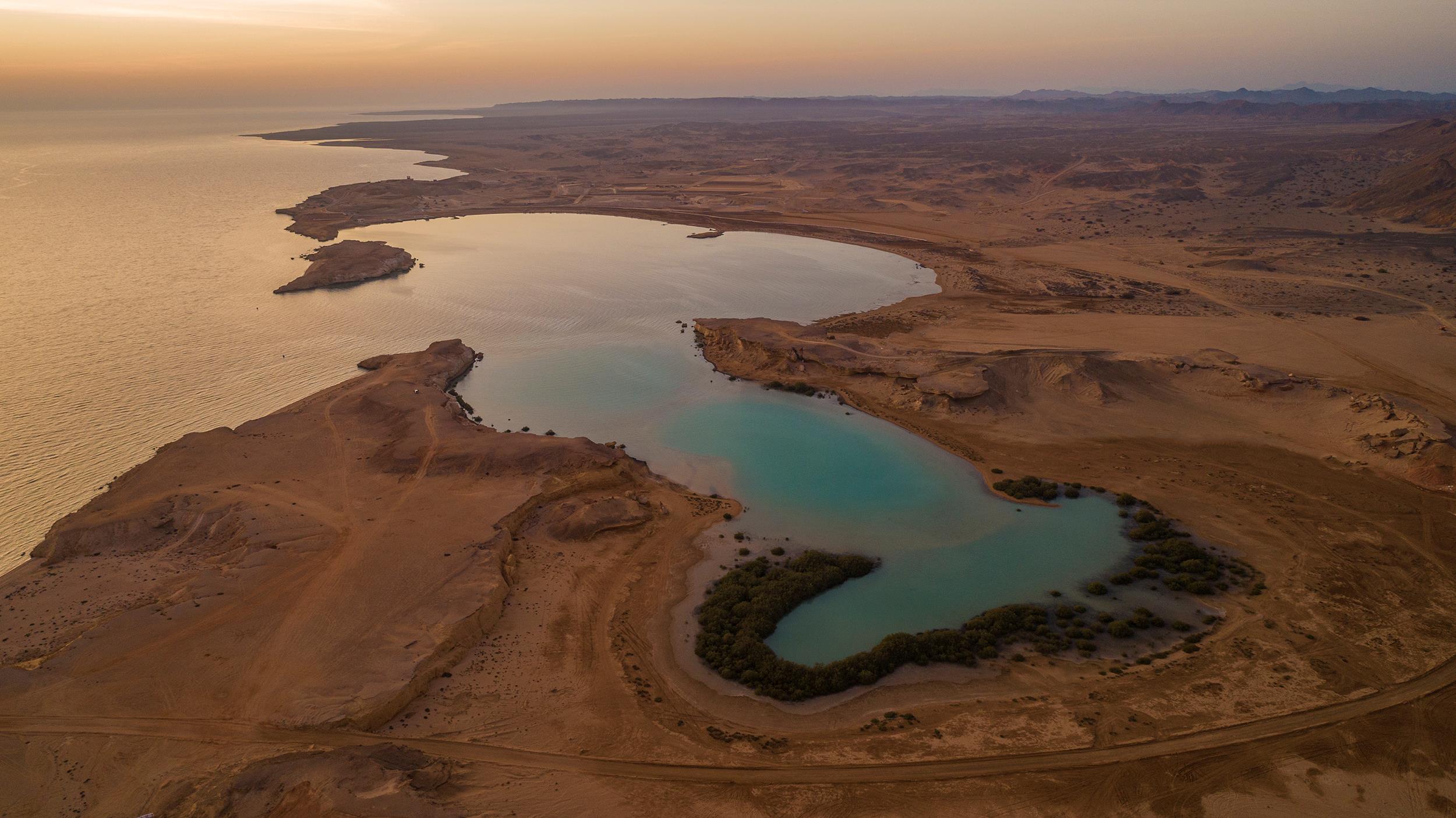
Découvrez un road trip inoubliable de 5 jours le long de la mer Rouge en Arabie Saoudite, de NEOM à Jeddah, explorant lagons, ports historiques et plages immaculées.
L'essentiel à retenir
- The working order is north to south: Tabuk – Sharma – Duba – Al Wajh – Umluj – Yanbu – Thuwal – Jeddah, about 1,100 km of sealed highway with no leg over ~320 km.
- Umluj is the highlight — shared island boat trips from about SAR 300 per person, private boats SAR 1,200–2,000 for a full day; arrange at the marina the day before.
- Book Sharma/Duba and Umluj accommodation ahead (supply is thin); Al Wajh, Yanbu and Jeddah are easier. Budget SAR 300–800 per night mid-range.
- Fill the tank in every town on the northern half — station gaps can top 150 km. Petrol costs around SAR 2.3 per litre.
- Go October to April for 24–28°C water and driveable daytime heat; summer exceeds 40°C.
- The route stays far north of the southwestern zones named in the 2026 US advisory, but the country-wide level is 3 (reconsider travel) — check your government's guidance before booking.
Embarquez pour l'ultime road trip le long de la mer Rouge : le chef-d'œuvre côtier de l'Arabie Saoudite
Imaginez un voyage où l'histoire ancienne murmure au gré des vents du désert, où les eaux turquoise caressent des rivages immaculés et intouchés, et où des villes futuristes surgissent du sable. Bienvenue sur la côte de la mer Rouge en Arabie Saoudite, une terre d'une beauté inégalée et d'aventures naissantes. Pour le voyageur averti en quête d'une expérience inoubliable en 2026, notre road trip de 5 jours le long de la mer Rouge offre une traversée immersive depuis les frontières futuristes de NEOM dans la province de Tabuk jusqu'à la ville portuaire historique de Jeddah. Cette odyssée côtière de 1 500 km n'est pas seulement un trajet en voiture ; c'est une exploration de l'âme de l'Arabie Saoudite, révélant ses merveilles naturelles, son patrimoine culturel et son avenir visionnaire.
Cet itinéraire méticuleusement conçu est destiné à ceux qui recherchent à la fois la découverte et le confort, mêlant le charme des sentiers battus au luxe émergent. Vous naviguerez dans un paysage aussi diversifié que saisissant, des fjords spectaculaires et des îles volcaniques du nord de la mer Rouge aux récifs coralliens vibrants d'Umluj et aux anciens comptoirs commerciaux de Yanbu. Préparez-vous à être enchanté par des plages désertes, à vous régaler de fruits de mer frais et à assister à l'aube d'une nouvelle ère touristique. Ceci est votre guide définitif pour découvrir la côte de la mer Rouge en Arabie Saoudite dans toute sa magnificence.
Faits rapides et informations essentielles pour votre road trip le long de la mer Rouge
- Durée : 5 jours / 4 nuits (prolongeable)
- Distance : Environ 1 500 km (aller simple)
- Point de départ : Tabuk (aéroport principal le plus proche pour l'accès à NEOM)
- Point d'arrivée : Jeddah (grand aéroport international)
- Meilleure période pour voyager : D'octobre à avril (pour éviter la chaleur estivale intense)
- Type de véhicule : Un SUV ou un 4x4 est fortement recommandé pour le confort et les sections non pavées occasionnelles, bien qu'une berline robuste puisse gérer la majeure partie de l'autoroute principale.
- Devise : Riyal saoudien (SAR). En 2026, le taux de change est d'environ 1 USD = 3,75 SAR.
- Visa : E-Visa ou visa à l'arrivée disponible pour de nombreuses nationalités. Vérifiez les plateformes officielles de visa saoudiennes pour les dernières exigences.
- Connectivité : Bonne couverture mobile le long des principales autoroutes ; peut être clairsemée dans les zones reculées.
- Sécurité : L'Arabie Saoudite est généralement très sûre pour les touristes. Prenez les précautions de voyage habituelles.
Jour 1 : De Tabuk à Sharma et la frontière côtière de NEOM (environ 200 km)
Votre aventure le long de la mer Rouge commence à Tabuk, la porte d'entrée des merveilles du nord-ouest de l'Arabie Saoudite. Après avoir récupéré votre véhicule de location, dirigez-vous vers l'ouest en direction de la côte, vers Sharma, un pôle en plein essor au sein du mégaprojet NEOM. Cette région, autrefois une étendue tranquille de désert et de mer, se transforme rapidement en une destination mondiale pour l'innovation et la vie durable. Bien qu'une grande partie de NEOM soit en construction, les zones côtières autour de Sharma offrent un aperçu de son avenir ambitieux et donnent accès à une beauté naturelle vraiment spectaculaire.
Passez votre après-midi à explorer les plages immaculées et les formations géologiques uniques qui caractérisent cette côte nord de la mer Rouge. Les eaux y sont réputées pour leur clarté et leur vie marine vibrante, ce qui en fait un excellent endroit pour la plongée avec tuba ou simplement pour se détendre au bord de la mer. Envisagez une courte excursion en bateau (des arrangements peuvent être faits localement ou par l'intermédiaire de votre hébergement) pour explorer certaines des îles ou des criques cachées à proximité. Alors que le soleil plonge sous l'horizon, peignant le ciel de teintes flamboyantes, vous ressentirez la magie sereine de cette frontière intacte.
Hébergement et restauration à Sharma/NEOM :
- Hébergement : Les options se multiplient dans la région de NEOM. Recherchez de nouveaux éco-lodges ou hôtels de charme qui émergent autour de Sharma. Attendez-vous à des prix pour un séjour confortable de l'ordre de 800 à 1500 SAR (environ 210 à 400 USD) par nuit. Les réservations sont essentielles car les options sont encore en développement.
- Restauration : Les fruits de mer fraîchement pêchés sont la vedette ici. Les restaurants locaux proposeront du poisson grillé et des plats saoudiens traditionnels. Des options de restauration plus haut de gamme émergent également dans les nouveaux développements.
Jour 2 : De Sharma à Duba et les lagons immaculés d'Umluj (environ 350 km)
Réveillez-vous avec la brise tranquille de la mer Rouge avant de poursuivre votre voyage vers le sud le long de l'autoroute côtière. Votre premier arrêt de la journée est Duba, souvent appelée « la perle de la mer Rouge ». Cette charmante ville portuaire offre un aperçu de la vie côtière saoudienne traditionnelle. Promenez-vous dans son marché aux poissons animé, où les pêcheurs locaux apportent leurs prises quotidiennes, et peut-être dégustez une tasse de café saoudien fort dans un café local.
Depuis Duba, le trajet jusqu'à Umluj est sans doute l'une des portions les plus pittoresques de votre road trip. Le paysage se transforme lentement, offrant des vues plus étendues sur la mer Rouge d'un côté et des escarpements désertiques spectaculaires de l'autre. Umluj est un véritable joyau caché, souvent surnommé les « Maldives de l'Arabie Saoudite » en raison de ses superbes lagons turquoise, de ses plages de sable blanc et de ses nombreuses petites îles. À votre arrivée, organisez une excursion en bateau pour explorer les îles protégées, telles que Jabal Hassan et Doqah. Ces îles sont des lieux de nidification pour diverses espèces d'oiseaux et offrent d'incroyables opportunités de snorkeling et de plongée au milieu de récifs coralliens vibrants.
Activités et logistique à Umluj :
- Excursions en bateau : Essentielles pour découvrir la véritable beauté d'Umluj. Prévoyez de payer environ 300-600 SAR (environ 80-160 USD) pour un bateau privé pendant quelques heures, selon la taille et la durée. Réservez via votre hôtel ou des opérateurs touristiques locaux.
- Snorkeling/Plongée : De nombreuses excursions en bateau incluent l'équipement de snorkeling. Pour la plongée, renseignez-vous sur les centres de plongée certifiés à Umluj.
- Hébergement : Umluj dispose d'un nombre croissant d'hôtels et de maisons d'hôtes confortables. Prévoyez de payer 400-800 SAR (environ 100-210 USD) par nuit.
- Restauration : Dégustez des fruits de mer frais dans les restaurants locaux. Ne manquez pas la pêche du jour.
Jour 3 : D'Umluj à Al Wajh et le charme historique de Yanbu (environ 250 km)
Dites adieu aux lagons idylliques d'Umluj et poursuivez votre voyage vers le sud, en direction d'Al Wajh, un autre port important de la mer Rouge. Al Wajh possède une histoire riche, visible dans sa vieille ville avec ses maisons en pierre de corail et son charmant front de mer. C'est une halte agréable pour vous dégourdir les jambes et peut-être prendre un déjeuner léger avant de continuer vers votre destination principale de la journée : Yanbu.
Yanbu al-Bahr, ou « Yanbu de la Mer », est l'un des plus anciens ports d'Arabie Saoudite, une étape cruciale sur les anciennes routes des épices et de l'encens et une porte d'entrée pour les pèlerinages pendant des siècles. Aujourd'hui, elle allie magnifiquement son importance industrielle (la ville industrielle de Yanbu est un immense pôle économique) à son patrimoine culturel. Concentrez-vous sur le quartier historique de Yanbu, connu sous le nom de Yanbu Al-Nakhl (Yanbu des Palmiers). Flânez dans ses ruelles étroites, admirez les bâtiments restaurés de l'époque ottomane et imprégnez-vous de l'atmosphère d'une époque révolue. Le souk y est un trésor d'artisanat local, d'épices et de souvenirs.
Explorer le patrimoine de Yanbu :
- Vieille ville historique de Yanbu : Prévoyez au moins 2-3 heures pour explorer à pied.
- Marché nocturne : Si votre visite coïncide, le marché du soir offre une expérience animée avec des stands de nourriture et des produits locaux.
- Hébergement : Yanbu propose une gamme d'hôtels, des options économiques aux chaînes internationales. Prévoyez 350-700 SAR (environ 90-180 USD) par nuit.
- Restauration : Yanbu est réputée pour ses fruits de mer. Cherchez les restaurants le long de la Corniche pour d'excellentes vues et des prises fraîches.
Jour 4 : De Yanbu à Rabigh et les merveilles marines de Thuwal (environ 350 km)
Le trajet d'aujourd'hui vous emmène plus au sud, couvrant une portion significative de la côte en direction de Jeddah. Le voyage offre des paysages variés, des plaines désertiques arides aux quelques établissements côtiers. Envisagez un arrêt à Rabigh, une ville industrielle en pleine croissance, principalement pour une pause ou un ravitaillement en carburant, avant de continuer vers la zone plus calme et plus pittoresque autour de Thuwal.
Thuwal abrite la prestigieuse King Abdullah University of Science and Technology (KAUST), une merveille architecturale et un pôle d'innovation scientifique. Bien que l'accès au campus principal puisse être restreint, la région autour de Thuwal est réputée pour son exceptionnelle biodiversité marine. C'est un endroit idéal pour une dernière excursion de snorkeling ou de plongée en mer Rouge avant d'atteindre Jeddah. De nombreux opérateurs locaux proposent des excursions en bateau vers les récifs voisins, qui regorgent de poissons colorés et de coraux intacts. Si vous n'avez pas envie de vous mouiller, profitez simplement des vues côtières sereines et de la sensation d'être loin des villes animées.
Exploration de KAUST et Thuwal :
- Activités marines : Renseignez-vous auprès des maisons d'hôtes locales ou des centres de plongée à Thuwal pour des excursions en bateau et des opportunités de snorkeling/plongée. Les prix pour une excursion d'une demi-journée peuvent varier de 250 à 500 SAR (environ 65 à 130 USD) par personne.
- Hébergement : Les options sont plus limitées à Thuwal même, mais il existe quelques maisons d'hôtes et petits hôtels. Alternativement, vous pouvez continuer jusqu'à Jeddah si vous préférez vous installer dans une ville plus grande pour votre dernière nuit.
- Restauration : Des restaurants locaux plus simples proposant des fruits de mer frais.
Jour 5 : De Thuwal à Jeddah : La mariée de la mer Rouge (environ 100 km)
Votre dernier jour de cet incroyable road trip le long de la mer Rouge vous mène à Jeddah, la deuxième plus grande ville dynamique d'Arabie Saoudite et la « Mariée de la mer Rouge ». Le trajet depuis Thuwal est relativement court, vous laissant amplement le temps d'explorer cette métropole fascinante. Jeddah est une ville où la tradition rencontre gracieusement la modernité, offrant une richesse d'expériences culturelles, historiques et culinaires.
Consacrez votre journée à l'exploration d'Al-Balad, la vieille ville historique de Jeddah, classée au patrimoine mondial de l'UNESCO. Perdez-vous dans ses souks labyrinthiques, admirez les bâtiments distinctifs en pierre de corail avec leurs balcons Roshan en bois complexes, et découvrez des mosquées cachées et d'anciennes maisons de marchands. Al-Balad est le rêve d'un photographe et un musée vivant. Ensuite, faites une promenade tranquille le long de la Corniche de Jeddah, l'une des plus longues du monde, en admirant les installations d'art public, l'emblématique fontaine du Roi Fahd et les vues imprenables sur la mer Rouge. Concluez votre voyage par un dîner de célébration, savourant les fruits de mer réputés de Jeddah ou explorant sa scène culinaire internationale diversifiée.
Points forts de Djeddah et départ :
- Al-Balad : Prévoyez au moins 3 à 4 heures pour l'exploration. Envisagez de faire appel à un guide local pour des aperçus plus approfondis.
- Corniche de Djeddah : Idéale pour une promenade ou une balade en soirée.
- Shopping : Des souks traditionnels d'Al-Balad aux centres commerciaux modernes.
- Hébergement : Djeddah offre un large éventail d'hôtels, des chaînes internationales de luxe aux hôtels-boutiques. Attendez-vous à 400-1500 SAR (environ 100-400 USD) par nuit selon le type.
- Restauration : De la cuisine saoudienne traditionnelle aux restaurants internationaux haut de gamme. Ne manquez pas d'essayer un restaurant de poisson local.
- Départ : L'aéroport international King Abdulaziz de Djeddah (JED) est un hub majeur avec d'excellentes connexions.
Planifier votre road trip sur la mer Rouge : Conseils essentiels et ce qu'il faut savoir pour 2026
Un road trip sur la mer Rouge en Arabie Saoudite promet une aventure pas comme les autres, mais un peu de préparation peut faire toute la différence. Alors que l'Arabie Saoudite poursuit son développement rapide et s'ouvre au tourisme, rester informé est essentiel.
Location de véhicule et conduite :
- Réservation : Réservez votre voiture de location bien à l'avance, surtout un SUV ou un 4x4. Les grandes sociétés de location internationales opèrent en Arabie Saoudite.
- Assurance : Assurez-vous d'avoir une couverture d'assurance complète.
- Carburant : Les stations-service sont nombreuses le long des principales autoroutes. Les prix du carburant sont relativement peu élevés en Arabie Saoudite (attendez-vous à environ 2,30-2,50 SAR par litre pour l'essence en 2026).
- État des routes : Les principales autoroutes sont généralement excellentes, bien entretenues et à plusieurs voies. Certaines routes secondaires, en particulier celles menant à des plages plus reculées, peuvent être non pavées.
- Code de la route : Conduisez à droite. Les limitations de vitesse sont clairement indiquées. Soyez conscient des radars. Les femmes sont autorisées à conduire.
Hébergement et réservation :
- Réservez à l'avance : Surtout dans les zones en développement comme NEOM et Umluj, les options d'hébergement peuvent être limitées et se remplir rapidement.
- Variété : Vous trouverez un mélange de chaînes hôtelières internationales, de maisons d'hôtes locales et d'éco-lodges émergents.
- Prix : Les prix varient considérablement en fonction de l'emplacement et du niveau de luxe. Prévoyez environ 400-1000 SAR (100-270 USD) par nuit pour un hébergement confortable de milieu de gamme.
Étiquette culturelle et code vestimentaire :
- Respectez les coutumes locales : L'Arabie Saoudite est un pays conservateur. Habillez-vous modestement, surtout lorsque vous visitez des sites religieux ou des lieux publics. Pour les femmes, cela signifie généralement couvrir les épaules et les genoux ; un foulard n'est pas obligatoire pour les touristes mais est respectueux dans certains contextes.
- Salutations : Une poignée de main est courante entre hommes. Les femmes peuvent préférer une salutation verbale ou un signe de tête.
- Photographie : Demandez toujours la permission avant de photographier des personnes, en particulier des femmes.
- Ramadan : Si vous voyagez pendant le mois sacré du Ramadan, soyez conscient des heures de jeûne et des horaires d'ouverture ajustés des commerces. Manger, boire et fumer en public pendant les heures de jeûne sont interdits.
Connectivité et communication :
- Carte SIM : Achetez une carte SIM locale à votre arrivée (STC, Mobily, Zain sont les principaux fournisseurs) pour une navigation et une communication faciles.
- Langue : L'arabe est la langue officielle. L'anglais est largement parlé dans les hôtels, les zones touristiques et par de nombreux jeunes Saoudiens.
Sécurité et santé :
Ce road trip de 5 jours sur la mer Rouge est plus qu'un simple voyage ; c'est une immersion dans un royaume en pleine transformation. De la beauté brute et sauvage de sa côte nord à la grandeur historique de Djeddah, vous découvrirez une Arabie Saoudite à la fois ancienne et étonnamment nouvelle, prête à vous accueillir à bras ouverts et avec des expériences inoubliables. Préparez-vous à être émerveillé.
Questions fréquentes
- What is the best time for a Red Sea road trip in Saudi Arabia?
- October to April. Water temperatures sit at 24–28°C, seas are generally calm, and daytime highs are manageable for walking old towns and waiting at marinas. From June to September, daytime temperatures regularly exceed 40°C and the trip becomes a dawn-and-dusk exercise.
- Do I need a 4x4 for the NEOM to Jeddah coastal route?
- No — the entire main route is sealed highway that any well-maintained sedan can handle. An SUV adds comfort and lets you take unpaved spurs to quieter beaches, but it is optional. What matters more is fuel discipline: fill up in every town on the northern half, where station gaps can exceed 150 km.
- How long is the drive from NEOM to Jeddah?
- About 1,100 km as this route runs it: Tabuk to Sharma (~170 km), Sharma to Al Wajh via Duba (~300 km), Al Wajh to Umluj (~150 km), Umluj to Yanbu (~160 km), and Yanbu to Jeddah via Thuwal (~320 km). Spread over five days, no single day exceeds about four hours of driving.
- Can you snorkel and dive along this route?
- Yes — it is the point of the trip. Umluj offers boat access to over 100 islands with hard-coral gardens (shared trips from about SAR 300 per person), Yanbu has proper dive centres running offshore reef trips, and Thuwal's reefs near KAUST are among the healthiest on the coast, with half-day trips around SAR 250–500.
- Is this route affected by the 2026 travel advisories?
- The route runs along the northern and central coast, far from the southwestern areas — Jizan, Najran, Abha, Khamis Mushayt and the Yemen border zone — named in the US do-not-travel designation. The country-wide US advisory is Level 3 (reconsider travel), so check your own government's current guidance and your insurance terms before booking.