Culture Weekend in Riyadh: A 2-Day Heritage Itinerary
Discover Riyadh's rich heritage in just two days. From the National Museum to the UNESCO-listed At-Turaif district in Diriyah, this weekend itinerary
Key Takeaways
- Day 1: Diriyah At-Turaif morning tour, Bujairi Terrace lunch, National Museum afternoon
- Day 2: Masmak Fortress and Dira Souq morning, KAFD architecture walk, Kingdom Tower sunset
- The National Museum and Diriyah are both free — this is an extremely budget-friendly weekend
- Thursday evening in Dira Souq (the old market) has the most authentic Riyadh atmosphere
- Add the Ithra museum in Dhahran if extending to 3 days — it is world-class
Why Riyadh Deserves a Cultural Weekend
Riyadh, the sprawling capital of Saudi Arabia, is far more than a modern metropolis of glass towers and wide boulevards. Beneath its contemporary surface lies a city steeped in centuries of Najdi heritage, where the founding story of the Saudi state began and where traditional craftsmanship still thrives in bustling souks. A well-planned weekend here reveals a fascinating duality — cutting-edge architecture standing shoulder to shoulder with mud-brick palaces and ancient fortifications.
This two-day itinerary is designed for travellers who want to experience Riyadh's cultural depth without feeling rushed. Whether you are visiting Saudi Arabia for the first time or returning to explore beyond the business district, these 48 hours will reshape your understanding of the capital.
Day 1: Museums, History and Panoramic Views
Morning: The National Museum of Saudi Arabia
Begin your cultural weekend at the National Museum of Saudi Arabia, located in the King Abdulaziz Historical Centre. This is the country's most comprehensive museum, spanning eight interconnected halls that chronicle the Arabian Peninsula from prehistoric times to the modern Kingdom. The Arabian Kingdoms gallery showcases artefacts from Nabataean and Lihyanite civilisations, while the Hajj and the Two Holy Mosques hall offers an immersive look at the pilgrimage experience.
Allow at least two hours here. The museum's architectural design — by Canadian architect Raymond Moriyama — is itself a highlight, with sweeping curves that evoke desert dunes. Arrive early at 9:00 AM to avoid weekend crowds, and consider hiring an audio guide for deeper context. Admission is remarkably affordable at 10 SAR (approximately 2.50 USD).
Adjacent to the museum, the Murabba Palace offers a glimpse into the life of King Abdulaziz. The restored mud-brick compound, with its austere Najdi architecture, provides a striking contrast to the modern city visible just beyond its walls.
Midday: Lunch at a Traditional Najdi Restaurant
Head to the Riyadh city centre for lunch at one of the capital's celebrated Najdi restaurants. Establishments like Najd Village serve regional specialities in atmospheric settings — think jareesh (crushed wheat porridge), kabsa (spiced rice with lamb), and margoog (vegetable stew with thin bread). Dining in a traditional majlis setting, seated on cushions around low tables, is an experience in itself.
Afternoon: Kingdom Centre Sky Bridge
After lunch, make your way to the Kingdom Centre, Riyadh's most iconic skyscraper. The 99th-floor Sky Bridge offers a 360-degree panoramic view of the capital stretching to the desert horizon. On clear days, visibility extends over 50 kilometres. The observation deck is open until late evening, but afternoon visits offer the best light for photography.
The tower itself is an architectural marvel, designed by Ellerbe Becket and Omrania. Its distinctive parabolic arch has become Riyadh's most recognisable silhouette, appearing on banknotes and countless postcards. Entry to the Sky Bridge costs 69 SAR and is well worth every riyal.
Evening: Deera Square and Traditional Souks
As the afternoon heat subsides, venture into the historic Deera district, home to Riyadh's oldest marketplace. The narrow alleys of Souq Al-Zal are a treasure trove of antiques, traditional daggers (janbiya), vintage coffee pots, handwoven textiles, and aromatic oud. Bargaining is expected and part of the experience.
Nearby, the Masmak Fortress — a 19th-century clay and mud-brick citadel — marks the site where the young Abdulaziz ibn Saud recaptured Riyadh in 1902, an event that ultimately led to the founding of modern Saudi Arabia. The fortress now houses a small but evocative museum. Look for the spearhead still embedded in the wooden door from that legendary raid.
End your evening with Arabic coffee and dates at a cafe overlooking the old quarter, watching the city transition from golden hour to the warm glow of evening lights.
Day 2: Diriyah and Architectural Wonders
Morning: UNESCO-Listed Diriyah
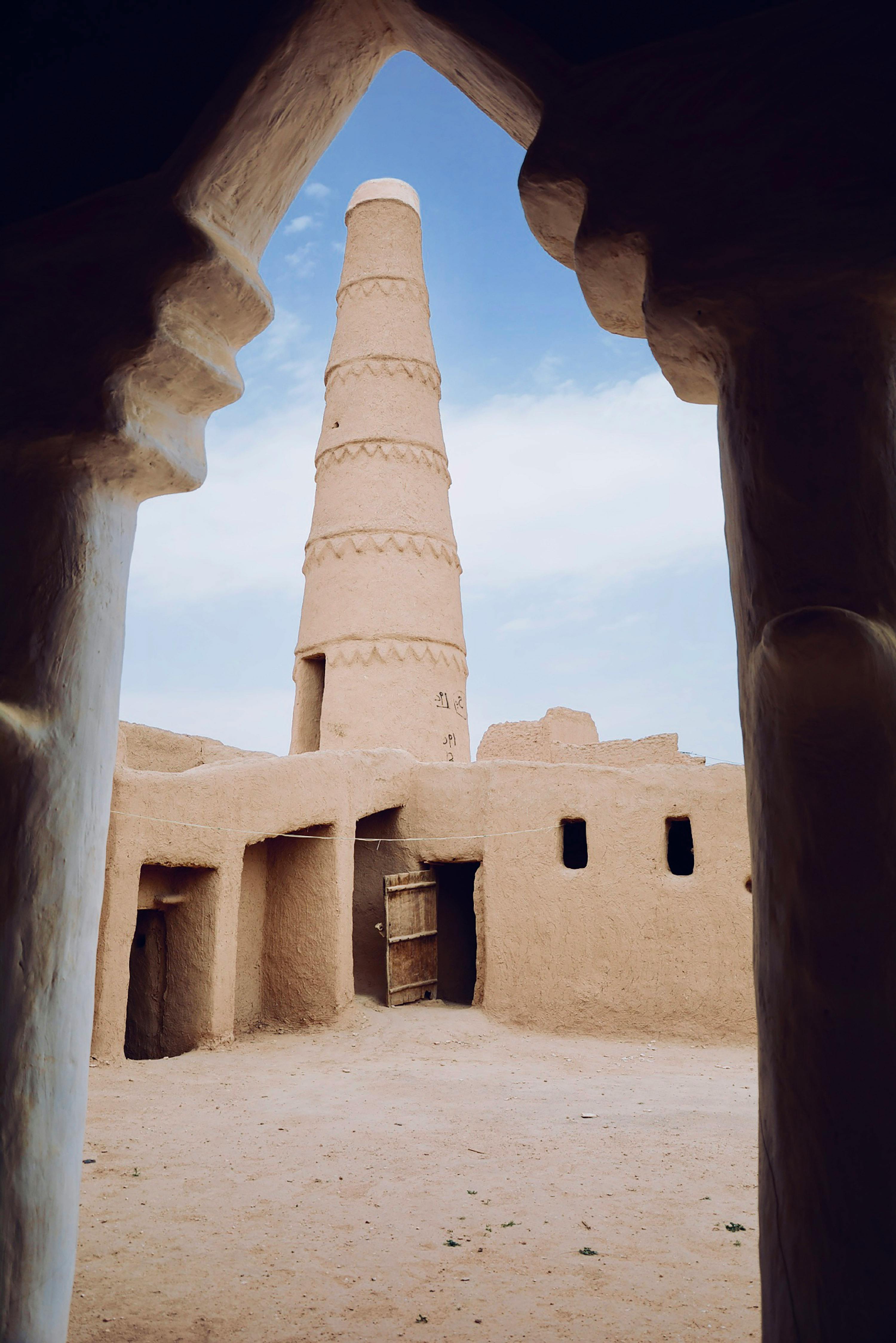
Dedicate your second morning to Diriyah, located on the northwestern outskirts of Riyadh along the banks of Wadi Hanifa. This is the birthplace of the First Saudi State and home to the At-Turaif district, a UNESCO World Heritage Site since 2010. The mud-brick palaces, mosques, and fortifications here represent the finest surviving examples of Najdi architectural style.
The Salwa Palace complex, once the seat of Saudi rulers, has been meticulously restored and now houses several museums interpreting the region's political, religious, and cultural history. The Diriyah Gate development is transforming the surrounding area into a world-class cultural destination while preserving the historic core.
Plan to spend two to three hours exploring At-Turaif. The site is expansive, and the interplay of light and shadow on the ochre-coloured walls makes for extraordinary photography, particularly in the morning light.
Midday: Bujairi Terrace
Just across the wadi from At-Turaif, the Bujairi Terrace has emerged as one of Riyadh's most celebrated dining destinations. This collection of restaurants, cafes, and artisan shops is set against the dramatic backdrop of the historic district.
Afternoon: Wadi Hanifa Walk and KAFD
After lunch, take a leisurely walk along the Wadi Hanifa bioremediation pathway, a remarkable ecological restoration project that transformed a neglected drainage channel into a 120-kilometre green corridor. If time permits, drive to the King Abdullah Financial District (KAFD) to see Riyadh's architectural future.
Evening: Farewell Dinner
Conclude your weekend in the Al-Murabba district, where heritage meets contemporary culture. For a memorable farewell dinner, consider the rooftop restaurants in the Diplomatic Quarter, where you can dine under the stars with views across the illuminated capital.
Practical Tips for Your Riyadh Weekend
- Best Season: October to March offers the most comfortable temperatures (18-25 C).
- Getting Around: The Riyadh Metro is now operational. Ride-hailing apps are widely available.
- Dress Code: Modest clothing is expected at heritage sites and souks.
- Budget: Museum entries rarely exceed 25 SAR, and excellent meals can be found for 50-100 SAR per person.
- Photography: Most sites allow photography. Ask permission before photographing people.
Why This Weekend Matters
Riyadh is undergoing one of the most dramatic cultural transformations of any global capital. A weekend spent exploring its cultural landmarks is not merely a sightseeing exercise — it is a front-row seat to a nation redefining its relationship with its own history and with the world. For travellers seeking depth, authenticity, and discovery, few cities reward a 48-hour visit as generously as Riyadh.
For more ideas in the capital, explore our full Riyadh destination guide, browse Riyadh experiences, or plan a longer stay with our Trip Planner.
Where to Stay for a Culture Weekend
Your choice of neighbourhood shapes the weekend. The Diplomatic Quarter (DQ) is the most comfortable base for culture-focused visitors — tree-lined streets, walkable parks, and a calm atmosphere that feels removed from Riyadh's traffic. Several mid-range and luxury hotels cluster here, with rates between SAR 400 and SAR 900 per night. The DQ is also within a 15-minute drive of both the National Museum and Diriyah.
For a more central position, Al Olaya puts you in the heart of the business district, steps from Kingdom Centre and the Sky Bridge. Hotel density is high here, from international chains to boutique properties, with mid-range rooms available from SAR 300 per night. The district is well connected to the Riyadh Metro Line 1 (Blue Line), which links Olaya to King Abdullah Financial District, the National Museum area, and Qasr Al-Hokm station near Deera Square and the Masmak Fortress — making it possible to cover most Day 1 sites without a car.
Looking ahead, the Diriyah Season Hotel (expected to open in late 2026) will offer accommodation directly adjacent to the At-Turaif UNESCO site, eliminating the commute for Day 2 entirely. For now, budget-conscious travellers can find clean, reliable rooms in the SAR 300-600 range at properties like Braira Hotel Olaya or Centro Olaya by Rotana. Luxury travellers should look at the Four Seasons Riyadh (SAR 1,200+ per night), which offers a weekend brunch that is a cultural experience in its own right.
Beyond the Weekend: Day Trips
If your schedule allows a third day, several day trips from Riyadh deepen the cultural narrative considerably. The most famous is the Edge of the World (Jebel Fihrayn), a 90-minute drive northwest of the city. Standing on the 300-metre cliff edge overlooking an ancient seabed is a geological and emotional experience unlike anything in the capital. A 4x4 is required for the final 10 kilometres of unpaved track — do not attempt it in a standard rental car.
Ushaiger Heritage Village, roughly 200 kilometres northwest of Riyadh, is one of the best-preserved traditional mud-brick settlements in the Najd region. Unlike museum reconstructions, Ushaiger is still partially inhabited, with some families maintaining homes that have been occupied for generations. The narrow lanes, carved wooden doors, and communal wells offer a tangible connection to pre-oil Saudi life that no Riyadh museum can replicate. Allow half a day for the round trip and exploration.
History enthusiasts should consider Huraymila, a small town 80 kilometres northwest of Riyadh known as the birthplace of Muhammad ibn Abdul Wahhab, the 18th-century religious reformer whose alliance with Muhammad ibn Saud shaped the modern Kingdom. The restored heritage quarter includes his family home and a small interpretive museum. For a broader selection of excursions, see our Short Trips from Riyadh guide, which covers logistics and seasonal recommendations for each route.
Frequently Asked Questions
- What are the top cultural sites to visit in Riyadh?
- The Saudi National Museum showcases the kingdom's history and Islamic heritage, the Masmak Fort is an iconic historical landmark, and the King Fahd Road cultural district features museums and galleries. The dirham museum and contemporary art spaces in Diriyah offer insights into traditional and modern Saudi culture.
- Is UNESCO-listed Diriyah worth visiting from Riyadh?
- Yes, Diriyah is a must-visit just 35 km northwest of central Riyadh. This historic mud-brick settlement was the birthplace of the Saudi dynasty and features beautifully restored palaces, mosques, and traditional architecture. A half-day trip allows exploration of this 300-year-old cultural gem.
- What cultural experiences are available in Riyadh on weekends?
- Weekend cultural offerings include traditional music performances, folk dance exhibitions at heritage centers, guided tours of historical forts, and visits to traditional souks like Souq Al-Zal. Check Riyadh's event calendar for festivals, art exhibitions, and cultural celebrations.
- Can you visit mosques as a tourist in Riyadh?
- Non-Muslim tourists cannot enter mosques for worship, but the exteriors of famous mosques like Al-Rajhi and Al-Khaleej are architecturally stunning and worth photographing. Some mosques offer non-prayer time visits on request. Respect prayer times and dress modestly when near any mosque.