
The Ceiling of Arabia
Ascend into the clouds. Where the air is crisp, the forests are ancient, and the land rises above the desert heat.
Above the Desert
Jabal Sawda rises from the Asir highlands as a climatic and geographical anomaly within the Arabian Peninsula. Located near the city of Abha, this massif reaches elevations exceeding 3,000 meters above sea level and is widely regarded as one of the highest peaks in Saudi Arabia. More than its height, however, it is Sawda's environment that defies expectations.
While much of the Kingdom experiences extreme desert heat, Jabal Sawda exists in a temperate, high-altitude microclimate shaped by elevation, moisture-laden winds, and seasonal monsoon patterns. Temperatures here are often 15–20°C cooler than the lowlands, with frequent fog, rainfall, and cloud cover. Dark volcanic rock, terraced slopes, and dense forests give the landscape a character more reminiscent of Mediterranean or East African highlands than Arabia. Standing at the summit, watching clouds spill over the escarpment toward the Red Sea, one experiences Saudi Arabia from its highest and quietest perspective.
Guardians of the Mist
The Cloud Forests
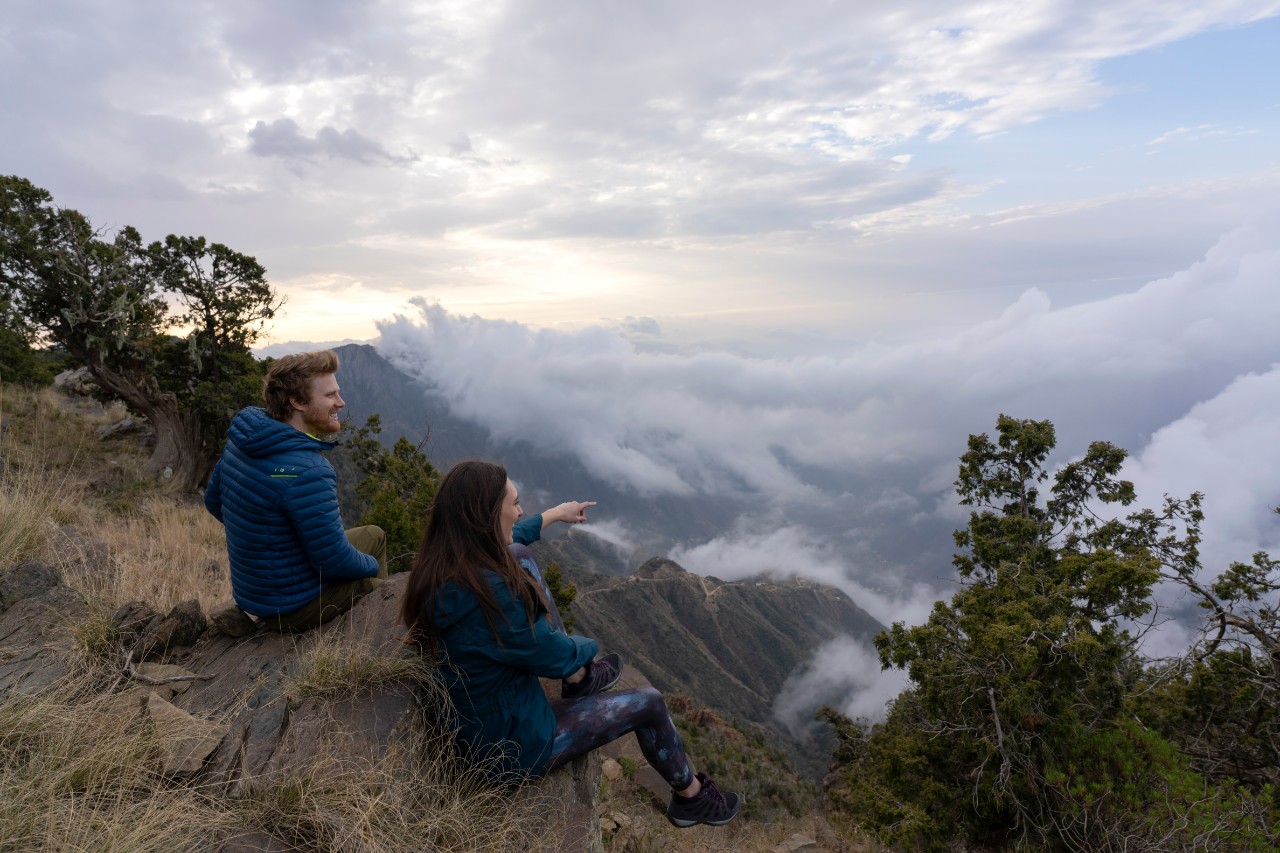
The ecological heart of Jabal Sawda lies in its ancient juniper forests. The slopes are dominated by Juniperus procera (African Juniper), a species that has thrived here for centuries in conditions created by elevation and persistent cloud cover.
These forests function as natural "fog catchers." Moisture condenses on twisted juniper branches and drips steadily into the soil, sustaining a rich understory of wild herbs such as lavender, sage, and mountain basil. This rare montane ecosystem supports diverse wildlife, including troops of Hamadryas baboons and bird species unique to the Asir region. Among them is the endangered Asir magpie, found nowhere else on Earth — a powerful indicator of the region's ecological significance.
Sensory Detail
Walking through the forest, the atmosphere is defined by scent and sound: damp earth underfoot, resinous juniper in the air, wind moving through needles, and the muffled quiet that only thick fog can bring.
A Mountain That Falls to the Sea
The Great Descent
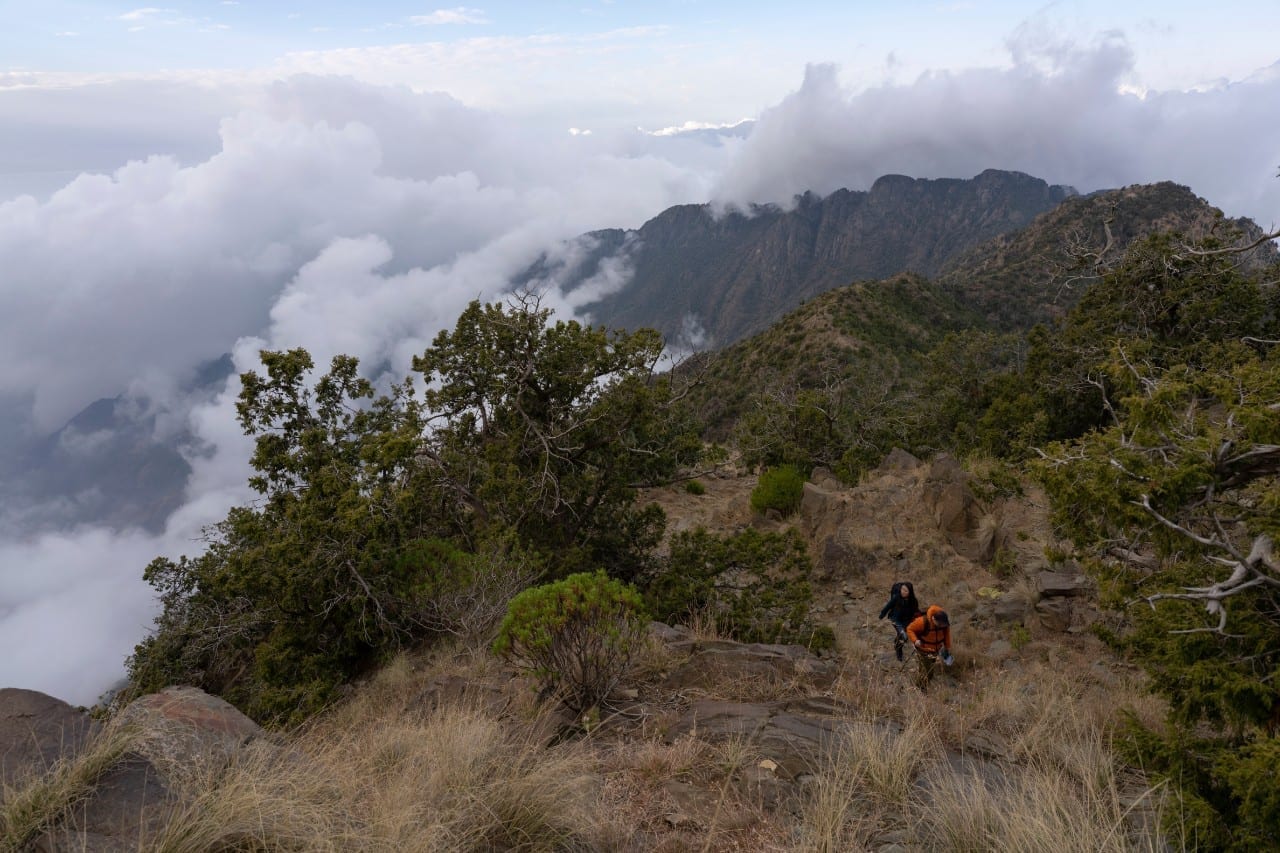
Jabal Sawda forms part of the western escarpment of the Arabian Plate, where the land drops dramatically toward the Tihama coastal plain. This descent is not gradual — it is abrupt and immense.
From exposed viewpoints, the terrain plunges more than 2,000 meters toward the Red Sea basin. On clear days, the landscape reveals a layered geography of ridges, wadis, and agricultural terraces stepping down toward the coast. The sharp elevation change generates strong thermal currents, making the region one of the Kingdom's premier paragliding locations. Launches from the cliffs are a frequent sight, with pilots rising into cloud layers before drifting toward the valleys below.
Access to the Valley
Road access connects the highlands to surrounding villages through steep mountain routes. Cable car systems in the broader Soudah region offer panoramic views of the escarpment and forests; operational routes and destinations may vary seasonally, but they provide one of the most striking perspectives of the Asir highlands from above.
When the Desert Turns Green
The Monsoon Effect
Unlike most of Saudi Arabia, the Asir highlands lie within reach of the Indian Ocean monsoon system.
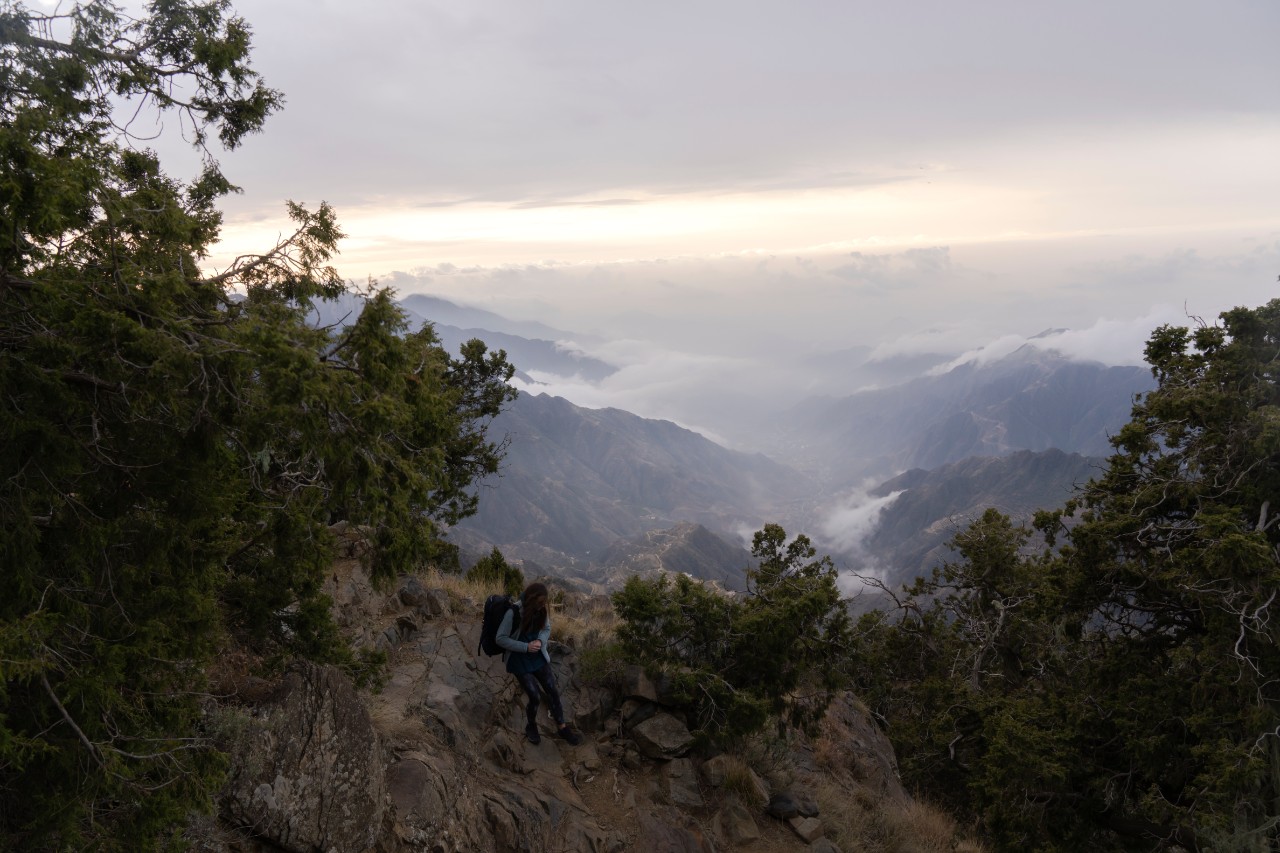
During summer months, moist air masses rise from the Red Sea and collide with the cool mountain peaks, producing afternoon cloud build-up, fog, and sudden storms. Locally referred to as the khareef season, this period transforms the landscape. Rainfall feeds centuries-old agricultural terraces carved into the slopes, allowing greenery to persist year-round. Visitors often experience rapidly shifting conditions — clear mornings followed by mist, hail, or rain within hours — reinforcing the mountain's reputation as a land of constant change.
Walking the High Ground
The Summit & The Hike
The question of Saudi Arabia's highest peak remains a subject of technical debate. Modern satellite data suggests nearby summits may rival or slightly exceed Jabal Sawda in elevation. Yet culturally, historically, and experientially, Sawda remains unrivaled — supported by infrastructure, accessibility, and collective recognition.
For travelers seeking immersion beyond roadside viewpoints, hiking trails lead into the heart of the forest. Restored historic paths — once used by traders, farmers, and herders — wind through juniper stands and along ridgelines. These moderate routes reward hikers with silence, panoramic views, and encounters with abandoned stone watchtowers and traditional beekeeping structures, remnants of a time when these heights served as strategic strongholds.
Prepare for the Altitude
Visitor's Guide
Jabal Sawda requires preparation distinct from lowland destinations.
What to Wear
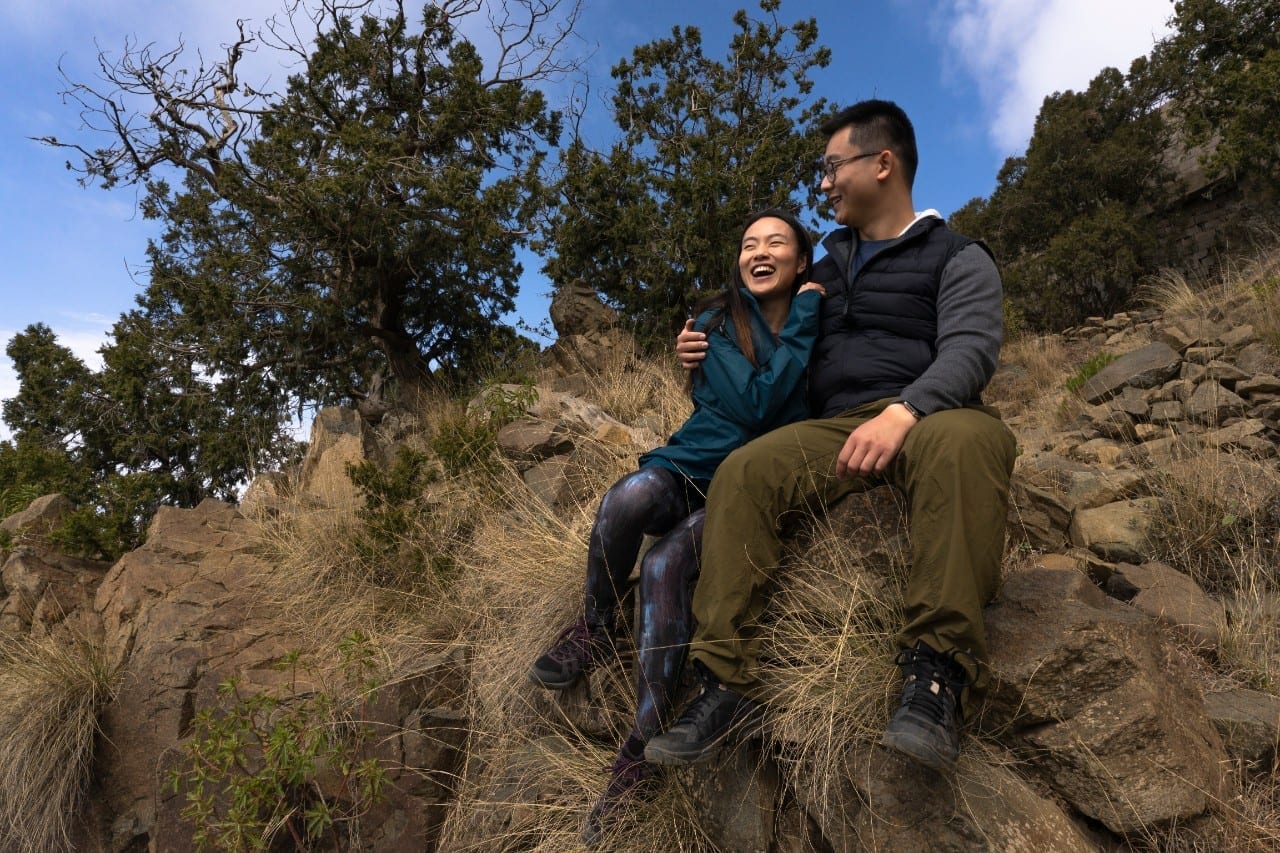
Layered clothing is essential. Even in summer, temperatures can drop sharply in the evening, and fog or rain is common. Sturdy footwear is recommended, particularly for forest trails where wet stone and roots can be slippery.
Best Time to Visit
Summer months offer a cool refuge from the heat elsewhere in the Kingdom, while winter provides clearer skies and long-distance visibility across the escarpment. Weather conditions can shift rapidly year-round.
Key Viewpoint
Al-Sahab (Cloud) Park is among the most popular vantage points. True to its name, the park often sits within the cloud layer itself. At sunset, the sun sinks beneath the mist, illuminating the clouds from below in hues of orange and gold — one of the most striking natural spectacles in Saudi Arabia.
Saudi-Arabiens höchsten Gipfel entdecken
Plan your Asir highlands itinerary — combine Jabal Sawda, Rijal Almaa village, and Abha's cultural sites.
Strategic Context
Regional Tourism Relevance
Jabal Sawda, at approximately 3,015 metres, is the highest peak in Saudi Arabia, located within the Asir Mountains near Abha. The Asir region represents a climatically distinct zone — receiving monsoon-influenced rainfall, supporting juniper forests, and maintaining temperatures 15–20°C below Gulf coast averages. This microclimate positions the region as Saudi Arabia's primary domestic summer tourism destination, with Abha alone receiving over 2 million visitors during peak summer months. International awareness of Saudi highland tourism remains nascent, representing a significant growth opportunity.
Cultural Importance
The Asir highlands have supported distinct cultural traditions for millennia, including the Al-Qatt Al-Asiri geometric painting tradition — inscribed on UNESCO's Representative List of Intangible Cultural Heritage in 2017. Mountain villages like Rijal Almaa showcase stone architecture adapted to steep terrain, with buildings rising 5–6 storeys using locally quarried materials. The Asir region's cultural identity — expressed through distinctive dress, architecture, and agricultural practices — differs markedly from Gulf and Najd traditions, offering visitors authentic regional diversity within a single national framework.
Infrastructure Evolution
Infrastructure development in the Asir highlands has accelerated under the Asir Development Authority. Abha International Airport now handles direct flights from Riyadh, Jeddah, and regional Gulf cities. Road improvements have enhanced access to previously remote mountain villages and viewpoints. The Abha cable car system, connecting the city centre to mountain observation points, provides accessible highland experiences for visitors of all fitness levels. Hotel and hospitality capacity has expanded significantly, with new boutique properties and eco-lodges complementing established options.
Vision 2030 Alignment
The Asir region features prominently in Vision 2030's tourism diversification strategy, which explicitly targets highland and climate tourism as alternatives to traditional desert and coastal offerings. The Soudah Development project — a PIF giga-project focused on sustainable mountain tourism — plans 2,700 hotel keys, adventure activities, and cultural programming across the 3,015 m Al-Soudah plateau. This SAR 11 billion investment targets 2 million visitors annually and positions Saudi Arabia's highlands as an internationally recognised mountain tourism destination.
Visitor Profiles
Jabal Sawda and the surrounding highlands attract domestic Saudi families escaping summer heat (June–September peak); Gulf state visitors seeking cool-climate retreats; international trekking enthusiasts exploring highland trails; cultural heritage travellers interested in Asiri traditions and architecture; and birdwatching specialists attracted to the region's endemic and migratory species. The region's appeal to health and wellness travellers — drawn to clean mountain air and moderate temperatures — represents an emerging segment aligned with luxury eco-tourism trends.
trust.sourcesReferences
- [1]
- [2]
Jabal Sawda Saudi Arabia — FAQ 2026
Everything you need to know about Saudi Arabia's highest peak and Asir highlands
Last updated: March 2026Can't find what you're looking for? Contact us for more help.
Das Asir-Hochland entdecken
Jabal Sawda sits in the Abha highlands, Saudi Arabia's coolest region. It's one of the Kingdom's premier hidden gems for nature lovers. The mountain terrain suits adventure sports including hiking and paragliding. The dramatic cloud forests reward photographers — see our photography guide. The Asir region is pleasant year-round — check the weather guide for altitude conditions. The highlands are central to Saudi Arabia's eco-tourism development.
Warum diese Informationen zuverlässig sind
Explore Saudi is an independent Saudi Arabia travel intelligence platform focused on structured discovery, cultural context, and long-term tourism transformation under Vision 2030.
Unser Content-Framework basiert auf
- Offizielle Tourismusdaten
- Regierungsankündigungen
- Regionale Entwicklungsprogramme
- Kulturerbe-Dokumentation
- Praxiserprobte Reiseroutenlogik
We do not aggregate generic listicles. We build layered travel architecture.
For partnership inquiries or data validation requests: partners@explore-saudi.com
Touch the Sky
Whether you seek silence among ancient junipers, a challenging mountain hike, or a refined picnic above the clouds, Jabal Sawda offers a perspective found nowhere else in the Kingdom.